
About Oconaluftee Indian Village
Run by the Cherokee Historical Association on sovereign Qualla Boundary land, Oconaluftee Indian Village puts you inside a reconstruction of Cherokee life as it existed in the 1760s — not behind a velvet rope looking at artifacts, but walking through a working village where artisans practice traditional crafts alongside guides who explain what they're doing and why. The address is 688 Tsali Blvd, Cherokee, NC 28719, off US-441 near the Museum of the Cherokee People. It's a seasonal attraction, open late spring through fall; confirm current dates and hours at cherokeehistorical.org before you build your itinerary around it.
What the Experience Actually Is
The village reconstructs the period before European settlement reshaped the Southern Appalachians, specifically the 1760s. That choice of era matters. It predates the Indian Removal Act, the Trail of Tears in the 1830s, and most of the disruptions that altered Cherokee society at its roots. The Eastern Band of Cherokee Indians are the descendants of those who remained in these mountains, and the village they maintain is less a historical recreation than a form of cultural continuity.
Guides dressed in traditional attire walk visitors through reconstructed structures: homes built to function the way the originals did, a council house that reflects actual governance practices, a ceremonial ground used in the context of the demonstrations. The tours aren't scripted loops. Guides answer questions and adjust to what visitors are curious about, whether that's daily subsistence practices, spiritual beliefs, the medicinal significance of particular plants, or the social organization of 18th-century Cherokee towns. You're getting knowledge carried through community, not recorded narration.
The physical scale of the village is modest, which works in its favor. The concentration of structures means you understand how a settlement actually functioned rather than walking a diffuse campus. The council house, in particular, gives you a sense of how Cherokee governance operated at the community level.
The Artisans
Around the village, Cherokee artisans demonstrate pottery, weaving, beadwork, and wood carving, each using techniques transmitted through family and community rather than archival reconstruction. The pottery work uses hand-building methods; no wheel. Watching clay pulled into form through hand pressure alone changes how you think about the object compared to reading about the process. Weavers work with natural fibers and dyes, and guides connect specific materials to plants growing in the surrounding mountains. Wood carvers shape functional tools alongside ceremonial objects, and the distinction matters: guides explain what separates everyday implements from items tied to ritual life.
What distinguishes this from a craft demonstration is that nothing exists in isolation. You're learning what things meant, not just how they were made. The council house wasn't just a building; the ceremonial ground wasn't just a clearing. The village is designed to make those connections explicit, and the Cherokee Historical Association has built it to do exactly that.
Photography and Cultural Respect
Several basics apply here that don't come up at most Smokies attractions. The Qualla Boundary operates under EBCI jurisdiction, not standard North Carolina law, and arriving with that awareness shapes the visit in practice. Before photographing any person at the village — artisan, guide, or otherwise — ask. Some will decline, and that's a complete answer, not an obstacle.
Sacred sites on the grounds are not general-access areas. Pay attention to where guides walk and which spaces they describe versus which they move past without commentary. The village is set up to make respectful engagement easy; you mostly need to stay observant and follow the lead of whoever's with you. Visitors who approach Cherokee cultural sites with that kind of attentiveness consistently report getting significantly more from the experience.
Seasonal Hours and Planning
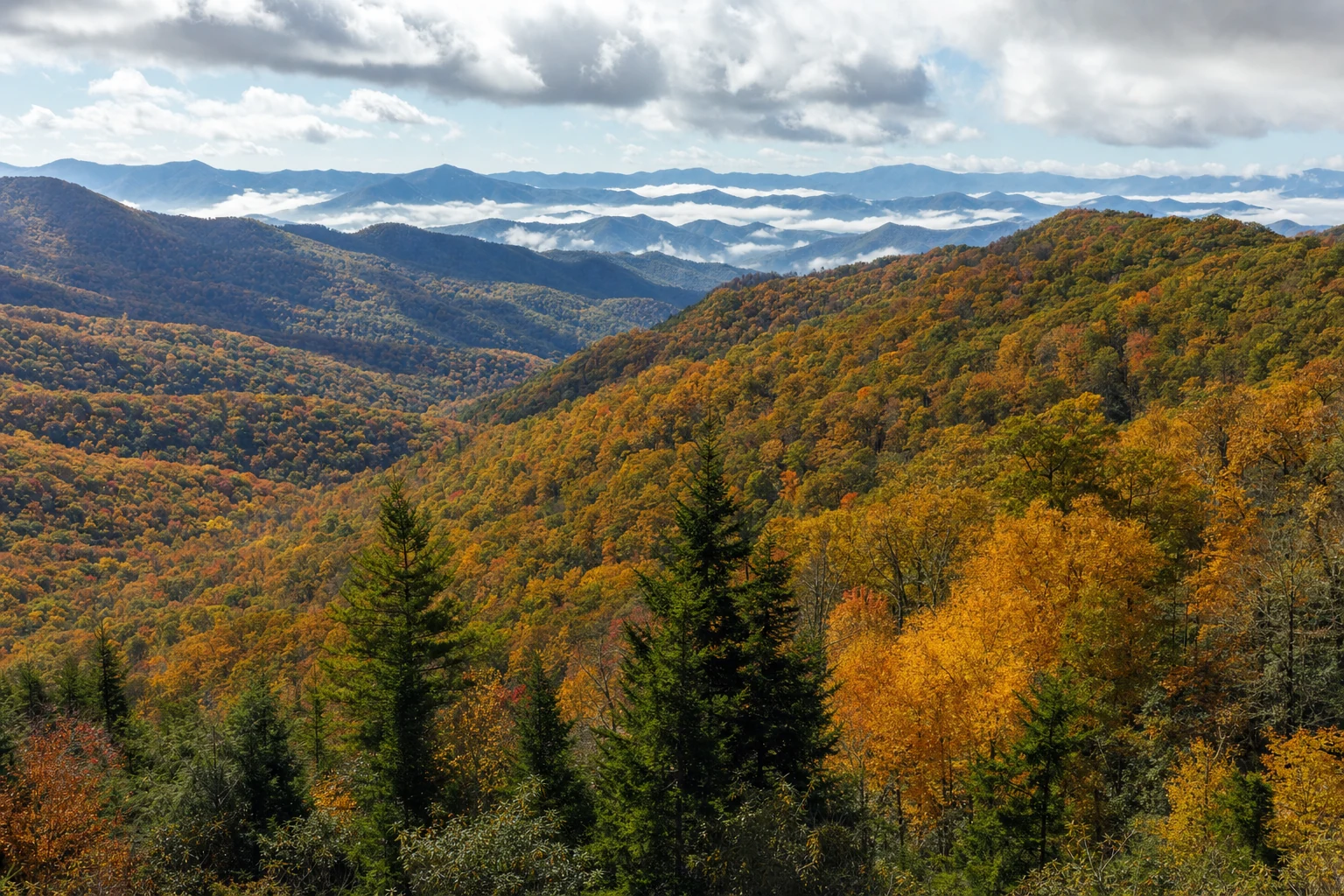
The village closes for winter. December through February visits to Cherokee won't include the Oconaluftee Indian Village; the Museum of the Cherokee People and the Qualla Arts and Crafts Mutual operate year-round if those months are your window. The main season runs late spring through fall, with October offering the surrounding mountain landscape at its most dramatic.
The Cherokee Historical Association also programs special cultural events and demonstrations through the season. Checking cherokeehistorical.org a week or two before your trip takes a couple of minutes and might surface something worth timing your visit around.
Pairing It With the Museum of the Cherokee People
The Museum of the Cherokee People sits adjacent to the village and covers Cherokee history across thousands of years, through the Trail of Tears and into the EBCI's present work. It was rebranded in 2022 (previously the Museum of the Cherokee Indian). Most visitors do both in one day, and that's the right call. The museum gives you interpretive context; the village gives the physical reality. Either order works, though starting at the museum gives you the historical frame before you're walking the grounds. Together they add up to something a single attraction can't manage.
Budget most of a full day if you plan to take both seriously.
Other Cherokee Stops Worth Coordinating
Several other things in the Cherokee area pair naturally with a village visit:
- Qualla Arts and Crafts Mutual: The oldest Native-owned cooperative in the country, and the right place to buy authentic Cherokee crafts — baskets, pottery, masks, jewelry made by EBCI artists. The quality and cultural integrity gap between what you'll find here and the souvenir shops on the main strip is not subtle.
- Unto These Hills: An outdoor drama running in season at the Mountainside Theatre, staged at night, covering Cherokee history from European contact through the Trail of Tears. Evening performances pair naturally with a daytime village visit. Season dates at cherokeehistorical.org.
- Elk at Oconaluftee River Valley: The elk herd reintroduced to Great Smoky Mountains National Park concentrates in the meadows near the Oconaluftee River, a few miles inside the park from Cherokee. Early morning and dusk are the most reliable windows.
- Mingo Falls: About four miles north on Big Cove Road, a short steep trail reaches a 120-foot waterfall. No fee, under an hour, genuinely worth the detour.
Getting There
The village sits at 688 Tsali Blvd off US-441 in Cherokee, NC 28719. From Gatlinburg or Pigeon Forge, US-441 South through Great Smoky Mountains National Park is the standard route — roughly 45 minutes, following the Oconaluftee River through the park before the road descends into Cherokee. The drive itself is worth slowing down for.
Parking is available at the site. The Park-It-Forward parking tag required inside GSMNP boundaries doesn't apply at the village, which sits on EBCI land outside the park. If you're also stopping at the Oconaluftee Visitor Center inside the park on the same day, you'll need the tag for that portion of the trip.