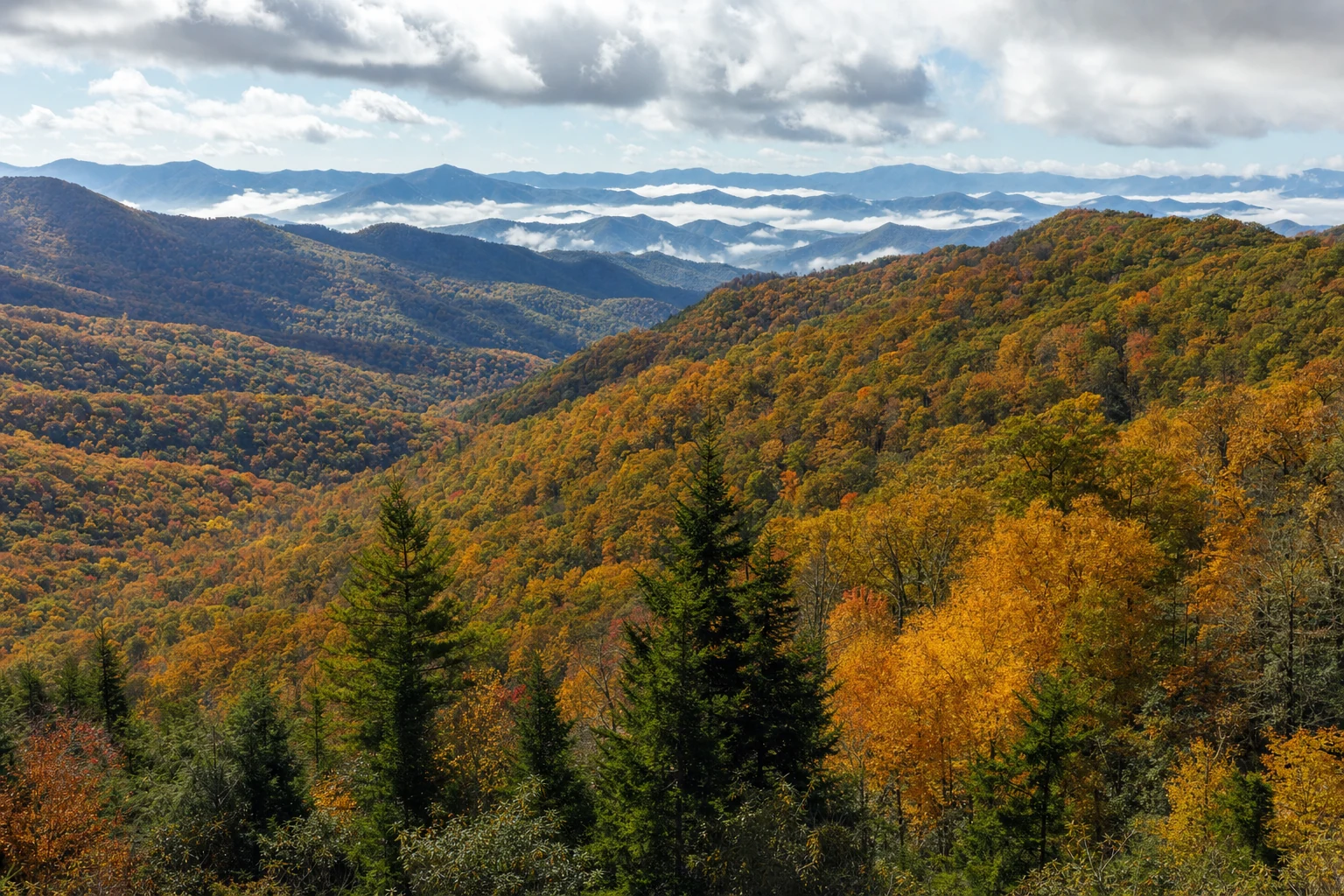

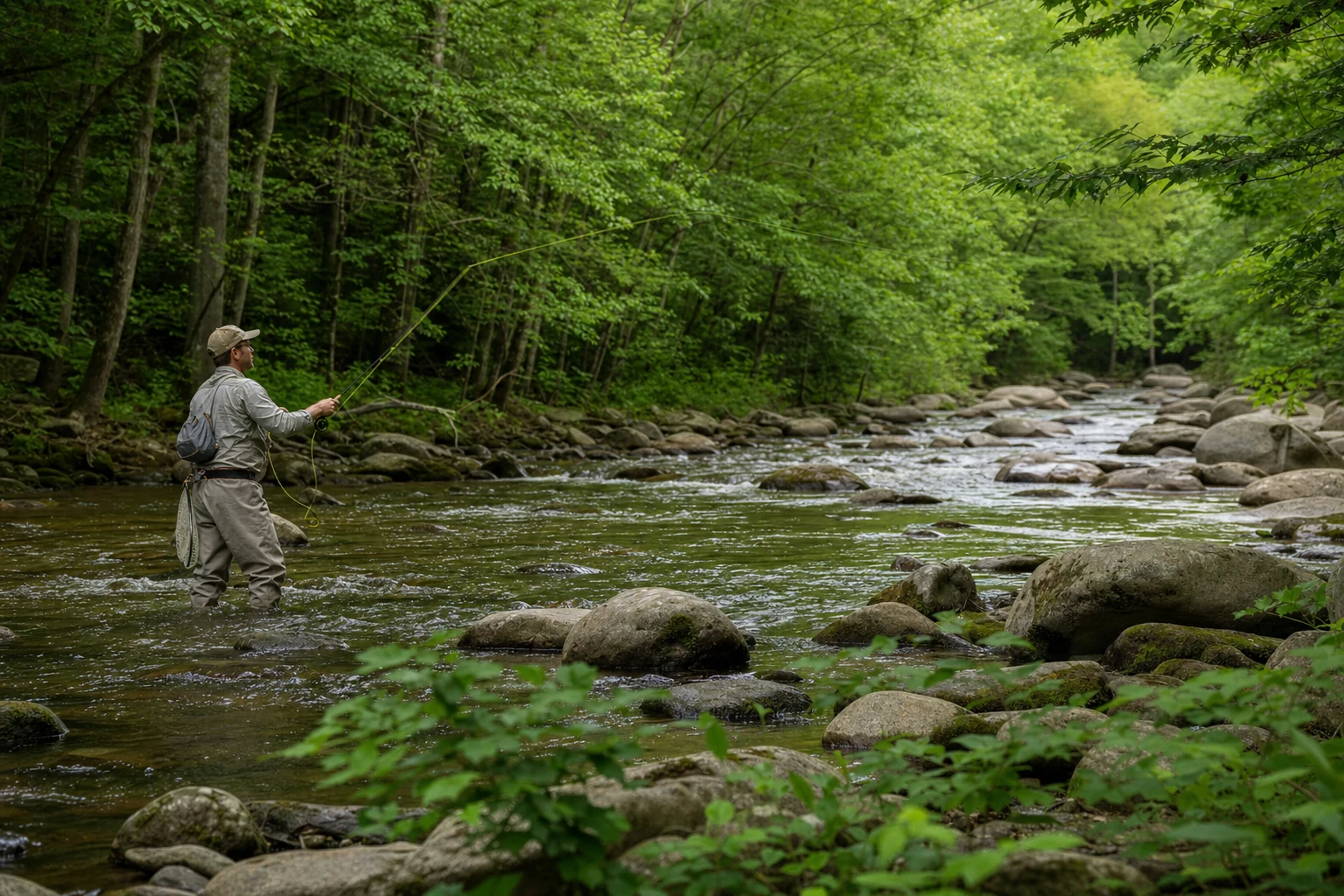
Great Smoky Mountains National Park and the surrounding national forests hold more than 2,900 miles of fishable streams — one of the richest concentrations of native trout water in the eastern United States. Rainbow, brown, and Appalachian brook trout all swim these waters, and the entire system has been carefully managed to preserve native populations. For fly fishers, the Smokies rank alongside the Catskills and the Driftless as an American home water.
The fish
Rainbow trout (non-native but naturalized since the early 1900s): the most abundant. Aggressive, sporting, 10-14" average in most streams.
Brown trout (also non-native, introduced in the 1930s): larger, warier, 14-20" possible in the bigger systems. Best fishing at dawn and dusk.
Appalachian brook trout (native; the true "specks"): the original trout of the southern Appalachians, pushed to higher-elevation headwaters by the non-natives. Stunning colors, smaller (6-10"), caught on light tackle. Tennessee and NC both protect brookies through regulation — catch-and-release typically required for brook trout, and some streams are brook-only. Check current regulations.
Where to fish
Little River (TN side): the classic Smokies fishery. Public access at Metcalf Bottoms, The Sinks, Elkmont, and along Little River Road. Rainbow and brown trout; some browns run big.
Abrams Creek (TN/Cades Cove): a limestone-influenced creek; trout often larger here. Strong fishery, but parking fills fast in season.
Oconaluftee River (NC): full range from the valley at Cherokee up to high headwaters. Heritage brook trout water.
Deep Creek (NC): excellent public access, short drive from Bryson City.
Hazel Creek (NC): remote, high-quality backcountry fishery. Fontana Lake boat-in access is classic.
Fontana Lake tailwaters: trophy-class tailwater fishery below the dam; some massive rainbows and browns.
Noland Creek, Forney Creek, Eagle Creek: lesser-known backcountry streams, less pressure, outstanding native-brook fishing.
Fishing licenses
- Tennessee: required on the TN-side streams. $35 annual for residents, $50 for non-residents, daily options available. Purchase online at tnwildlife.org or at any outfitter
- North Carolina: required on NC-side streams. $25 annual for residents, $50 for non-residents. Purchase at ncwildlife.org or at any outfitter
Inside the park, you need a TN or NC license corresponding to the state you're fishing in — park boundaries follow the state line. A small number of waters require a separate trout stamp.
Regulations
- Season: year-round, though fishing is limited to daylight hours
- Tackle: single-hook artificial lures only in the park (no live bait, no treble hooks)
- Catch-and-release: required for brook trout in many waters; creel limits apply to rainbow and brown
- Gear: fly rod, spinning rod with single-hook artificials, or Tenkara all work
- Size limits: vary — check current regulations at nps.gov/grsm or your outfitter
Guided trips
Multiple guide services operate around the Smokies:
Tennessee side:
- Little River Outfitters (Townsend) — longest-running, pro guides, full service
- Smoky Mountain Angler (Gatlinburg)
- Fly Fishing the Smokies (Bryson City and Gatlinburg)
North Carolina side:
- Nantahala River Fly Shop
- Hunter Banks (Asheville-based, covers the whole region)
Typical rates:
- Half-day wade trip for 2: $275-325
- Full-day wade trip for 2: $375-475
- Drift boat full-day for 2: $500-650
- Introductory half-day with instruction: $250-300
Guides supply gear, flies, and expertise; you supply license, boots, and willingness. Most include lunch on full-day.
Best seasons
Spring (March-May): water levels strong from snowmelt; active feeding. Best all-around season.
Summer (June-August): warmer water; fish feed early and late. Mid-day is difficult; dawn and dusk excellent. High-elevation brook water stays cool and productive.
Fall (September-November): prime time. Aggressive pre-winter feeding, cooler water temperatures, spawning behavior. October often the best fishing of the year.
Winter (December-February): quieter. Fish are deeper, slower. Tailwater fishing below Fontana Dam remains productive. Some dedicated anglers swear by winter for the solitude.
Fly selection
- Dry flies: elk hair caddis, Adams, blue-winged olive, stimulators
- Nymphs: pheasant tail, hare's ear, Copper John
- Streamers: wooly bugger, sculpin patterns
- Terrestrials (summer): ant, beetle, hopper patterns
Local fly shops (Little River Outfitters especially) sell fly boxes tuned to current Smokies hatches. Buy local — the patterns that work vary.
Etiquette
- Stay in your pool: give other anglers space. If someone's working a pool, move 100+ yards upstream before starting
- Release properly: wet hands, support the fish in the water, minimize air exposure
- Don't block trailheads: park in designated pullouts
- Report violations: to TWRA or NCWRC if you see live-bait use in the park
Starter tackle for a DIY trip
Budget setup for a first-time Smokies fly fisher:
- 9 ft 4-5 weight fly rod + reel + line: $200-400
- 9 ft 5X tapered leader: $5
- Handful of flies in sizes 12-16: $20-40
- Waders + boots: $150-250 (or wet-wade in summer)
- Fishing license: $25-50
- Basic net: $25
Total: $425-775. Compare to guided trip: $375 for a full day for two. For occasional anglers, guided is often better value.
Hazel Creek backcountry
Hazel Creek is the legendary Smokies backcountry fishery. Reachable only by boat (across Fontana Lake) or a 14+ mile hike, with old cabins and mill ruins along the creek and some of the purest brook trout water in the region. Bring a permit, bear-canister food storage, and a light rod. A true southern Appalachian bucket-list fishing experience.