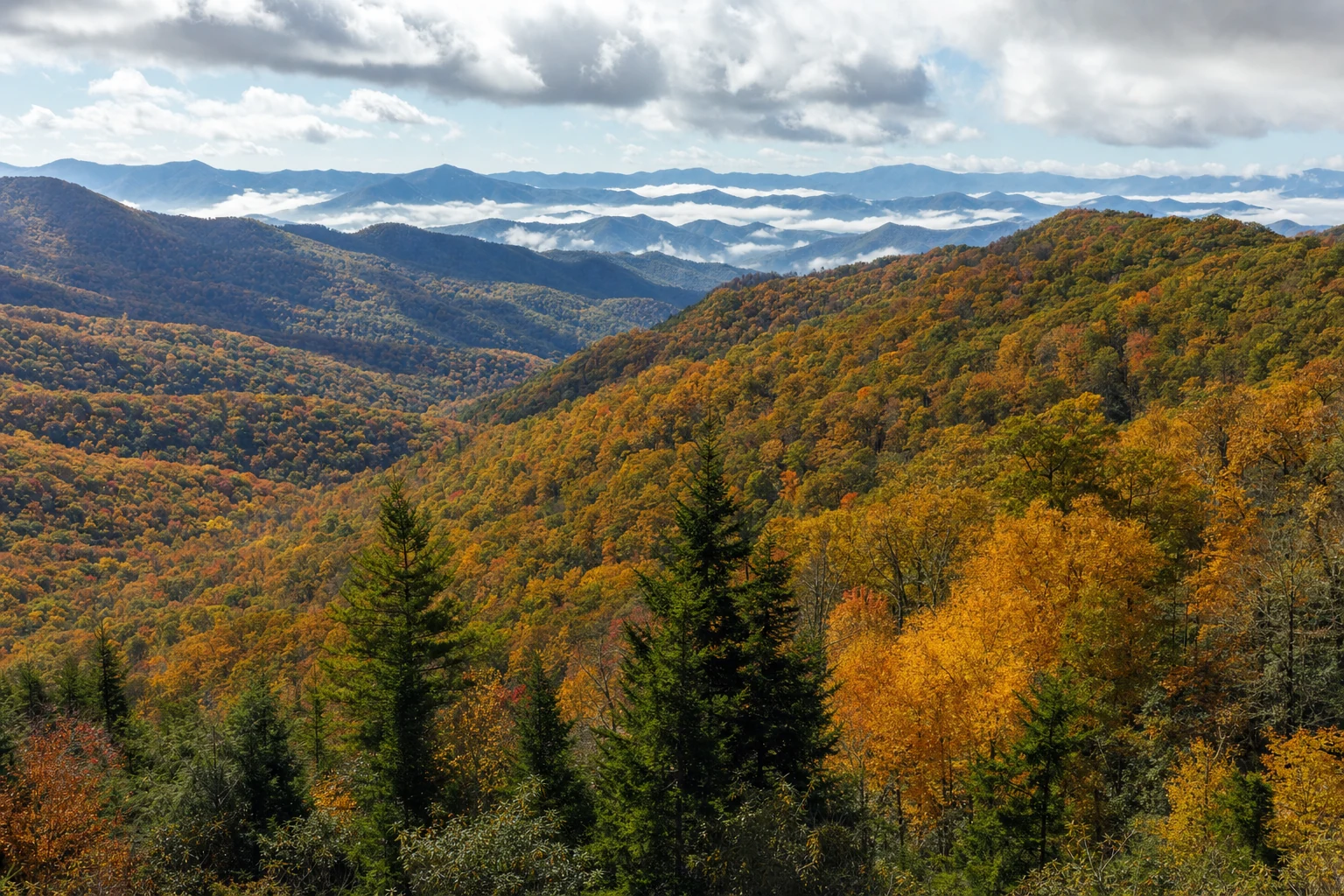

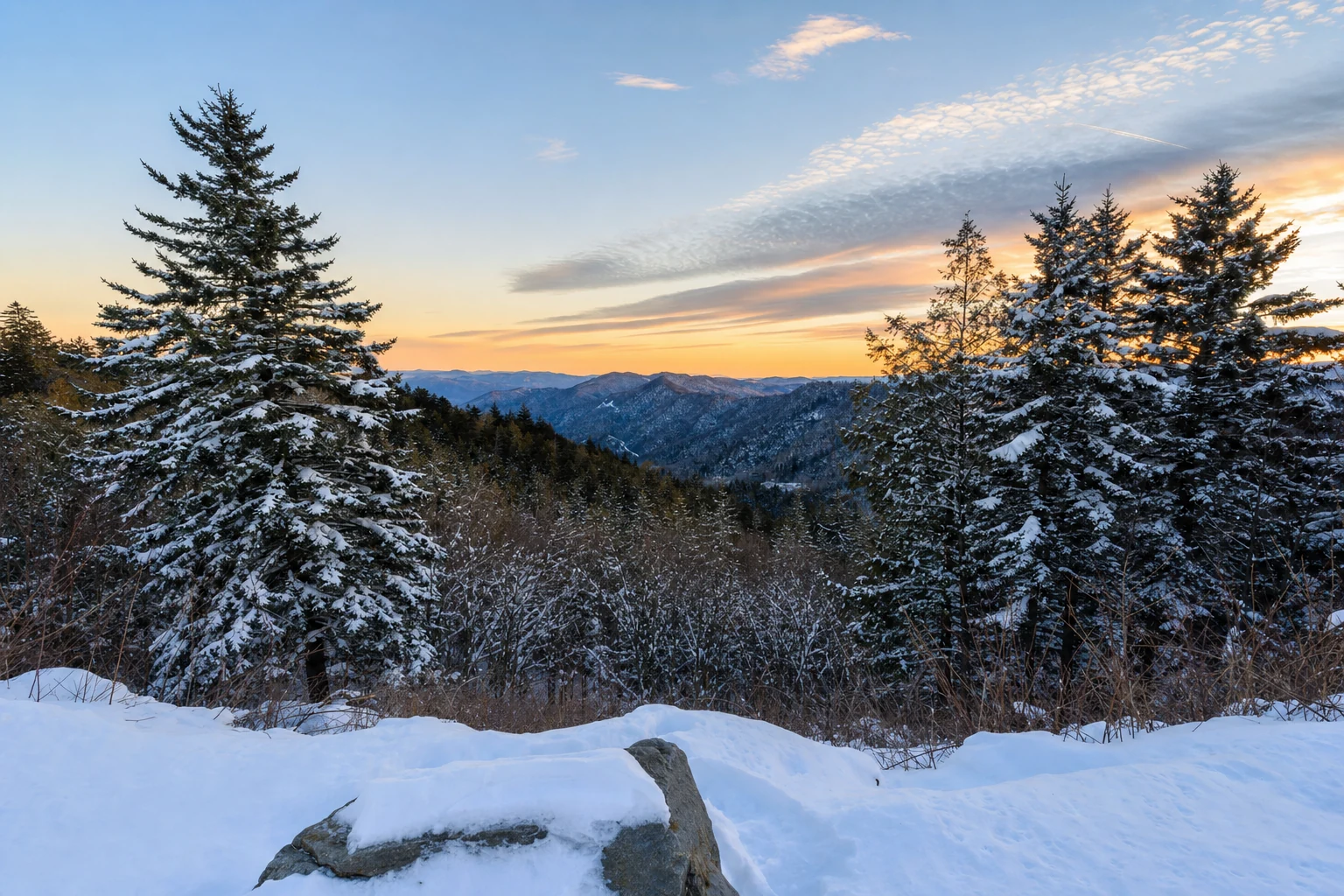
Winter in the Smokies is the park's best-kept secret. From mid-November through early March, visitation drops by 70%, the leafless hardwood forests reveal the long ridge views that summer hides, the high peaks ice over, and the gateway towns slow to their real pace. It's the best season for photography, solitude, and paid attractions without the lines — if you're willing to plan for weather.
The weather reality
Temperatures at Gatlinburg valley level (1,300 ft) typically run 30–50°F; at Newfound Gap (5,046 ft), typical winter lows hit the teens with occasional single digits. Snow accumulation at the high peaks can exceed a foot in a single storm. Ice is the main concern — not just on trails, but on the roads: Newfound Gap Road, Foothills Parkway high sections, and Blue Ridge Parkway between Cherokee and Mt. Mitchell all close intermittently for ice, sometimes for days.
Check nps.gov/grsm current conditions every morning of your trip. Roads reopen as soon as ice clears but can close again the same day if another storm arrives.
What's open
Year-round:
- Newfound Gap Road (weather permitting)
- Cades Cove Loop (closed briefly for ice/snow; otherwise open)
- All major visitor centers (Sugarlands, Oconaluftee)
- Most lower-elevation trails
- Every cabin rental and hotel in the gateway towns
- Dollywood (Smoky Mountain Christmas runs November through early January)
- Anakeesta (year-round, with winter lighting display)
- Ober Mountain skiing (December through early March)
- Cataloochee Ski Area (November through March)
Seasonal closures:
- Roaring Fork Motor Nature Trail (closed December through February)
- Little Greenbrier Road (closed December through March)
- Parson Branch Road (closed year-round since 2016 storm damage)
- Most high-elevation campgrounds (Balsam Mountain, Heintooga)
- Blue Ridge Parkway high sections (closed for ice regularly)
Skiing and snow sports
Ober Mountain (Gatlinburg): 10 slopes, 600 ft vertical, aerial tramway from downtown Gatlinburg. Snowmaking-dependent; operating days depend on temperatures. Tube park, ice skating rink, and snow tubing even in low-snow years. Weekday rates are cheaper than weekend.
Cataloochee Ski Area (Maggie Valley, NC): 18 slopes, 1,200 ft vertical, significantly larger than Ober. Southernmost ski area in the eastern U.S. Typical season mid-November through mid-March. Tube World and ski school for first-timers.
Neither resort is Aspen. Both are real skiing with real lifts, real snow (made + natural), and a very welcoming vibe for first-timers. For a Smokies family week, either is a legitimate addition to your plan.
Winter photography
- Ice-rimed waterfalls at Rainbow Falls, Ramsey Cascades, Laurel Falls, and Mingo Falls become ice cathedrals in deep cold. Access depends on trail/road status — check before driving up.
- Cloud inversions are more common in winter. Clear cold mornings after a wet front often produce dramatic valley fog below Newfound Gap, Kuwohi, and Foothills Parkway high points. Sunrise drives up can yield magazine shots.
- Rime ice on high-elevation trees looks like everything has been sprayed with white frosting. Common above 4,500 ft in January/February.
- Leafless winter ridges expose long views from Newfound Gap, Kuwohi, Morton Overlook, Foothills. Sunset light on snow-dusted peaks.
Dollywood Smoky Mountain Christmas
Dollywood's November-through-early-January Christmas event transforms the park with 5 million lights, a "Parade of Many Colors" nighttime procession, and holiday food. The park is substantially quieter than peak season — a real option for families wanting Dollywood without the summer crowds. Tickets typically cheaper in early December vs. weekend nights in late December.
Gatlinburg's Winter Magic
Downtown Gatlinburg hangs 3 million lights from mid-November to late February (one of the longest-running light displays in the South). The Christmas Parade draws 70,000+. Christmas Eve and New Year's fireworks on the Space Needle.
Hikes that work in winter
Stick to lower-elevation trails and avoid anything with significant ice risk unless you're equipped:
- Cades Cove Loop (bike or drive): stunningly peaceful in winter, no crowds, wildlife active
- Gatlinburg Trail (3.8 miles RT from Sugarlands, paved, easy, year-round, dogs allowed)
- Oconaluftee River Trail (3 miles RT, paved, easy, dogs allowed)
- Cove Hardwood Self-Guiding Trail (0.75 mi loop, easy, great for cold sunny days)
- Laurel Falls (2.6 mi RT, moderate, paved but slippery — check ice status)
- Deep Creek waterfall loop (2.4 mi, easy-moderate, usually snow-free at low elevation)
For winter hiking at mid-to-high elevations, bring microspikes and check trail status.
Lodging strategy
Winter is the cheapest Smokies booking window of the year. Cabin rates drop 30–50% from mid-January to late February. Hotels run specials. The downside: some operators close for maintenance weeks. Check that your target cabin's heating is reliable (ask the rental company) and avoid cabins at the top of steep gravel driveways.
What's closed (or running limited)
Some restaurants in Gatlinburg close January for maintenance; most Pigeon Forge dinner shows run limited schedules until March. Little River outfitters (tubing) are closed. The Great Smoky Mountains Railroad runs limited schedules, typically only on weekends until spring. Many backcountry campsites are closed for bear management.