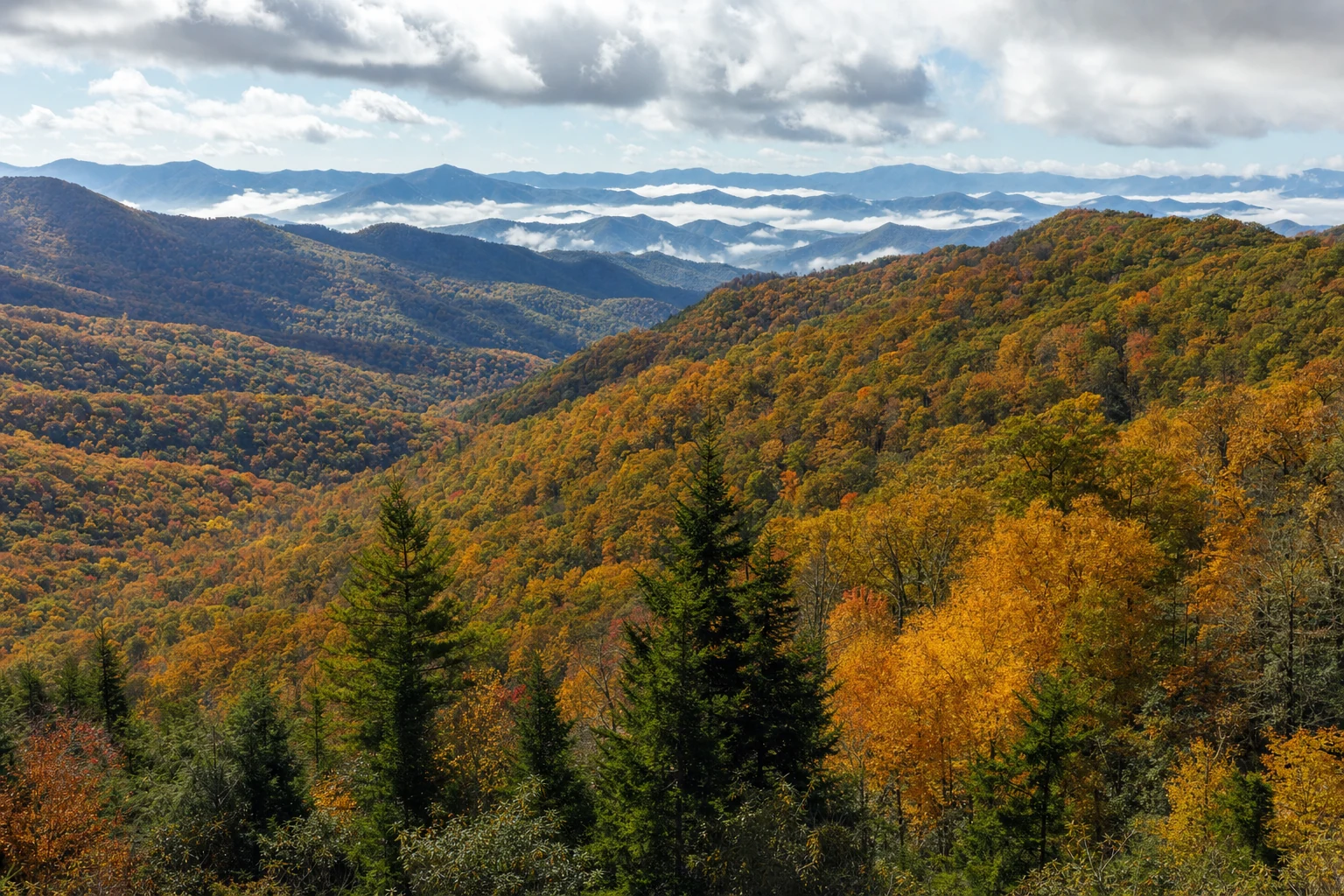

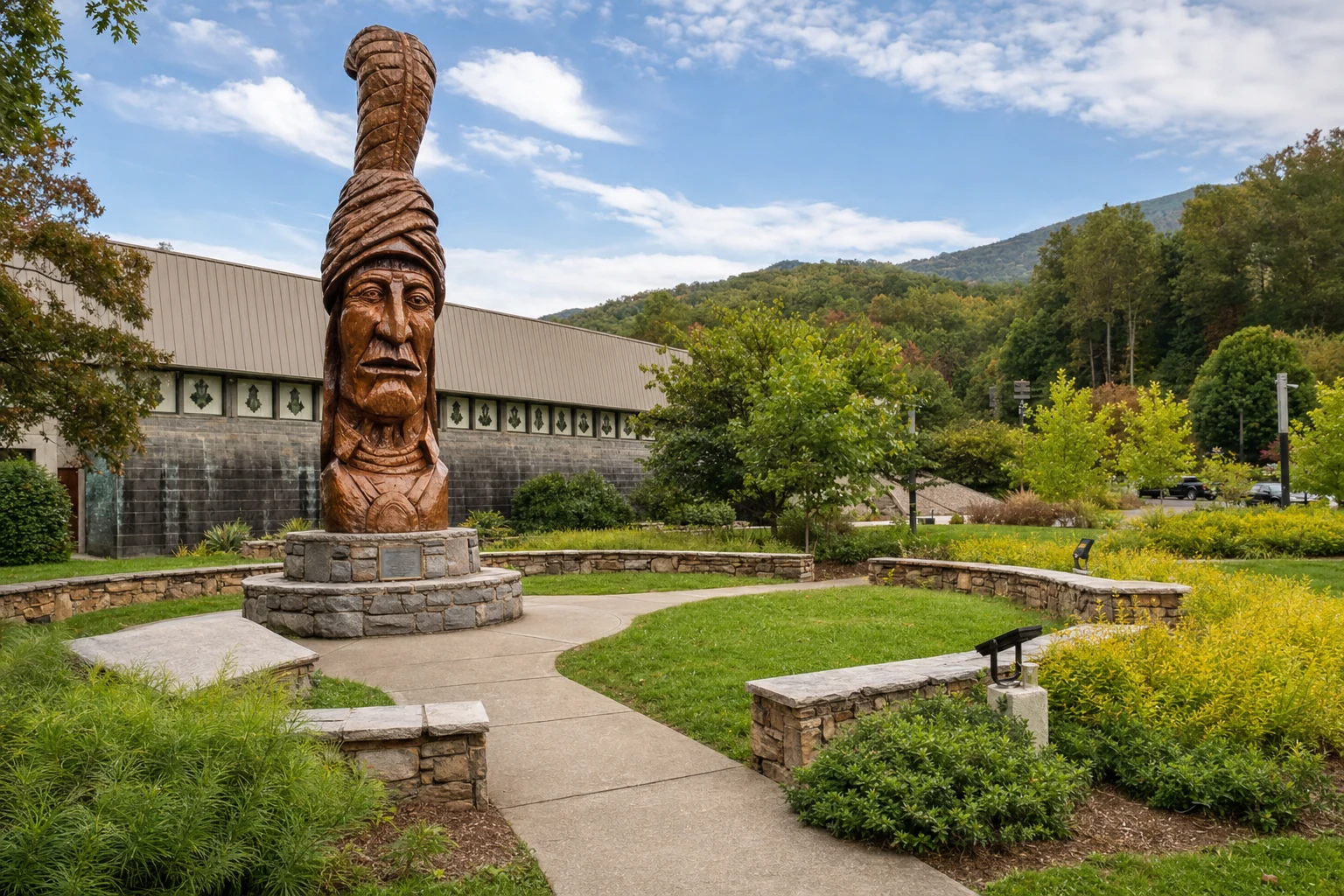
The Great Smoky Mountains are the ancestral homeland of the Cherokee people. The Eastern Band of Cherokee Indians (EBCI) today holds sovereignty over the 57,000-acre Qualla Boundary — a federally-recognized tribal reservation surrounding the town of Cherokee, NC — and maintains one of the most robust living Native American cultural presences in the eastern United States.
For visitors, this means something important: you are a guest in Cherokee country. Approach the culture, language, and traditions with respect and curiosity. The Cherokee people are not a historical exhibit — they are a modern nation of about 16,500 enrolled members, governed by their own Tribal Council and Principal Chief, operating schools, a hospital, a tribal court system, businesses, and cultural institutions. The following is a starting point for engaging with Cherokee culture in an informed, respectful way.
Key sites
Museum of the Cherokee People (formerly Museum of the Cherokee Indian): the anchor. Opened 1948, expanded multiple times, holds thousands of artifacts and tells the story from pre-contact through present day. The "Trail of Tears" exhibit is powerful. Allow 2 hours minimum; many visitors stay all day. Tickets ~$12/adult; audio guide available. Open year-round.
Oconaluftee Indian Village: an open-air living-history recreation of an 18th-century Cherokee village. Guided 1-hour tours; artisans demonstrate basket-weaving, pottery, dart-blowgun making, and cooking. Open seasonally (typically April through October). Ticket ~$20/adult.
Unto These Hills: an outdoor drama telling the story of the Cherokee and the Trail of Tears. Performed in the Mountainside Theatre in Cherokee since 1950 — one of the longest-running outdoor dramas in the United States. Peak performances late May through late August; ticket ~$25-30/adult.
Qualla Arts and Crafts Mutual: founded 1946, the oldest Native American cooperative in the country. Authentic Cherokee-made crafts — baskets, pottery, beadwork, wood carving, ornamental stone. Prices reflect handmade quality. A legitimate purchase supports artisan members directly.
Cherokee Central Schools / Cherokee Language classes: the tribe operates immersion schools and offers periodic public language classes. Check the Cherokee.org site for current schedules.
Kituwah Mother Town archaeological site: the historic capital of the Cherokee before the Trail of Tears. 20 minutes north of Cherokee town. Returned to EBCI ownership in 1996. Open to visitors; interpretation signage; be respectful as this is an active cultural site.
Sequoyah birthplace site (technically just across the TN border, in Vonore TN): Sequoyah created the Cherokee syllabary — one of the only times in human history a member of a pre-literate society has single-handedly created a written language. The Sequoyah Museum tells this story well.
The Cherokee language
Tsalagi, the Cherokee language, is a Southern Iroquoian language. It has been written since Sequoyah's syllabary in the 1820s — the 85-character script that lets Cherokee be written phonetically. There are currently around 2,100 native speakers, most elders, and active revitalization efforts (immersion schools, adult language classes, online programs) working to reverse decline.
Visitors often notice Cherokee signage alongside English across the Qualla Boundary. The syllabary is beautiful and distinctive; basic translation:
- siyo (hello)
- wado (thank you)
- ohiyu (yes)
- duyv hi wa (how are you?)
The Trail of Tears
In 1838-39, the U.S. government forced approximately 16,000 Cherokee people from their southeastern homelands to Oklahoma (then Indian Territory). Roughly 4,000 died during the relocation. The Eastern Band of Cherokee Indians are descendants of the Cherokee who either evaded the removal (hiding in the high mountains) or legally separated from the larger Cherokee Nation prior to removal.
The story is told with full weight and grief at the Museum of the Cherokee People, at Unto These Hills, and at many historic sites. Come prepared emotionally — this is not sanitized history.
Contemporary life
Cherokee has a diverse contemporary economy:
- Harrah's Cherokee Casino Resort and Hotel (significant employer and revenue generator)
- Cherokee Indian Hospital Authority (tribal healthcare)
- Cherokee Central Schools
- Various tribal enterprises (construction, agriculture, tourism)
The tribal government is structured with an elected Principal Chief, Vice Chief, and Tribal Council. Elections are regular; the tribe is actively engaged in federal Indian policy and regional issues (including the reintroduction of elk to ancestral lands).
Mostly, though, Cherokee is a small working town where people live ordinary lives. Treat it that way. Don't photograph residents without permission. Don't assume everyone you meet is an artisan or a storyteller — many are just getting groceries.
What to skip
- Ranger-presented "teepees" or anything that conflates Plains Indian and Cherokee culture. The Cherokee lived in log and clay-daub houses, not teepees.
- Cheap souvenir shops selling "Cherokee" crafts not made by Cherokee people. Look for the Qualla seal or shop at the Qualla Mutual.
- Outdated "Playing Indian" experiences. The mid-century "chief in headdress" roadside attractions are largely gone; what remains is mostly exploitative. Skip.
The respectful visitor
- Use the correct name: the federally-recognized government is "Eastern Band of Cherokee Indians" (EBCI). The people are Cherokee (not "Cherokee Indians" in most contexts). The land is the Qualla Boundary, not a reservation (it is technically, but the people prefer Boundary).
- Ask before photographing people, even in public settings
- Buy from Qualla Mutual, not souvenir imitations
- Visit the Museum early in your trip — everything else makes more sense afterward
- Approach sites like Kituwah with the gravity due a sacred site
- Support tribal-member-owned businesses
- If you attend a cultural event, follow the lead of tribal members on photography, recording, and applause
Further reading
Before visiting, consider:
- "After Removal: The Cherokee in North Carolina" by Duane H. King
- "The Cherokee Syllabary: Writing the People's Perseverance" by Ellen Cushman
- Stories and articles via the Cherokee.org website and the Museum of the Cherokee People resources page
A note on Kuwohi
Clingmans Dome, the highest peak in the Smokies, was renamed Kuwohi in 2024 — its Cherokee name, meaning "Mulberry Place." The renaming, proposed by the EBCI, honors the Cherokee's deep historical relationship with this sacred mountain. Use the new name when referring to the peak. The old park signs are being updated.