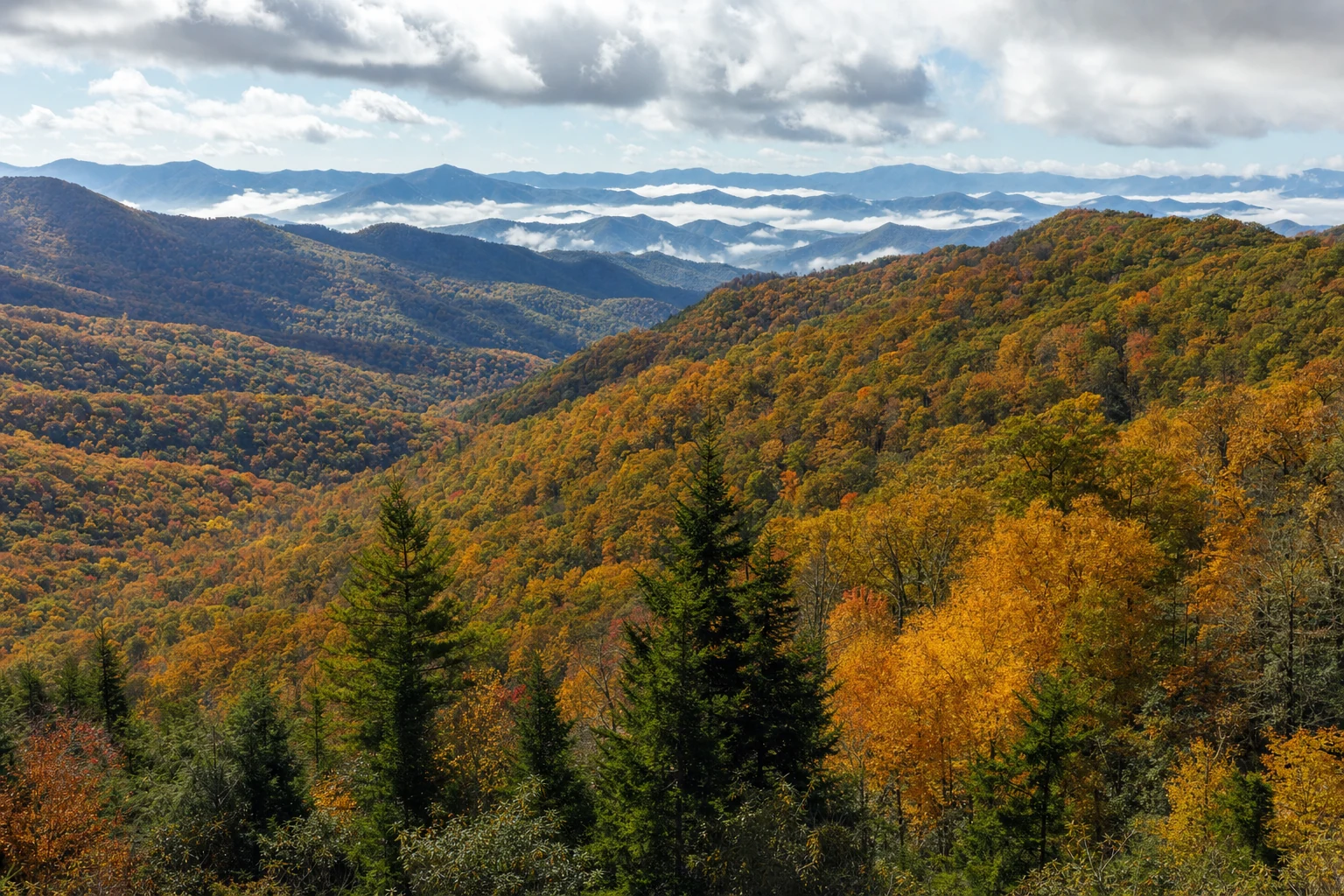

The Great Smoky Mountains hold one of the most ecologically diverse environments in temperate North America — over 19,000 documented species, with scientists estimating that 80,000 more exist in the park awaiting description. For visitors, the headline species are black bears, reintroduced elk, white-tailed deer, wild turkeys, and — high on certain summits — peregrine falcons. Every one is best observed at a respectful distance.
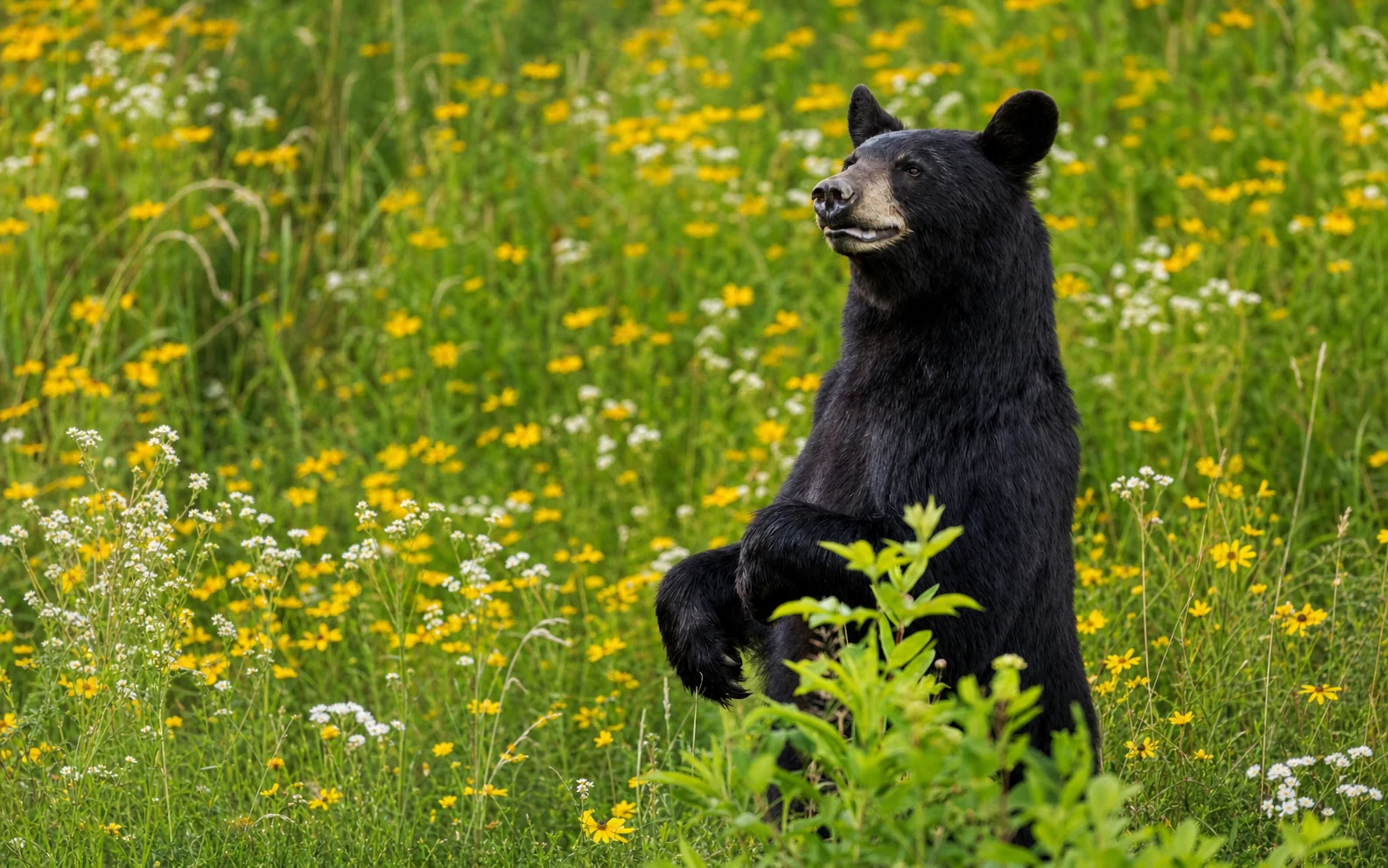
Black bears
Population: ~1,500 in the park (approximately 2 per square mile — one of the densest populations of American black bears anywhere).
Where to see them: Cades Cove at dawn and dusk, especially spring and fall; Roaring Fork Motor Nature Trail; backcountry campsites (less ideal — more conflict). Bears often forage in the edge of meadows and along creeks.
When: Bears are most active March through November, less so in winter (torpor — not true hibernation, but much reduced activity). May-June is peak activity; September-October sees heavy foraging for fall acorns.
The rules:
- Stay at least 50 yards (half a football field) away
- Never approach for a photo. Use a telephoto or crop later
- If a bear approaches you, make yourself large, make noise, back away slowly. Do not run
- If a bear charges, stand your ground (most charges are bluffs). Do not play dead — that's grizzly advice, not black bear advice
- Report any aggressive or food-conditioned bear to a ranger immediately
Food storage:
- Store food, coolers, and all scented items (toiletries, trash) in your car with windows up or in the provided bear box
- Bear canisters required for backcountry use
- Never leave food unattended at a campsite, picnic table, or car hood
Elk
Population: ~200 in the park, reintroduced starting in 2001 after a 150-year absence.
Where to see them: Cataloochee Valley (northeast NC side) and Oconaluftee Valley (NC side, at park entrance near Cherokee). Cataloochee has the larger herd.
When: Dawn and dusk year-round. September rut (breeding season) is the dramatic time — bulls bugle, charge, spar for dominance. Late October to early December sees the males drop their antlers. May-June is calving, when females are most defensive.
The rules:
- Stay 50+ yards from all elk (further from bulls during rut)
- Never approach for a photo
- Never run or turn your back on an elk that's aware of you
- Do not feed — even "cute" small feeding habituates dangerously
- Respect closed areas during rut and calving; some fields are closed September–October
White-tailed deer
Ubiquitous — Cades Cove sees hundreds on any given evening. Easiest wildlife to photograph, but still give them space. Active dawn to dusk. Fawns born May/June — never touch a fawn, even one that looks abandoned (mothers park fawns while they feed; they return).
Wild turkeys
Common in Cades Cove, Cataloochee, and throughout the park. Spring gobbling (April/May) is loud and wonderful. Often seen in groups of 6–20 birds.
Synchronous fireflies (*Photinus carolinus*)
See our [Synchronous fireflies of Elkmont](/fireflies/) pillar page for full details — two weeks in June, requires a lottery-won pass.
Salamanders
The Smokies hold 30+ salamander species and are often called the salamander capital of the world. Most are small, cryptic, and found in damp forest floor — lift a rock, look in a stream bed, check under leaves. Every one is a piece of the deepest evolutionary heritage in the park.
Birds
250+ species documented. The highlights:
- Peregrine falcon: nesting on the Chimney Tops cliffs since the species' local recovery; view from Newfound Gap Road overlook
- Black bear and other large fauna aside, birding the Smokies is world-class — especially the spring warbler migration in April/May
- Wild turkey, ruffed grouse, barred owl, pileated woodpecker all common
- The annual Christmas Bird Count covers multiple routes
Photography ethics
- Always use a telephoto lens. A 300mm minimum keeps you at a respectful distance
- Never bait or call in wildlife with food or calls
- Don't block traffic when a sighting happens — pull fully off the road
- Turn off car engines when sitting at a pullout watching; idling stresses wildlife
- Limit flash on predawn/dusk wildlife shots. Natural-light photography is far more ethical and usually more beautiful anyway
Wildlife calendar
| Month | Highlight | |-------|-----------| | January | Winter bird feeding, deer feeding on bark | | February | First bear emergence in low valleys | | March | Bear activity picks up; wild turkey gobbling begins | | April | Warbler migration; morel mushrooms; bear activity strong | | May | Fawns born; bear cubs active with sows | | June | Synchronous fireflies; elk calving | | July | Everything active; viewing best at dawn/dusk | | August | Peak salamander breeding; late-summer bear fattening | | September | Elk rut begins; bears fatten on acorns | | October | Peak elk rut; bear activity intensifies before torpor | | November | Elk drop antlers; bears enter winter slow-down | | December | Light wildlife activity; some bears in near-torpor |