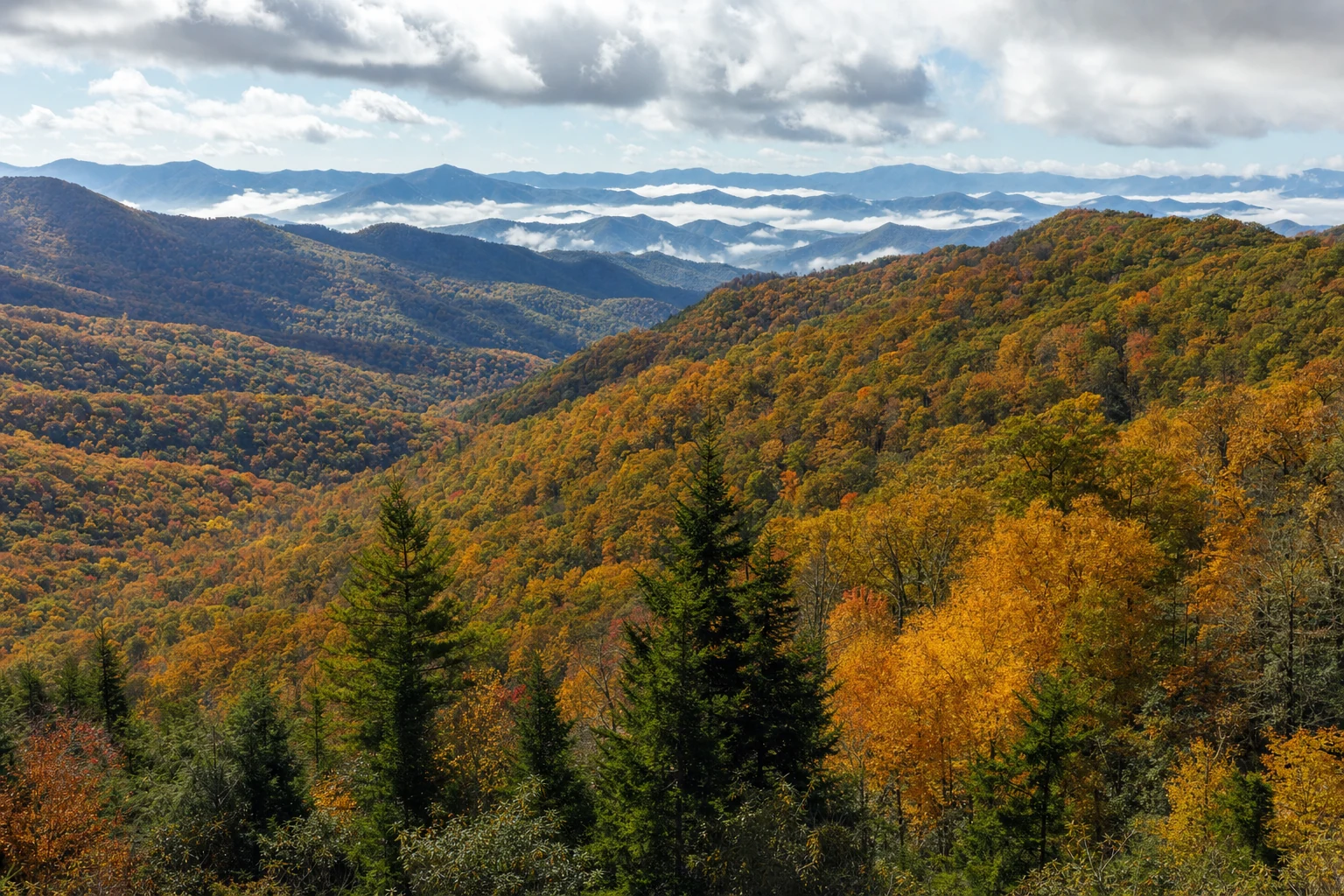

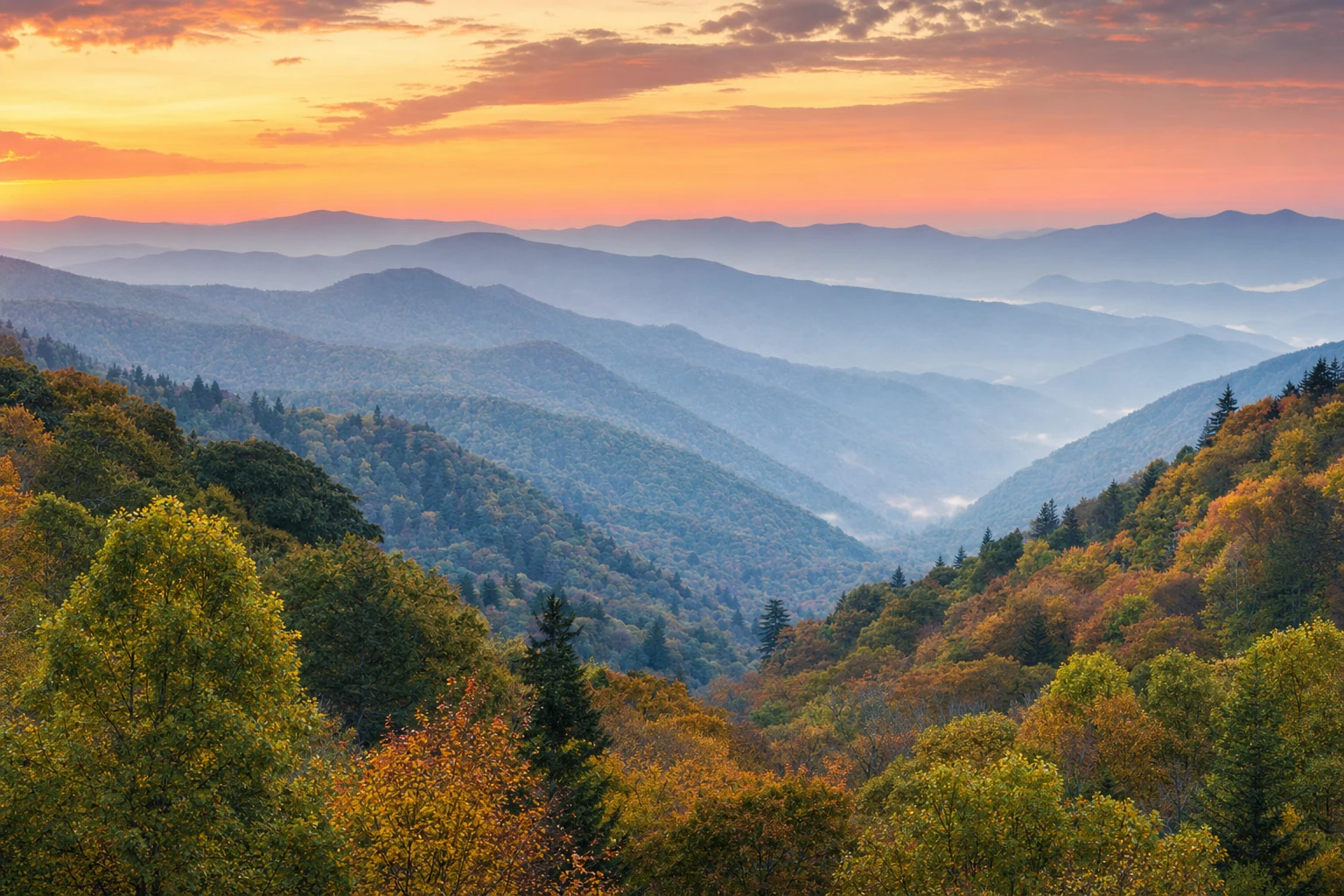
The Great Smoky Mountains are a world-class photography destination precisely because the subject material is dense and varied — layered ridge lines, cloud inversions, old-growth forests, dozens of waterfalls, 1,500 black bears, 200 reintroduced elk, 1,500+ flowering species, 270 bird species, and 200+ preserved historic structures. This is a month-by-month playbook for when and where to aim your camera.
January
Subject: rime ice, leafless ridges, cloud inversions, winter wildlife Where: Newfound Gap, Kuwohi observation tower, Cades Cove at dawn, Foothills Parkway Look Rock Conditions: Cold, clear mornings are the gift — expect 25°F at dawn at Newfound Gap. Rime ice on high-elevation trees common after storm cycles. Gear note: battery drain at cold temps; keep spares warm in inside pocket.
February
Subject: early spring wildflowers (hepatica, trout lily), lingering ice on waterfalls, winter wildlife still Where: Cades Cove, Greenbrier area, Porters Creek lower sections Conditions: Variable — late winter and early spring overlap.
March
Subject: wildflower beginnings, bare-tree wildlife (bears waking, deer active), dogwood buds Where: Cove Hardwood Self-Guiding Trail, Porters Creek, Cataloochee Valley Conditions: Mud season begins. Many dirt roads rough.
April
Subject: PEAK WILDFLOWERS (mid-to-late April), spring wildflower pilgrimage, warbler migration Where: Porters Creek, Cove Hardwood, Chestnut Top, any old homestead clearing Conditions: Overcast days yield best wildflower saturation. Rain likely; embrace it. Gear note: macro lens for details, lens hood for drizzle.
May
Subject: full leaf-out, mountain laurel, rhododendron beginnings, full waterfalls Where: Rainbow Falls, Ramsey Cascades, Grotto Falls, Laurel Falls, Mingo Falls Conditions: Thunderstorm potential rising. Water levels strong from snowmelt.
June
Subject: synchronous fireflies (Elkmont, lottery required), flame azaleas on Gregory Bald, early summer greens Where: Elkmont (with lottery pass), Gregory Bald (strenuous hike), Balsam Mountain Conditions: Long shooting days — sun up by 6 AM, down after 9 PM.
July
Subject: afternoon thunderstorms, high-humidity "smoke," lightning (carefully), wildlife at dawn/dusk Where: Newfound Gap, Kuwohi, Mount LeConte summit, any elevation above 4,500 ft Conditions: Hot and humid in valleys. Mid-day light harsh. Plan dawn/dusk only for best light.
August
Subject: peak Smokies "smoke," thunderstorms, salamander breeding, late wildflowers Where: Morton Overlook, Foothills Parkway, Clingmans/Kuwohi tower Conditions: Heaviest haze of the year. Visibility can be dramatic or obscured.
September
Subject: ELK RUT (mid-to-late month), first high-elevation color, early foliage in upper Blue Ridge Parkway Where: Cataloochee Valley (bulk of rut action), Oconaluftee, Kuwohi area Conditions: Cooler mornings. Some valley mist. Gear note: 500mm lens minimum for elk. Tripod for low dawn light.
October
Subject: PEAK FALL FOLIAGE (see our fall foliage guide), cloud inversions increase Where: Newfound Gap Road, Foothills Parkway, Blue Ridge Parkway MP 411–469, Cades Cove late in the month Conditions: The biggest month. Traffic heavy. Arrive before 8 AM at every popular spot.
November
Subject: late valley foliage, cloud inversions peak, first ice on waterfalls at month's end Where: Cades Cove (late peak), Little River Road, Morton Overlook Conditions: Frost frequent. Short days mean golden hour hits 4:30 PM.
December
Subject: ice, snow (if we get it), low winter light, Christmas lights in Gatlinburg Where: Downtown Gatlinburg for Winter Magic lights, Newfound Gap after any snow event Conditions: Roads close intermittently for ice. Short days.
The classic shots
Layered ridges: Morton Overlook, Newfound Gap, Foothills Parkway Look Rock. Use telephoto (200-400mm) to compress the layers. Dawn or dusk light is everything.
Cloud inversions: Kuwohi at sunrise, Newfound Gap at sunrise, Waterrock Knob (BRP MP 451). Drive up in the dark; shoot the first 30 minutes of light.
Waterfalls: Rainbow Falls, Ramsey Cascades, Grotto Falls (shot from behind the curtain), Mingo Falls, Linville Falls. Use 1/2–2 second exposure for silky water; ND filter helpful on sunny days.
Wildlife: Elk at Cataloochee dawn/dusk (fall rut), bears in Cades Cove dawn/dusk, deer everywhere. Always 300mm minimum, 500mm+ preferred.
Historic structures: Cades Cove cabins and churches (dawn low light, fence shadow lines), Cataloochee Palmer Chapel, Mountain Farm Museum buildings. Wide-angle (16–35mm) for interiors; 50mm for exteriors.
Cades Cove fog: Early-morning fog and mist in the valley floor make the classic "Smoky" shots. Best October-January.
Gear considerations
- Tripod: essential for cloud inversions, waterfalls, low-light forest, long-exposure fall color
- Filters: polarizer (reduces glare on wet rocks and water); ND for long exposures; graduated ND for high-contrast sunrise/sunset
- Lenses: 16–35mm for interiors and night sky, 24–70mm walk-around, 70–200mm for most scenics, 200–500mm for wildlife
- Rain gear: the Smokies are wet. Bring lens cloths, rain cover for camera, dry bag for pack
- Drones: prohibited parkwide. Don't bring one up for aerial photography in GSMNP
Low-impact ethics
- Stay on marked trails. Off-trail scrambling for the "better angle" kills wildflowers and erodes fragile hillsides
- Maintain legal wildlife distance at all times
- Never bait wildlife with food or calls
- No tripods in the middle of overlook pullouts — stay to the side, share the view
- Leave found objects (antlers, feathers, artifacts) where you found them