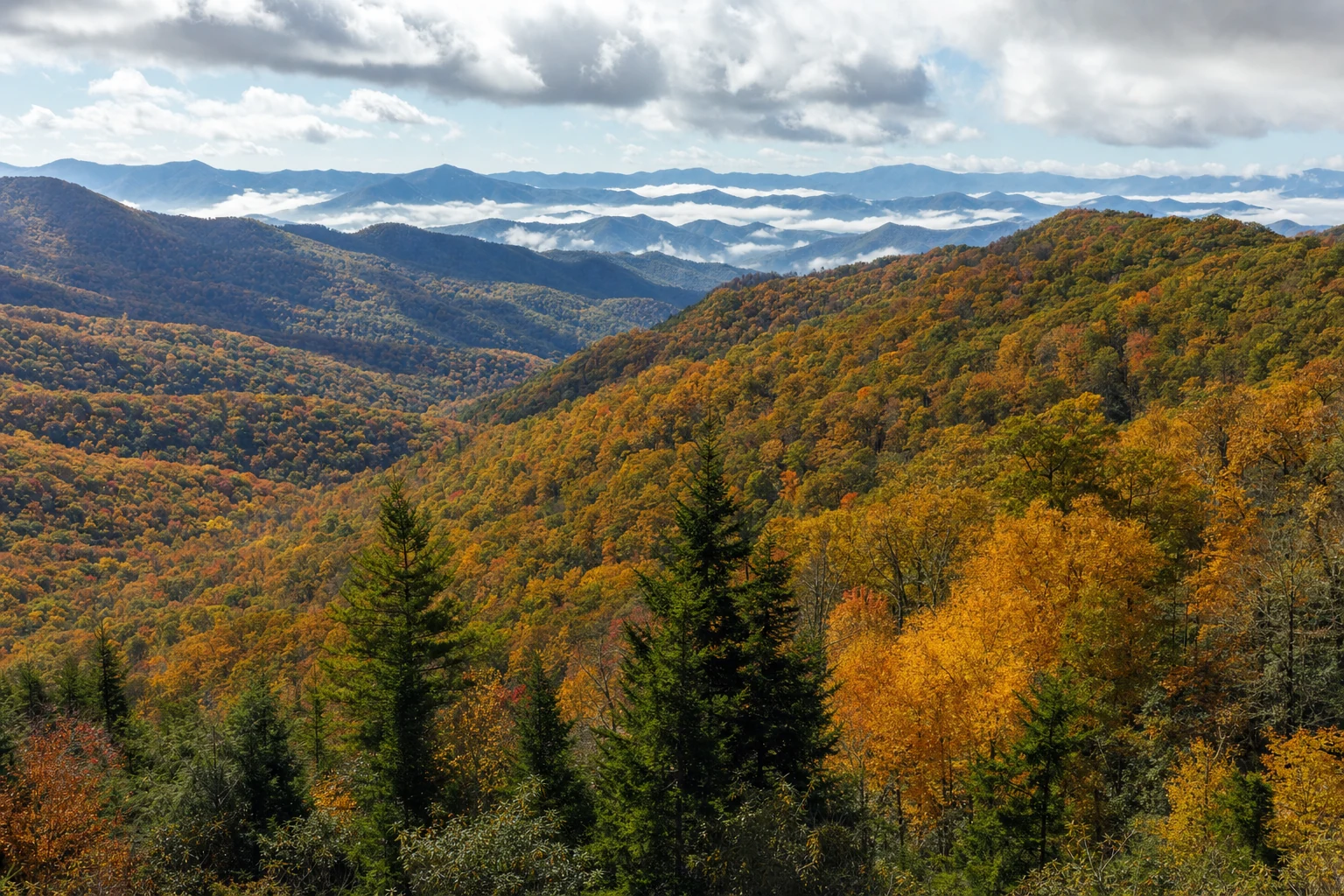

Great Smoky Mountains National Park is internationally recognized as "Wildflower National Park" — over 1,500 flowering plant species across 520,000 acres of elevation-layered habitat. The progression unfolds from late February in the low valleys through late June on the high balds, and the annual Spring Wildflower Pilgrimage (typically late April) is one of the top wildflower events in the United States.
Timing the bloom by elevation
Late February to early April (low elevations, <2,500 ft):
- Hepatica (tiny, pale purple-to-white, blooms on leafless stems)
- Bloodroot (8-petal white, ephemeral)
- Trout lily (yellow, speckled leaves)
- Spring beauty (pink-striped white, often in massive carpets)
- Early cutleaf toothwort, wild geranium beginning
Mid-April to mid-May (mid-elevations, 2,500–4,000 ft):
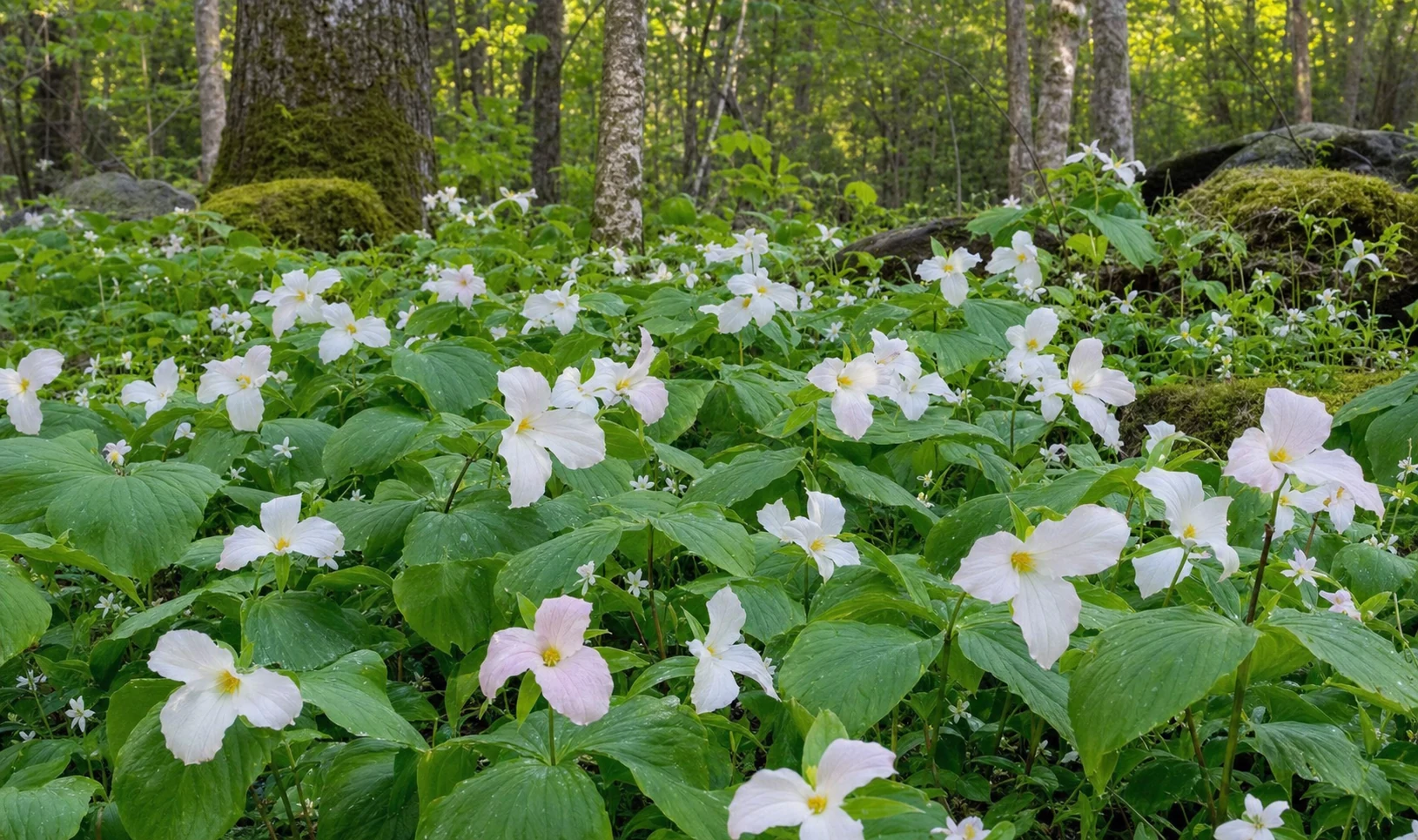
- Large-flowered trillium (the headline act — white 3-petal blossoms carpet entire hillsides)
- Jack-in-the-pulpit
- Painted trillium, yellow trillium, vasey trillium (at least 10 trillium species in the park)
- Dwarf-crested iris, wild ginger, mayapple
- Dutchman's breeches, squirrel corn
Late May to early June (high elevations, >4,000 ft):
- Flame azalea (brilliant orange, see Gregory Bald mid-to-late June for the unmatched display)
- Rhododendron (white catawba, pink), mountain laurel
- Pink turtlehead, Tennessee saxifrage
June (balds, above 5,000 ft):
- Gregory Bald flame azaleas (the best wildflower event in the southern Appalachians)
- Spiderwort, bluets
Best trails for wildflowers
Porters Creek Trail (Greenbrier area, 4 miles round-trip, easy-moderate): the classic wildflower walk in April. Ephemeral beds of spring beauty, trillium, and bloodroot carpet the old homestead clearings. Peak mid-to-late April.
Cove Hardwood Self-Guiding Trail (near Chimneys picnic area, 0.75-mile loop, easy): excellent short walk through old-growth cove hardwood forest with ephemerals and early-April color.
Chestnut Top Trail (Townsend entrance, 8 miles RT but rich color starts in the first mile): 1,000+ wildflowers identified here by park botanists.
Gregory Bald (11 miles RT from Twentymile, strenuous): the flame azalea destination. Peak mid-June to first week of July.
Bullhead Trail and Alum Cave Trail: good mid-elevation spring color paths into the Mt. LeConte zone.
The Spring Wildflower Pilgrimage
The 5-day Spring Wildflower Pilgrimage runs annually the last week of April, typically Tuesday through Saturday. It includes:
- Over 150 guided hikes at every difficulty level
- Evening lectures by park botanists and ecologists
- Trail visits with experts who identify plants as you walk
- A marketplace of wildflower-focused vendors and books
It's organized by the Great Smoky Mountains Association (register via smokiesinformation.org) and draws 900+ attendees. Register in mid-February; popular hikes sell out. Base in Gatlinburg or Townsend — the pilgrimage uses both sides.
Quick identification for the top 10 species
1. Large-flowered trillium: 3 white petals (turn pink as they age), 3-whorled leaves, 12–18" tall, in moist woods 2. Bloodroot: single white 8-petal flower on a leafless stem, lobed leaf, stem bleeds red-orange sap when broken 3. Spring beauty: pink-striped white 5-petal flower, in low mats, often covers old cabin sites 4. Trout lily: 6-petal recurved yellow flower, mottled green-and-brown leaves, often 1-flower-per-2-leaves 5. Dwarf-crested iris: tiny (4–8") blue-purple iris with yellow-and-white crest on falls 6. Jack-in-the-pulpit: striped green-and-purple hood ("pulpit") over a flower spike ("Jack"), 3 leaflets 7. Mayapple: single umbrella-like leaf, single white flower tucked beneath, apple-sized green fruit in summer 8. Dutchman's breeches: white inflated blossoms that look like tiny upside-down pants, ferny leaves 9. Flame azalea: orange-to-red tubular flowers, shrub form, peak on balds in June 10. Rhododendron: evergreen shrub, pink or white clustered flowers, peaks late May at mid elevations
What affects the bloom
- Warm spring with mild nights advances the peak by a week or more
- Cold spring with late frost sets back or shortens the bloom
- Drought shortens flower life; wet spring extends it
- Check NPS updates on nps.gov/grsm the week of your visit for current bloom status
Responsible wildflower viewing
Stay on the trail. Wildflower poaching is a real problem in the park — in 2023, park biologists documented dozens of unauthorized digs of rare plants. Photograph but do not pick, and never dig. Bloodroot, goldenseal, and ginseng are particularly targeted and protected. Report suspicious activity to a ranger.