
About Smoky Mountain Outdoor Center (SMOC)
Sevierville sits just outside the national park boundary, which gives it an unusual position in the Smokies region: close enough to be a practical base for park-oriented activity, yet developed enough to support the kind of infrastructure an outdoor outfitter needs to run smoothly. Smoky Mountain Outdoor Center (SMOC) operates here, offering guided outdoor experiences shaped by the rivers and terrain that run through this part of East Tennessee and directly into the park itself.
The Setting and What It Makes Possible
The geography around Sevierville suits outdoor adventure well. Rivers in this watershed carry volume from the park's high-elevation rainfall, and conditions shift meaningfully by season. Spring tends to bring the most consistent water flow; late summer can see shallower stretches depending on how much rain the high country has received. For guided water activities, that variation matters, and a serious outfitter accounts for it in what they schedule and when.
The national park adds a layer of context worth understanding before you book. GSMNP draws roughly 12 million visitors per year, more than any other unit in the national park system, and Sevierville functions as one of the primary staging towns for people approaching from the Tennessee side. That volume drives demand for guided outdoor experiences across the board. It also means that booking ahead at SMOC isn't optional during peak periods — particularly in summer and during fall color season, when every operation in the region runs at capacity.
What to Expect from a Guided Outdoor Operation
Adventure outfitters in the Smokies work from a mix of water-based and land-based activities, structured around what the local terrain makes accessible. The specific lineup at SMOC, including current pricing and seasonal scheduling, should be confirmed directly before your trip; the details shift with conditions and time of year. What stays consistent is the fundamental format: guided means someone who knows the river, the trail, and the safety requirements runs the day alongside you rather than simply pointing you toward the put-in.
For outdoor beginners and families, that structure carries real value. The Smokies terrain can transition from accessible to technically demanding without much warning, and working with a guide shifts your focus from managing uncertainty to experiencing the activity itself. Even visitors who've done similar trips elsewhere often find value in the guided format here, since local outfitters typically access terrain and water that isn't easily reached independently.
Timing Your Visit
Spring is the high-water season. Rainfall and snowmelt from the park's upper elevations push volumes up through April and into May, which is generally the strongest window for water-based activities. Summer brings the region's heaviest overall visitation, so expect SMOC to run at full capacity from Memorial Day through Labor Day. Booking at least a week in advance during these months is standard; waiting until the night before on a summer weekend often means nothing available.
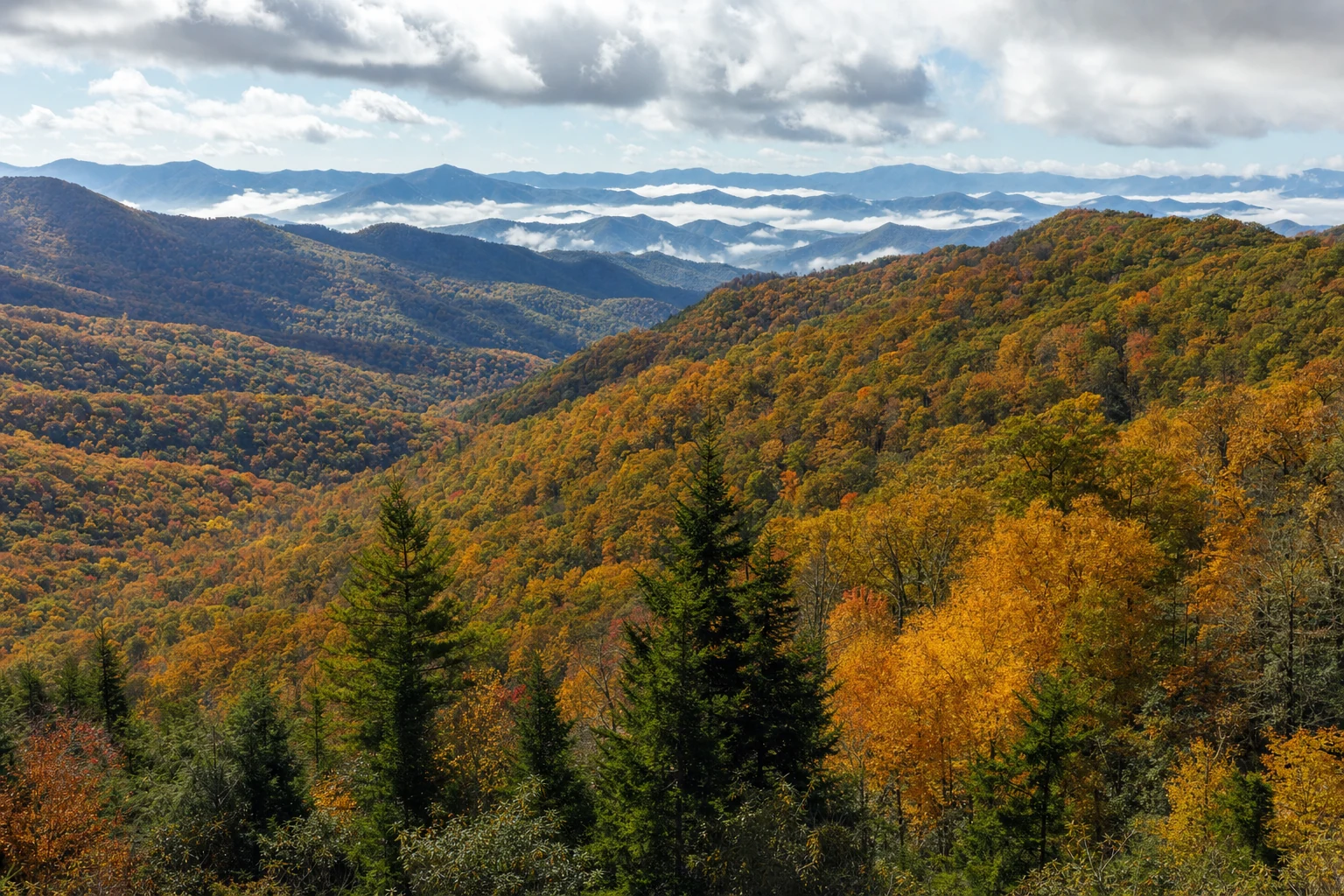
Fall draws its own crowd, driven by the park's leaf color, which typically peaks from mid-October through early November at the lower elevations, earlier in the high country. Fall activity across the Smokies tends to skew toward hiking and land-based experiences as water levels drop, though conditions vary year to year. Winter is genuinely quieter and sometimes underestimated as a travel window; crowds fall sharply after Thanksgiving, the park stays open, and the terrain reads differently with bare canopy and the occasional snow at elevation. Some outfitters trim their seasonal lineup in winter, so check what SMOC is running if you're planning an off-season visit.
Getting There
From Interstate 40, take the Sevierville exits and follow US-66 south into town. Sevierville connects directly to Gatlinburg via US-441, which also serves as the primary approach to the national park's Sugarlands Visitor Center. Most visitors flying in arrive through Knoxville's McGhee Tyson Airport, roughly 30 miles to the west.
Traffic on the US-441 corridor between Sevierville, Pigeon Forge, and Gatlinburg builds fast on weekend mornings during peak season. If you have an early start time at SMOC, leave extra buffer in your travel plan; this stretch can be backed up by mid-morning on busy days, and it catches visitors off guard if they're used to rural driving times.
Before You Go
Book online or call ahead to confirm your slot, what to bring, and any requirements specific to the activity. Guided outdoor operations in this region typically supply safety equipment, but the details around footwear, layering, and personal items vary by activity and season. If water is involved, dress for getting wet regardless of how the air temperature feels when you leave your accommodation; rivers in the Smokies run cold well into summer.
If you're planning time inside the national park after your SMOC visit, check the current status of GSMNP's parking reservation system before you leave Sevierville. The park has expanded timed-entry requirements and Park-It-Forward parking tags at popular trailheads in recent years, and arriving without a reservation at peak sites means getting turned away. Confirming that part of your day takes five minutes and saves a frustrating detour.