
About Mountain Laurel Chalets
Mountain Laurel Chalets has been renting cabins and chalets in Gatlinburg longer than most of its competitors have existed. The company manages 150-plus properties, concentrated in the hills above downtown, and is particularly well-represented in Chalet Village, the elevated residential community with long sight lines toward the mountains. For travelers who want a fixed address in Gatlinburg rather than a hotel room, this is one of the most established options available.
The Properties
Mountain Laurel Chalets focuses on what the company's name actually says: chalets. These aren't the log-and-hot-tub units that dominate much of Pigeon Forge's rental market. Many of the properties lean toward a classic mountain chalet aesthetic, which in practice means A-frame construction, wood-heavy interiors, and layouts oriented toward the views rather than toward entertainment amenities. That said, with 150-plus properties in the inventory, there's a real range in size, age, and overall configuration.
The portfolio skews toward couples and small families rather than large groups. Properties that sleep eight or ten do exist, but the overall character of the collection is smaller and more intimate than what you'll find at the big multi-location rental operators elsewhere in the region. If you're shopping for a unit that fits sixteen people with a game room and a theater, this probably isn't the right catalog. If you want a chalet that feels like someone actually lives there, it's worth looking here first.
Chalet Village and What That Location Actually Means
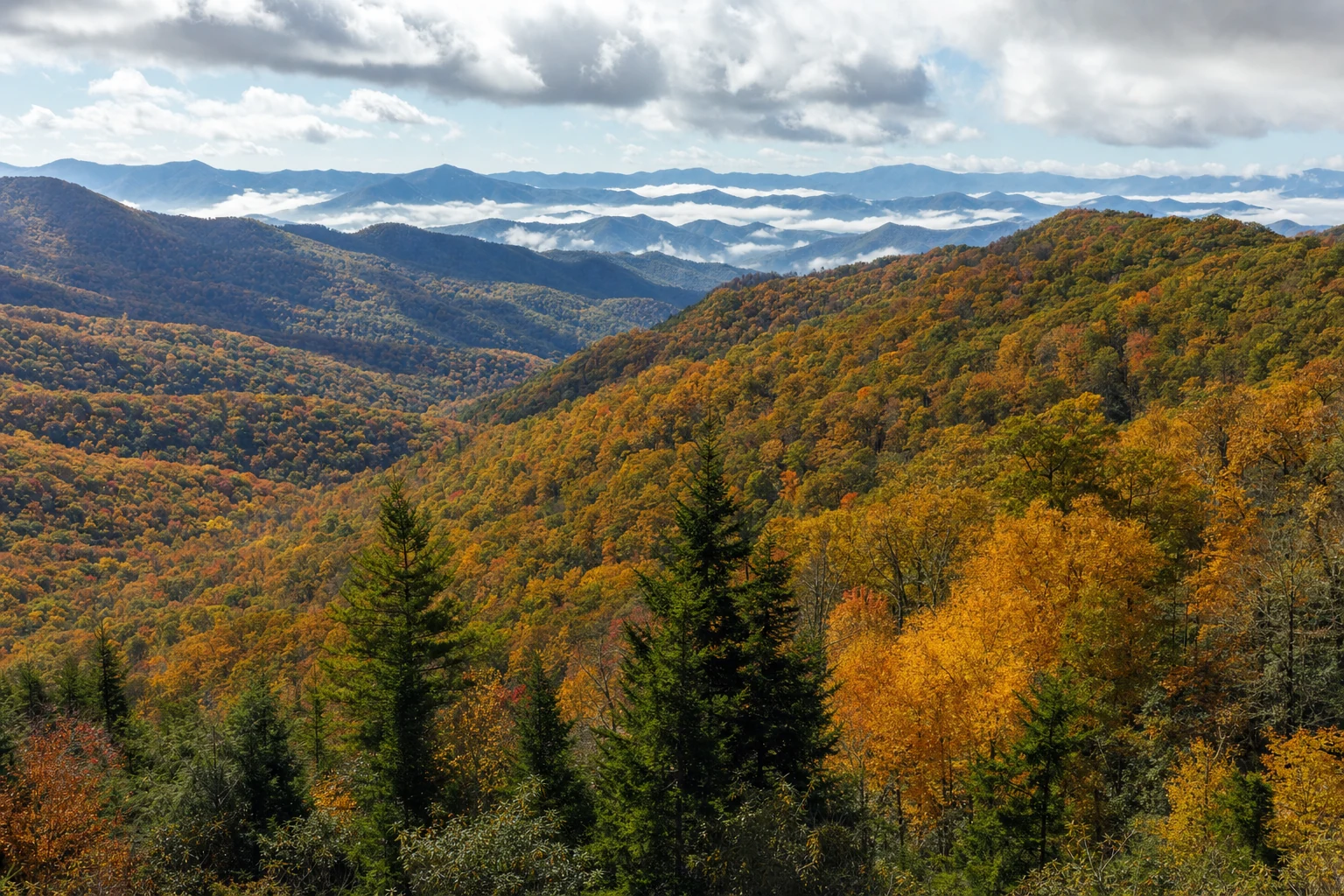
Many Mountain Laurel Chalets properties sit within or immediately adjacent to Chalet Village, a residential community built up on the ridgelines above downtown Gatlinburg. The elevation matters for two reasons. First, the views: on a clear day you can see across the town and well into the mountains in a way that flat-ground or treeline-blocked properties simply can't offer. Second, Chalet Village has its own community amenities, including clubhouses, pools, and tennis courts, that some Mountain Laurel properties have access to. It functions partly as a neighborhood, partly as a resort, and the mix gives it a character that newer purpose-built rental communities lack.
The trade-off is the road. Getting in and out of the elevated sections of Gatlinburg requires driving steep, winding residential streets. That's manageable in a standard car under good conditions; it becomes worth thinking through if you're arriving in winter, if anyone in your group finds mountain driving stressful, or if you're planning to walk to downtown for dinner each night. From the upper sections of Chalet Village, the walk to the Parkway is neither short nor flat.
How This Company Differs From the Competition
Gatlinburg's cabin rental market has been thoroughly colonized by multi-region conglomerates in the past decade. Mountain Laurel Chalets operates differently: it's a local company, focused on one area, with a roster of properties that have been maintained and improved over many years rather than units built to a spec sheet. The character that comes from that history is real. Properties here tend to have personality, imperfect quirks, and a sense of place that newer vacation-rental-shaped boxes don't.
The company is also small enough to operate with something closer to actual customer service. At 150-plus properties, it's large enough to offer genuine selection across sizes and price points; it's small enough that it's still a focused local operation rather than a national brand routing calls through a distant center. Whether that matters depends on how much you expect to interact with the property manager, but it's worth knowing if you've had frustrating experiences with the larger platforms.
Practical Booking Advice
The company's website, mountainlaurelchalets.com, lists properties individually with availability calendars. Browsing by specific unit rather than by broad category is the better approach, since the Chalet Village properties vary considerably in their view quality, road access, and proximity to amenities. If views are the main draw, filter for those properties specifically and read the individual listings carefully.
Gatlinburg's peak season runs from late spring through early fall, then spikes again during fall foliage; mid-October is the busiest single week most years. During peak summer weekends, the main Parkway can back up badly. Hillside properties with their own outdoor space and less daily reason to drive down to the strip can actually become easier to use in those conditions than properties closer to the commercial center. The relative isolation of a chalet turns into an advantage when traffic below is backed up for a mile.
Winter stays are worth considering if you're flexible. Crowds drop sharply after Christmas, nightly rates fall, and the views from elevated properties get considerably longer once the hardwood leaves are gone. The steep access roads in Chalet Village can ice in January and February; check road conditions before arriving and confirm with the company whether the specific property you're booking has any access issues in cold weather.
Getting There
Gatlinburg has no commercial airport. The standard approach is McGhee Tyson Airport outside Knoxville, followed by a 45-minute drive southeast on US-441 through Sevierville and Pigeon Forge. The Pigeon Forge stretch is heavily commercial and frequently congested; build in extra time on weekends and never assume you'll make good time through it. Once in Gatlinburg, the main park entrance at the Sugarlands Visitor Center is under two miles south of the main strip.
If you're staying in Chalet Village or any of the elevated neighborhoods, a car is non-negotiable for the duration of your trip. Gas up before arriving; prices inside Gatlinburg run higher than the surrounding towns, and the national park itself has no gas stations anywhere along its road network.