
About Smoky Mountain Lodging
For travelers who want more than a hotel room but aren't ready to sort through thousands of individual listings on a vacation rental platform, a regional cabin company like Smoky Mountain Lodging offers a practical alternative. Based in Gatlinburg, the company manages 60-plus cabins and chalets across both Gatlinburg and Pigeon Forge, with properties positioned around mountain views and genuine separation from neighboring units rather than dense resort-row proximity. That combination of curated inventory and local operation is what regional rental companies have over the big platforms: not always lower prices, but a narrower, more intentional selection.
What Smoky Mountain Lodging Offers
The catalog tilts toward cabins and chalets rather than condos or resort rooms. The emphasis, per the company's own description, is on well-maintained properties with good sightlines into the surrounding hills and enough distance from adjacent properties to make the stay feel private. Sixty-plus units spread across two towns gives a reasonable spread of options by size and location, though specific availability depends on your travel dates and how far in advance you book.
Booking through a company that manages its own inventory, rather than a peer-to-peer marketplace, has one practical benefit: a single point of contact for any issues that come up mid-stay. You're not dealing with an individual property owner who may or may not be reachable; there's an actual management company on the other end.
Gatlinburg vs. Pigeon Forge
Smoky Mountain Lodging operates across both towns, and the choice matters more than most visitors realize before arrival.
Gatlinburg sits immediately outside the Sugarlands entrance to Great Smoky Mountains National Park. If early morning trail access is the priority, this is the right call. You can be inside the park before 8 a.m. without fighting significant traffic, and during peak season that matters: parking lots at high-demand trailheads fill by mid-morning, so early access is not a minor detail. The town itself is compact and walkable, with restaurants, distilleries, and several attractions that keep people occupied when they're not in the park.
Pigeon Forge runs louder and more commercially. Dollywood anchors the strip, but go-kart tracks, dinner shows, outlet shopping, and chain restaurants fill in the miles between it and Sevierville. Families with younger kids who need variety beyond hiking often land here for exactly this reason. The tradeoff is that getting into the park from Pigeon Forge adds time and traffic, particularly on summer weekends when US-441 backs up considerably.
Cabins in either town can deliver on views and privacy. The practical question is how central park access is to your trip versus how much you'll use the surrounding commercial corridor.
Views and Privacy: What This Actually Means
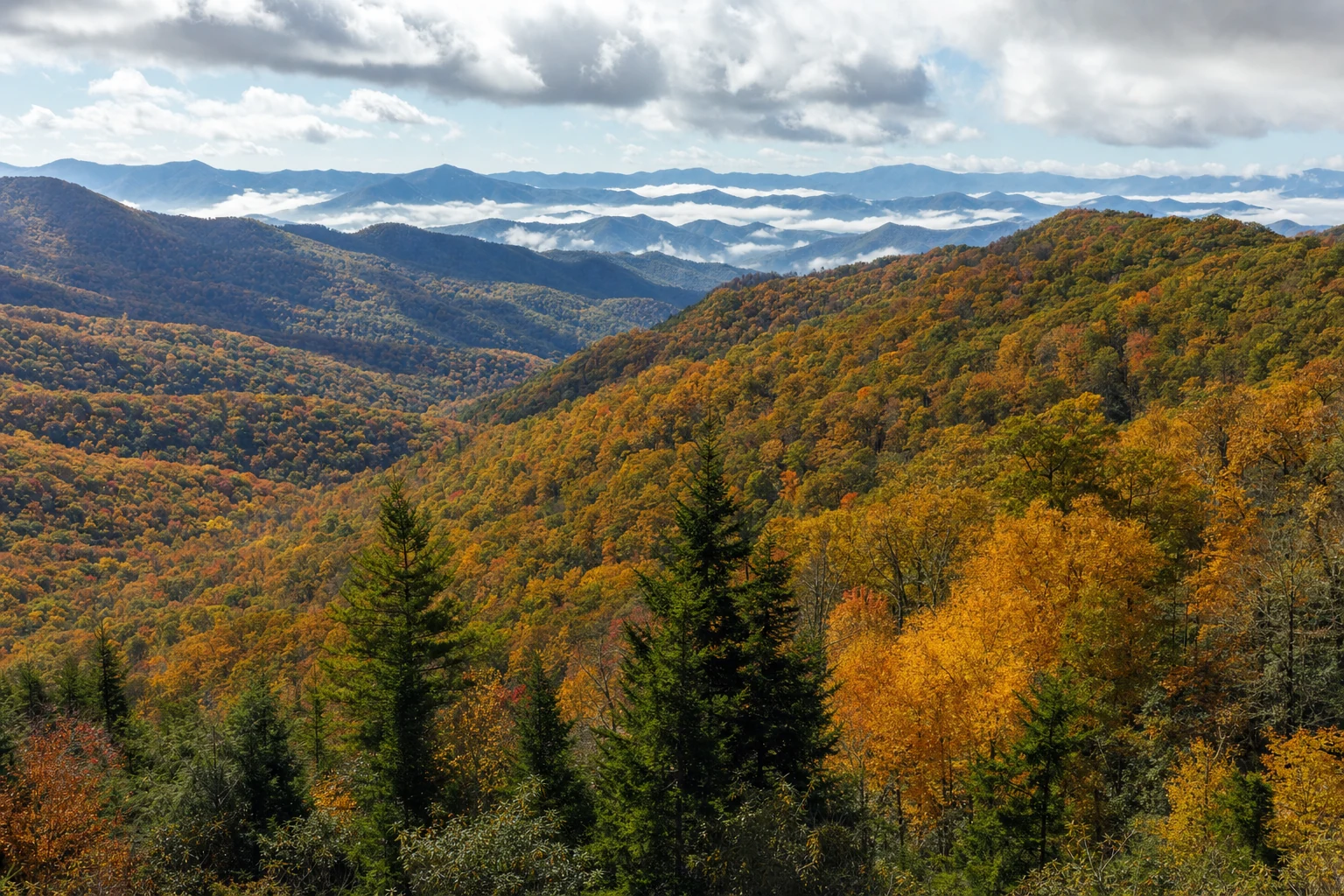
The defining characteristic Smoky Mountain Lodging leans into is the combination of mountain views and seclusion. In this region, that typically means cabins positioned on hillside lots where the deck looks out over forested ridges rather than another building's roofline. The terrain is steep enough that even properties a short drive from downtown Gatlinburg can feel genuinely removed from the noise below.
What "privacy" looks like in practice varies by property. Some cabins sit on heavily wooded lots where neighboring units aren't visible; others offer separation but not isolation. Reviewing property photos and requesting information about lot configuration before booking gives you a clearer picture than listings typically provide on their own. If seclusion is the priority, ask directly rather than assuming the photos tell the full story.
When to Go and How Far Ahead to Book
Two seasons drive the heaviest demand: fall foliage, running roughly mid-October through early November, and summer, particularly July and the Fourth of July window. Spring wildflower season has also grown significantly as a travel period in recent years, with mid-March through April drawing real crowds to the park. Booking well in advance for any of these windows is not optional; the difference between booking early and booking late is often the difference between a solid selection of properties and whatever's left.
January and February offer the lightest crowds and the most competitive pricing. Snow at elevation is common, several high-elevation roads close during winter weather, and the park operates under reduced services in some areas. A cabin with mountain views during a January cold snap is a legitimately different trip from a summer visit, and worth considering if your dates are flexible.
Getting Around
Cabins in this area require a car. The terrain is hilly, distances between attractions vary, and public transit options are minimal. Plan for driving as the primary mode throughout the stay.
The parking situation inside GSMNP has become meaningfully more constrained in recent years. High-demand trailheads such as Alum Cave and Laurel Falls fill early on peak days, and the park has introduced reservation requirements for certain areas and time windows. Checking current conditions on the National Park Service website before your trip is the kind of step that saves a frustrating morning of arriving at a full lot with no clear alternative.
Pairing Your Stay with the Region
A cabin near Gatlinburg works well as a hub for multi-day park exploration. Clingmans Dome, the Alum Cave Trail, Abrams Falls, and the Roaring Fork Motor Nature Trail all sit within a short drive, and the loop roads inside the park work best when you can time your arrival for early morning before the midday rush on Cades Cove or the Newfound Gap corridor.
Outside the park, Gatlinburg's craft distilleries offer a quieter afternoon when you've had enough of the trails. On the North Carolina side, Cherokee is about an hour from Gatlinburg via Newfound Gap Road through the park; the Museum of the Cherokee Indian and the surrounding town give you a full day of options in a different direction entirely.
Pigeon Forge stays pair naturally with Dollywood and the commercial strip, but a short drive out to Wears Valley drops the pace considerably and opens access to the park's western reaches with far less congestion than the main Gatlinburg corridor.