
The Smokies charge no entrance fee, which already puts budget travelers ahead of nearly every major national park in the country. The one cost to solve upfront is the Park-It-Forward parking tag: a 7-day pass runs $15, while four individual day tags at $5 each would cost $20. Buy the weekly pass at the entrance kiosk first thing and you're $5 ahead before you've hiked a single step.
Day 1: Cades Cove Loop and Camp Setup
Drive straight to Cades Cove after buying your parking tag. The 11-mile one-way loop takes anywhere from ninety minutes to three hours depending on wildlife sightings and how long you linger at the historic structures. The Becky Cable House and Carter Shields Cabin are both roadside stops; neither requires more than a short walk from the car. The working Cable Mill ground corn for Cades Cove settlers well into the 20th century, and rangers sometimes demonstrate the millstone operation on weekends. On Wednesday and Saturday mornings during the summer season, the road closes to vehicles before 10 a.m. and opens only to cyclists and walkers—if your schedule allows, that's worth planning around.
Camp at Cades Cove Campground, one of the more affordable in-park sites. If you arrive with daylight to spare, the Gatlinburg Trail runs 3.8 miles from the Sugarlands Visitor Center along the West Prong of the Little Pigeon River; it's flat, it's free, and it puts you inside the park without requiring another drive. Cook your own food tonight; every dollar saved on dinner funds another day of hiking.
Day 2: Newfound Gap Road and Andrews Bald
Leave camp before 8 a.m. and drive Newfound Gap Road (US-441) toward the state line. Pull off at Campbell Overlook on the Tennessee side for a wide view of the Sugarland Mountains without any hiking required. Newfound Gap itself sits at 5,046 feet and marks where the Appalachian Trail crosses the road.
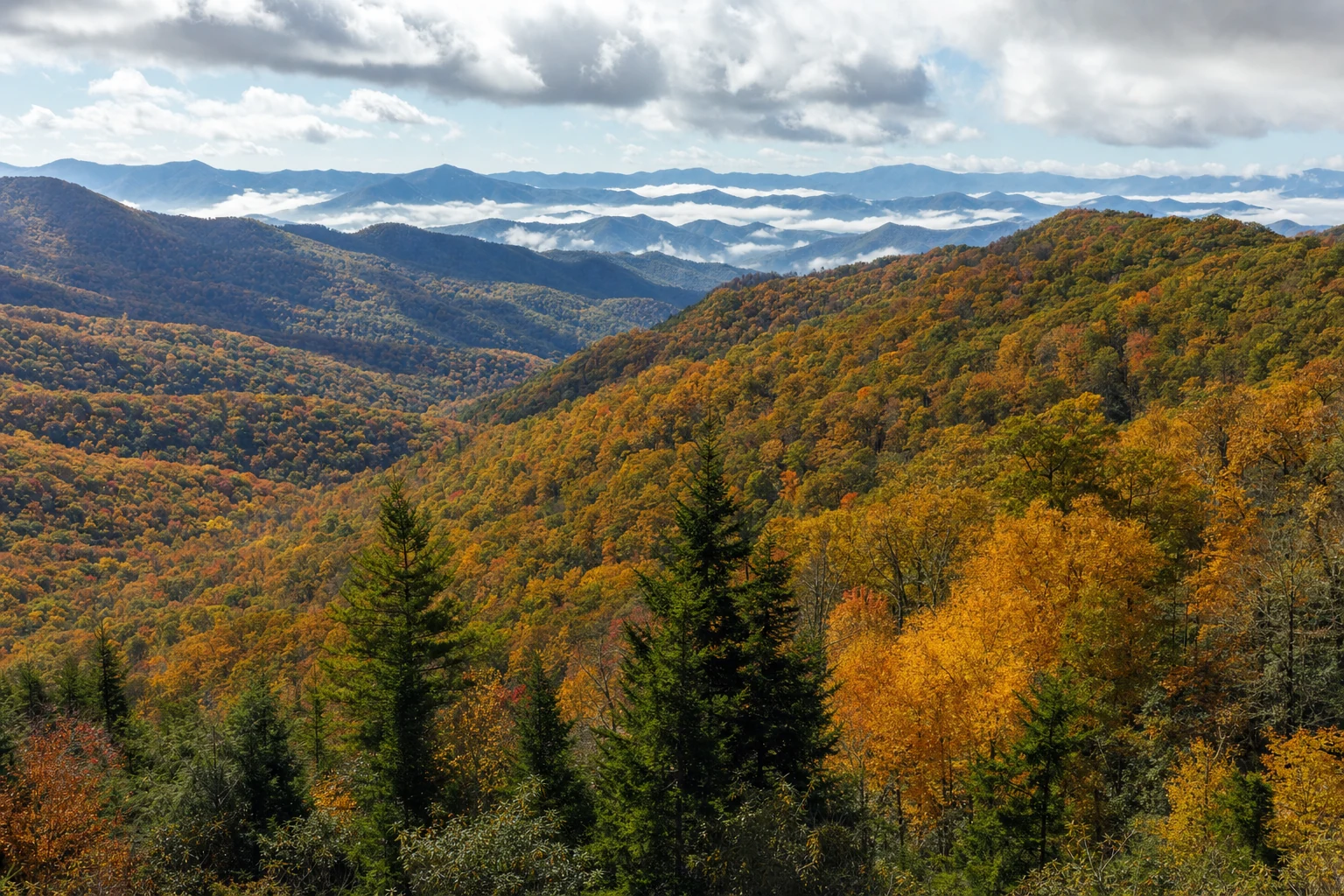
From the gap, take the spur road up to Kuwohi (Clingmans Dome), the park's highest point at 6,643 feet. The road is free with your parking tag. From the summit parking area, the Andrews Bald Trail runs 1.8 miles out to the park's highest grassy bald via the Forney Ridge Trail, a moderate walk that most hikers finish in under two hours round-trip. At the bald, the treeline drops away and you're standing in open sky looking west into Tennessee and east into North Carolina. It's one of the few places in the eastern park where that happens, and it costs nothing beyond the tag you've already paid for.
Pack a lunch. Donut Friar ($) in Gatlinburg is an inexpensive stop for pastries the night before; they travel well as trail food.
On the way back, stop at Chimney Tops Overlook, a roadside pull-off with a direct view of the rocky peaks that burned in the 2016 fire and have been slowly recovering since. Move camp to Elkmont Campground, closer to the Gatlinburg entrance, for Day 3.
Day 3: Two Waterfalls and the Roaring Fork Loop
Laurel Falls is the most visited waterfall in the park. Get there before 9 a.m. to find parking. The paved trail runs 1.3 miles to an 80-foot cascade that drops in two distinct tiers; the path gets busy by mid-morning. From Elkmont, the Grotto Falls Trail (Trillium Gap Trail) covers 2.6 miles through dense hemlock forest to a cascade you can walk behind. Allow three hours for both waterfalls combined, including the drive between trailheads.
Afternoon: the Roaring Fork Motor Nature Trail loops through second-growth forest above Gatlinburg and passes several historic structures, including the Alfred Reagan Place, a well-preserved homestead with an original tub mill on the grounds. The loop runs about four miles of narrow one-way pavement; pull over whenever the canopy opens. Free with your parking tag.
For dinner, Bennett's Pit Bar-B-Que ($$) in Gatlinburg is a fair mid-budget choice. Coffee & Company ($) handles a lighter evening meal if you're keeping the day's spend minimal.
Day 4: Cosby, Hen Wallow Falls, and the Drive Out
Cosby is the quietest major entry point to the park. The Hen Wallow Falls Trail covers 4.4 miles round-trip to a 90-foot waterfall that spreads wide across the rock face at its base. Give it three hours. The difference in crowd levels compared to the Gatlinburg side is noticeable even on summer weekends.
Before leaving the region, the Museum of the Cherokee People in Cherokee, NC charges a modest admission but covers 11,000 years of history in a way few roadside stops come close to. It's worth the hour on the way home.
Four days here, with tent camping at in-park sites, self-catered meals, and one $15 parking tag, comes in well under $50 per person per day for most travelers. The park entrance is permanently free. That's the actual math.