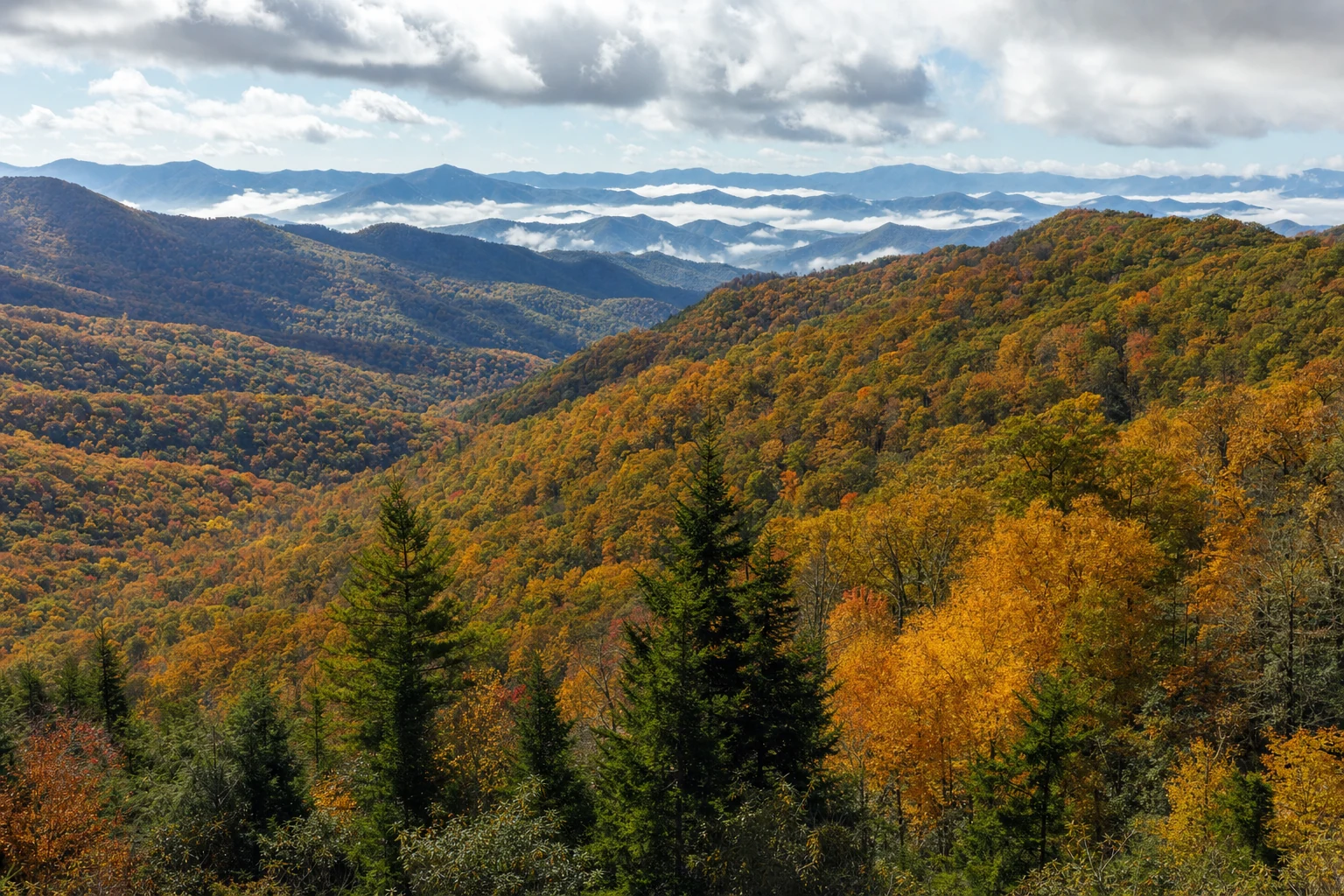

Great Smoky Mountains National Park draws more annual visitors than any other unit in the national park system, somewhere north of 12 million a year. That volume shows up in parking lots and trailheads if you don't plan around it. A little preparation changes the whole experience.
Pick Your Base Town First
The two main Tennessee-side gateways are Gatlinburg and Pigeon Forge, five miles apart on US-441. Gatlinburg is walkable and older, sitting directly at the park's main entrance near Sugarlands Visitor Center. Pigeon Forge runs along a commercial strip with more hotel inventory at lower prices; it's the better choice if Dollywood is part of the trip. Cosby, at the park's eastern Tennessee corner, is quieter and the right base if you're specifically targeting the Cosby or Big Creek trailheads. Cherokee, NC sits at the park's southern entrance and makes sense for a one-way drive over Newfound Gap Road, or if the Museum of the Cherokee People or Oconaluftee Indian Village are priorities.
For a first visit with no specific anchors, choose Gatlinburg. You can walk from your hotel to the park entrance.
When to Go
Fall color peaks mid-October through early November and is worth the trip, but it's also the park's most congested window. Expect full trailhead lots by 9 a.m. on weekends.
Spring is the underrated season. Wildflowers run from late March through early May depending on elevation, crowds are lighter, and temperatures at higher elevations are comfortable for hiking. Summer means reliable weather but heat in the valleys; heading to Alum Cave Trail or Andrews Bald gets you above most of it. Winter sees the fewest visitors by far, and Newfound Gap Road on a clear snowy day is a genuinely good drive. Check road conditions before going up; it closes when icy.
The Park-It-Forward Tag
The park doesn't charge an entrance fee, but a Park-It-Forward hang tag is required at most high-use trailheads. Buy one at the Sugarlands or Oconaluftee visitor centers, entrance kiosks, or through the park's website. The daily rate is $5, the weekly rate is $15, and an annual tag runs $40. Get it the moment you arrive.
Day 1: Learn the Park's Spine
Start at Sugarlands Visitor Center inside the Tennessee entrance. Pick up a paper map; cell service disappears quickly once you're deep in the park. Drive Newfound Gap Road toward the state line, stopping at the Chimney Tops Overlook on the Tennessee side for an open ridge view, then continue to Newfound Gap at 5,046 feet on the Tennessee-North Carolina line.
For an easy afternoon hike near Sugarlands, the Cove Hardwood Nature Trail is 0.75 miles through old-growth forest and takes under 30 minutes. It's a good way to calibrate your trail legs before the days ahead.
Dinner: Calhoun's in Gatlinburg is reliable, with solid BBQ and a full bar. Arrive before 6 p.m. on weekdays or expect a wait.
Day 2: Cades Cove and Abrams Falls
Drive to Cades Cove early. The gate opens at sunrise and the main lot fills by 9 a.m. on weekends. The 11-mile one-way loop road circles an open valley that was a farming community until the 1940s; white-tailed deer are common in the meadows at dawn, and black bears appear often enough that you should watch the tree line. The Cable Mill Historic Area at mid-loop and the Carter Shields Cabin near the end are worth stopping at.
From Cades Cove, the Abrams Falls Trail is a 5-mile out-and-back to a waterfall with a wide, deep pool. It's rated moderate; the last stretch to the base of the falls is rocky and gets slippery in wet conditions. Plan two to three hours round trip.
Lunch: Crockett's Breakfast Camp in Gatlinburg serves through midday and is one of the better-value meals near the park entrance.
If energy holds in the afternoon, the Grotto Falls Trail off Roaring Fork Motor Nature Trail is 2.6 miles round trip and passes behind the falls. The trailhead lot fills fast; early afternoon, after the morning wave clears, is your best shot.
Day 3: Go High or Go Deep
For a strenuous hike with real payoff, Alum Cave Trail covers 5 miles out and back with significant elevation gain; the rock formations in the first two miles are worth the effort even if you turn back at Alum Cave Bluffs. Chimney Tops Trail at 3.6 miles ends with an exposed rocky scramble that produces the clearest views from any day hike on the Tennessee side.
If you'd rather drive, head to Kuwohi (Clingmans Dome) at 6,643 feet. The paved half-mile ramp to the observation tower is steep and the altitude is real. On a clear morning, the view extends well past the park's ridgelines in every direction.
Before leaving, Bennett's Pit Bar-B-Que in Gatlinburg is the right call for a final meal. The chopped pork is consistently good, and no reservation is needed.
Five Things Every First-Timer Should Do
Drive Newfound Gap Road end to end at least once, just to understand the park's geography. Walk to at least one waterfall; Laurel Falls on the Fighting Creek Gap trail is a 1.3-mile paved walk and the most accessible in the park. Get to Cades Cove before 8 a.m. one morning. Ask a ranger at either visitor center what's worth seeing this week specifically; they'll know what's blooming, where bears have been active, and which trailheads are backed up. Eat at least one meal away from the Gatlinburg Parkway strip.
Common First-Timer Mistakes
The most common is pulling into a major trailhead after 9 a.m. on a fall Saturday and expecting a spot. Skipping the Park-It-Forward tag is a close second; citations at park trailheads are real. Underestimating the temperature gap between valley and ridge catches a lot of people; it can be 15 to 20 degrees cooler and actively raining at Newfound Gap when Gatlinburg is warm and sunny, and the change happens fast. Packing Cades Cove, Clingmans Dome, and a long hike into one day is a reliable path to an incomplete, exhausting trip. And hiking above 4,000 feet on wet trail in street sneakers is how most people turn an ankle.