
The Smokies have a way of making two days feel like a genuine reset. This itinerary keeps things deliberately slow — a secluded cabin as home base, one well-chosen waterfall, a fine dinner worth dressing up for, and enough open road to watch the ridges change color at dusk. Three days gives you the right amount of time to see the mountains properly without turning the whole thing into a checklist.
Day 1: Arrive, Unwind, and Open a Bottle
Plan to check in by 3 p.m. Private cabin rentals throughout the Gatlinburg and Wears Valley corridor run the full range from basic to fully outfitted; book one with a hot tub and a deck view if the budget allows. Resist the urge to immediately drive back into town — this is the one afternoon you have to actually stop moving.
By late afternoon, head to Pigeon Forge for a tasting at Old Forge Distillery. They produce Tennessee whiskey on-site, and the tasting room is small enough to feel like a real conversation with the people pouring. Pick up a bottle to take back to the cabin.
For dinner, hold a reservation at Chesapeake's Seafood and Raw Bar in Gatlinburg. It sits at the $$$ tier and earns it — the menu leans toward fresh fish and shellfish, the room stays calm, and the food is clearly the main event rather than an afterthought. Book ahead; it fills up on weekends.
Return to the cabin, sit on the deck, and go to bed early. Tomorrow starts before sunrise.
Day 2: Sunrise, the Park, and the Best Meal of the Trip
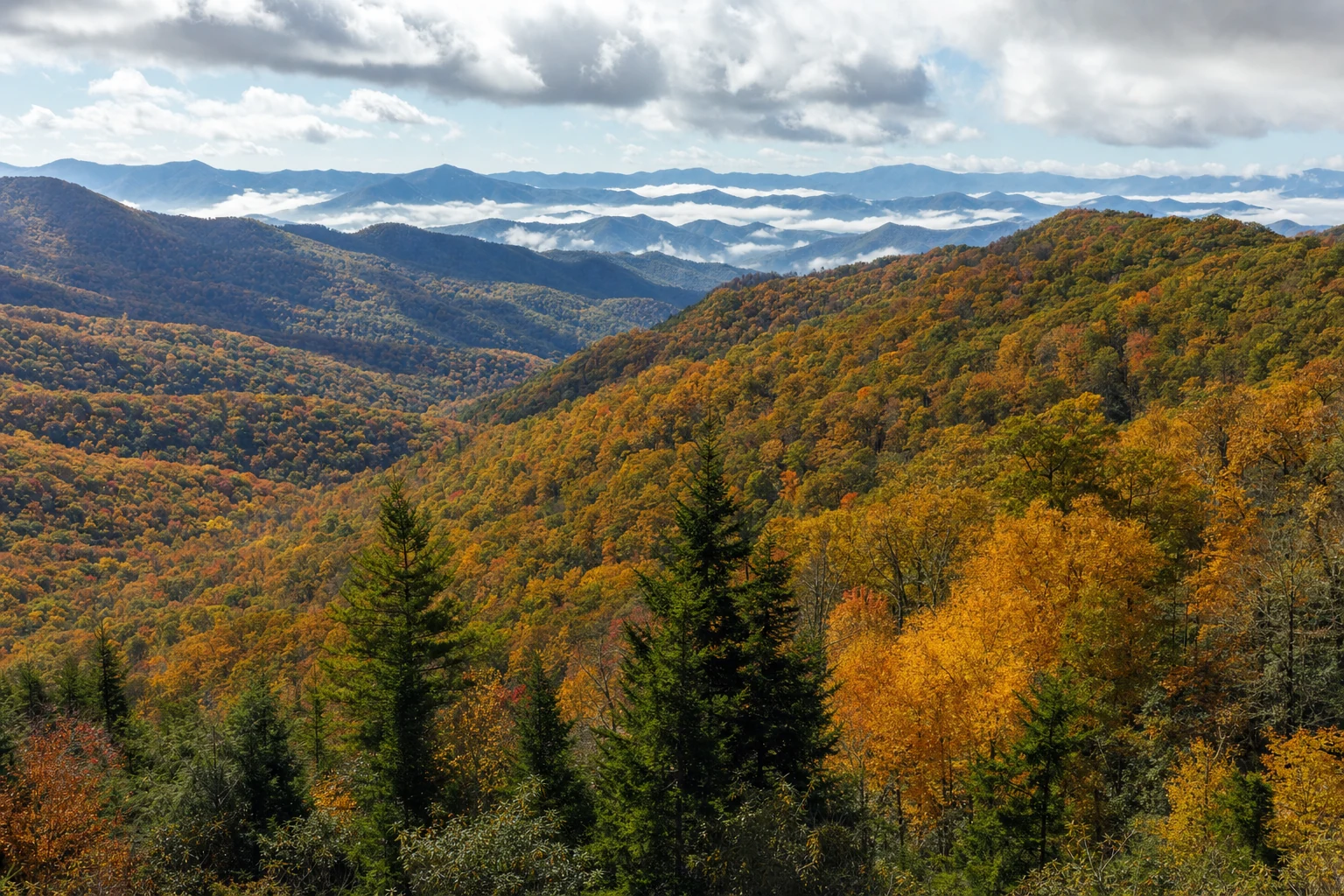
Set an alarm for 5:30 a.m. Newfound Gap Road — the main park crossing between Gatlinburg and Cherokee — offers one of the better sunrise positions in the eastern United States without requiring a single step of hiking. Campbell Overlook on the Tennessee side sits a few miles into the park and frames a direct eastern sightline across layered ridges. Arrive before first light. Great Smoky Mountains National Park charges no entrance fee, but some trailhead lots require a Park-It-Forward reservation tag — check current requirements on the NPS website before you go.
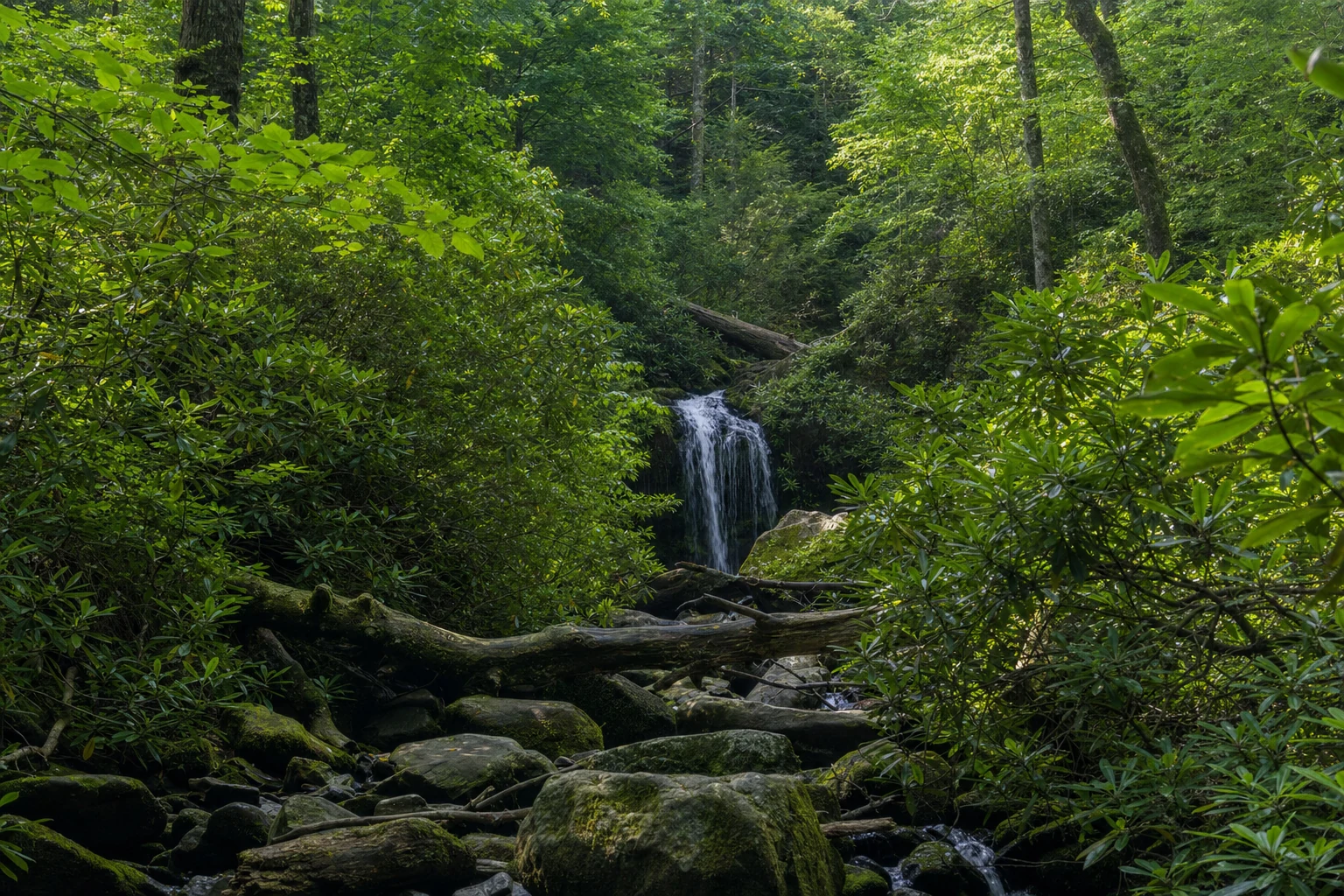
After sunrise, drive back toward Gatlinburg and start the Grotto Falls Trail by 8 a.m. The trailhead sits along Roaring Fork Motor Nature Trail (seasonally closed in winter — confirm it's open before your visit). At 2.6 miles round-trip and moderate difficulty, the path winds through old-growth hemlock forest before reaching a tiered curtain falls where the trail passes directly behind the water. Mid-morning on weekdays, foot traffic is thin. The air near the falls runs noticeably colder than the trailhead — bring a layer.
Back in town by 10:30, change out of wet shoes and head up to Anakeesta for a relaxed lunch at the Cliff Top Grill & Bar. The gondola earns its ticket price on a clear day, and the ridge-top setting makes an ordinary lunch feel considerably less ordinary.
For the afternoon, drive to the Clingmans Dome parking area and walk the Forney Ridge Trail to Andrews Bald — 1.8 miles moderate, ending at a wide-open grassy bald at roughly 5,860 feet. The skyline views are unobstructed in every direction, with no canopy to interrupt them. If cloud cover cooperates, the paved half-mile ramp up to the Kuwohi (Clingmans Dome) observation tower — the highest point in the park at 6,643 feet — is worth the detour. Check Park-It-Forward requirements for this lot as well.
Dinner tonight is the anchor of the trip. Make a reservation at Cherokee Grill & Steakhouse in Gatlinburg — aged cuts, a real wine list, and service that doesn't feel rushed. Book several days in advance and plan for a later seating so the evening has room to breathe.
After dinner, drive out onto the Foothills Parkway toward Look Rock. The parkway runs along a ridge above the tree line and sees almost no traffic after 9 p.m. Pull into any overlook, kill the headlights, and give your eyes three minutes to adjust. The Smokies sit in a federally protected dark-sky zone — on a clear night, the Milky Way is visible without any equipment. Bring a blanket from the cabin.
Day 3: One Quiet Trail, Then the Drive Out
Sleep in. By 9 a.m., drive to the Deep Creek area just north of Bryson City and walk to Juney Whank Falls — a 0.6-mile easy path that ends at a 90-foot cascade that sees a fraction of the crowds drawn to more publicized park waterfalls. The hemlock and tulip poplar canopy keeps the trail shaded and cool even in summer. Pack coffee in a thermos and take your time on the way back.
If Juney Whank feels short, the Indian Creek Trail nearby adds 1.6 easy miles and passes additional small cascades before reaching Indian Creek Falls. Either option gets you back on the road by noon without the Sunday-afternoon rush that builds through Gatlinburg by midafternoon.