
Planning a Smokies trip around little legs and nap schedules takes some honest logistics thinking, but the park is genuinely one of the better national parks for young families — the trails are short, the entrance fee is zero, and wildlife turns up without any hiking required.
Day 1: Settle In and Get Your Bearings
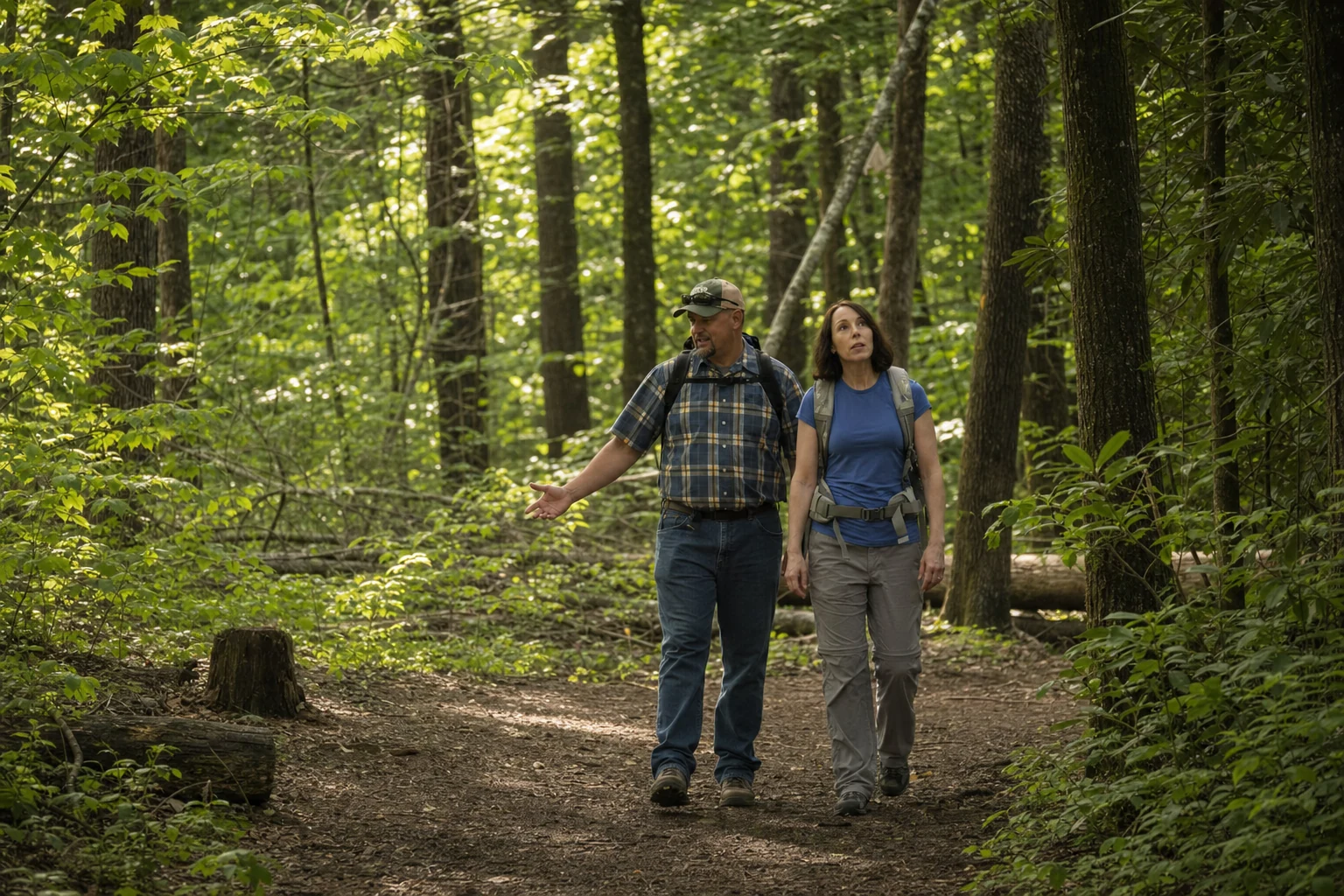
Don't try to cram too much on arrival day. If you're staying in Gatlinburg, walk the Gatlinburg Trail in the late afternoon when crowds thin — 3.8 miles round-trip and flat, it follows the West Prong of the Little Pigeon River through river-bottom forest and passes two historic bridges; strollers handle the paved sections without any real effort. Pick up a Park-It-Forward hangtag at the trailhead kiosk if a departing visitor has left one — it covers your parking fee when time remains on the tag.
That evening, take the gondola up to Anakeesta. The ridge-top park runs a mountain coaster, a treetop sky trail, and a small village of shops, and the coaster operates until dark. For dinner, Crockett's Breakfast Camp serves food all day and handles strollers without drama; it's a reliable choice for large, unpredictable groups.
Day 2: Cades Cove in the Morning
Cades Cove rewards early risers. Get there by 8 a.m. if you can — deer, black bear, and wild turkey move through the open meadows before midday heat pushes them back into the tree line. The loop road runs 11 miles one-way and takes between 90 minutes and three hours depending on wildlife stops. On Wednesday and Saturday mornings from mid-May through late September, the road is open to bikes and pedestrians only until 10 a.m., which is a rare thing in a park this busy.
Stop at the Cable Mill area around mile marker 5.5; kids can watch the working gristmill and walk through the Becky Cable House and surrounding historic structures without any fencing between them and the history. The Cove Hardwood Nature Trail begins nearby — 0.75 miles easy, through old-growth hardwoods that most visitors skip because they're already scanning meadow edges for bears on the loop.
Pack your own lunch. The cove has no food vendors, and a cooler in the car keeps everyone functional through a long morning.
Day 3: Laurel Falls and Newfound Gap Road
Laurel Falls is one of the most-walked trails in the park: 1.3 miles round-trip on a paved path to an 80-foot two-tiered waterfall. Get to the trailhead on Little River Road before 9 a.m. — by 10 a.m. on summer weekdays the lot fills completely and latecomers face a long walk from overflow. Strollers technically fit the paved path, but the grade is steep enough in spots that a carrier or toddler backpack is genuinely easier for kids under two.
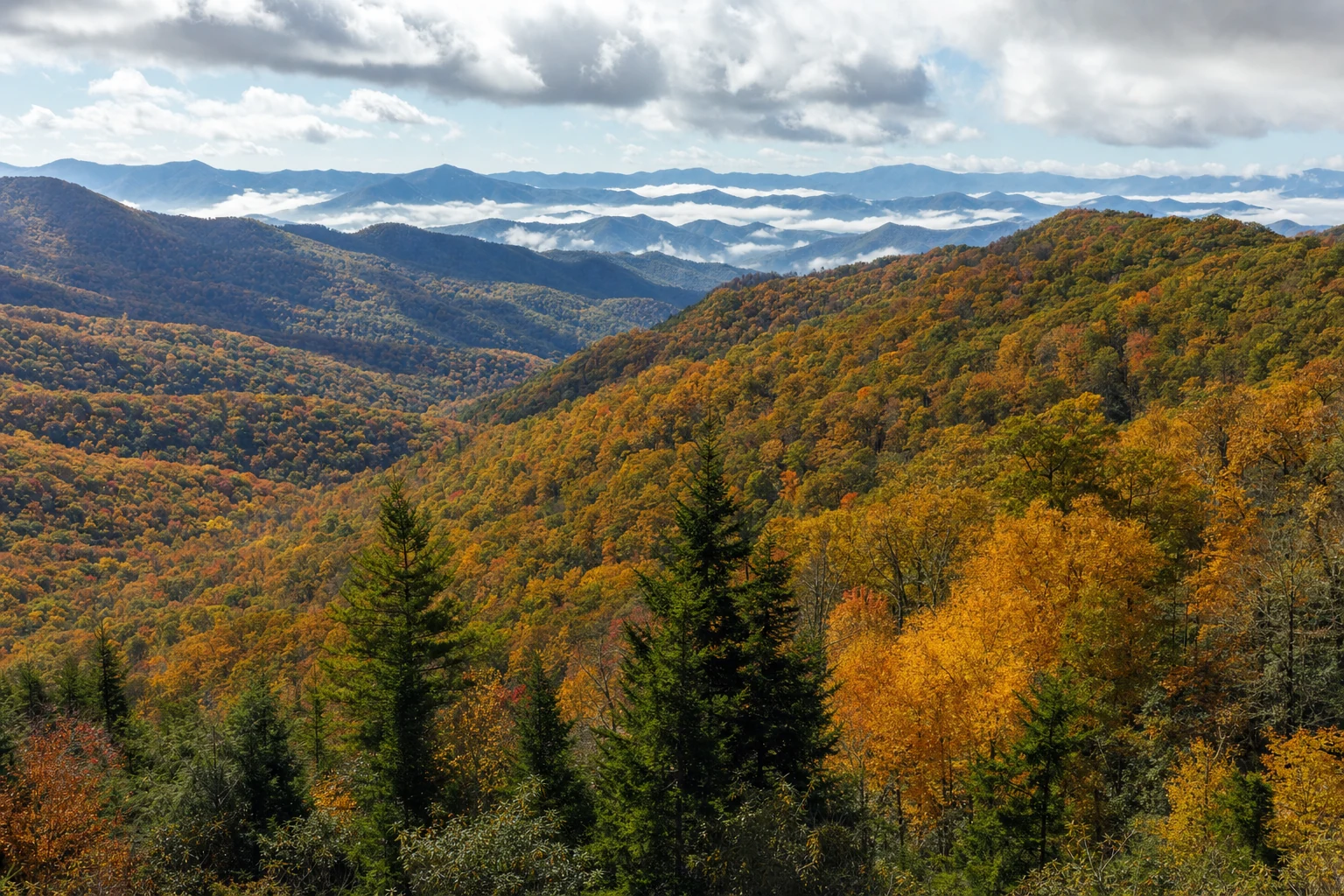
Afterward, drive Newfound Gap Road (US-441) south from Sugarlands. The road climbs from roughly 1,460 feet at the Tennessee park boundary to 5,046 feet at Newfound Gap, and temperatures fall noticeably with elevation — bring a light layer even in July. Pull off at the Chimney Tops Overlook and Campbell Overlook for long views down into the Tennessee valley. At Newfound Gap itself, the Appalachian Trail crosses the road; even very young kids can walk 50 yards onto the AT and back, which satisfies the curiosity at almost no effort.
Day 4: Dollywood
Plan for a full day. Rides span from toddler-level attractions in the Country Fair section up to roller coasters for older kids, and live music stages run throughout the park all day so different ages stay occupied without constant negotiation. The park has full-service restaurants alongside standard fair food — eat lunch before noon or after 2 p.m. to avoid the main rush. Arrive at opening to get ahead of the surge that builds around 11 a.m.; Saturday is the busiest day of the week, and mid-August is peak season on top of peak season.
Day 5: Deep Creek Waterfalls and Tubing
Deep Creek, accessed from Bryson City on the North Carolina side, is one of the few spots in the park where tubing is legal and genuinely popular with families. The Deep Creek Loop (2.4 miles, easy, compacted gravel) passes Tom Branch Falls and Indian Creek Falls before connecting via a short spur to Juney Whank Falls — 90 feet high and worth the extra 0.6 miles. All three falls are within reach with a four-year-old along. Tube rentals are available from outfitters just outside the park boundary in Bryson City.
On the drive back, stop in Cherokee for Mingo Falls on the Qualla Boundary. The 0.15-mile hike leads to a 120-foot drop that catches most visitors off guard given how close the parking area sits to it. The Museum of the Cherokee People gives kids real historical context about the Eastern Band Cherokee — not a souvenir-shop summary — and moves through in roughly 45 minutes at a child's pace.
Rainy Day Options
Two or three wet days in a week-long Smokies trip is normal, especially in June. MagiQuest in Pigeon Forge works well for ages five and up; it's a live-action RPG game that runs two to three hours easily. Anakeesta pulls lighter crowds on drizzly afternoons and has covered areas, so a second visit on a wet day pays off. For pure chaos management when nothing else sounds appealing, Arcade City in Pigeon Forge absorbs children for as long as your patience holds.
Stroller and Snack Notes
Trails that work for strollers: Gatlinburg Trail (flat, paved) and Laurel Falls (paved, but steep enough to feel it). The Deep Creek Loop is compacted gravel — manageable but not smooth. Everything else here works better with a carrier or toddler backpack for kids under three.
Bring more water than seems necessary. Most trailheads have no fountains. Reusable bottles, trail snacks, and a cooler in the car are the difference between a family that lasts until 4 p.m. and one that's done by noon.