
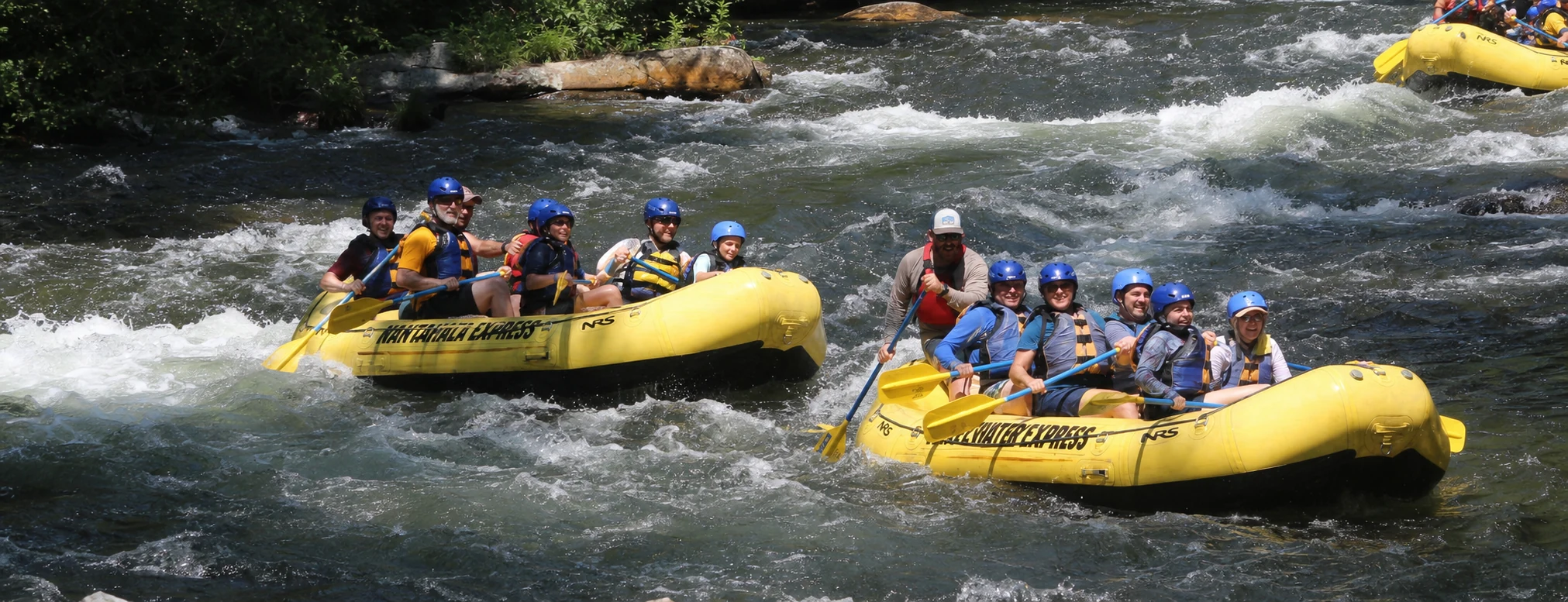
The Nantahala River carves an 8.5-mile whitewater run through a steep, forested gorge in Western North Carolina, less than two hours from Gatlinburg and an easy drive from Cherokee or Bryson City. Class II-III rapids, a reliable dam-release schedule, and a bracing 52°F water temperature year-round combine to make it one of the most dependable — and most distinctive — rafting experiences in the Southeast. The river's consistency is engineered: water is drawn from the cold depths of Nantahala Lake and released on a Duke Energy schedule, which means outfitters can run trips daily from April through October without waiting on rain or snowmelt.
A dam-controlled river with a 52°F catch
Unlike most natural whitewater rivers, the Nantahala does not rise and fall with the weather. Its flow is controlled by a bottom-release hydroelectric dam at Nantahala Lake, operated by Duke Energy. Daily scheduled releases push a steady current down the gorge, producing rapids that run at roughly the same level every trip. This is what lets the commercial outfitters sell reliable, pre-scheduled departure times throughout the season.
The same engineering produces the river's single most important quirk: the water is drawn from the cold depths of the lake, so the Nantahala runs at approximately 52°F year-round, even on 90-degree August afternoons. That is not a number to dismiss. Prolonged contact with water that cold causes rapid heat loss, and a swim in a rapid without insulation can become genuinely unpleasant within minutes. Every outfitter on the river recommends or requires wetsuits and splash jackets, and every outfitter rents them. Cotton is a mistake — it wets out and stays cold. Synthetic or wool layers, sturdy water shoes (no flip-flops), and a willingness to zip up a rental wetsuit are what separate a comfortable trip from a long, cold paddle.
The 8.5-mile commercial run, rapid by rapid
The commercial section begins just below the Nantahala Dam and ends at the Nantahala Outdoor Center's main campus, which doubles as the river's primary take-out point. The run is continuous without being exhausting — long stretches of lively Class II wavetrain punctuated by named rapids, with quieter pools in between for catching breath, taking photos, or climbing out for a quick swim.
- Patton's Run — an early wake-up rapid that introduces the river's character within the first mile. Guides use it to dial in paddle commands and crew timing.
- Big Rock — a mid-run feature where rafts thread past a prominent midstream boulder. The eddy below is a common play spot.
- Lesser Wesser — a staircase of waves and short drops that keeps paddlers engaged without demanding technical maneuvering.
- Nantahala Falls — the grand finale, rated Class III and located just above the NOC take-out. A substantial drop with powerful hydraulics, it requires precise paddling and teamwork. Spectators frequently gather along the railroad bridge and NOC deck to watch rafts and inflatable kayaks take the drop.
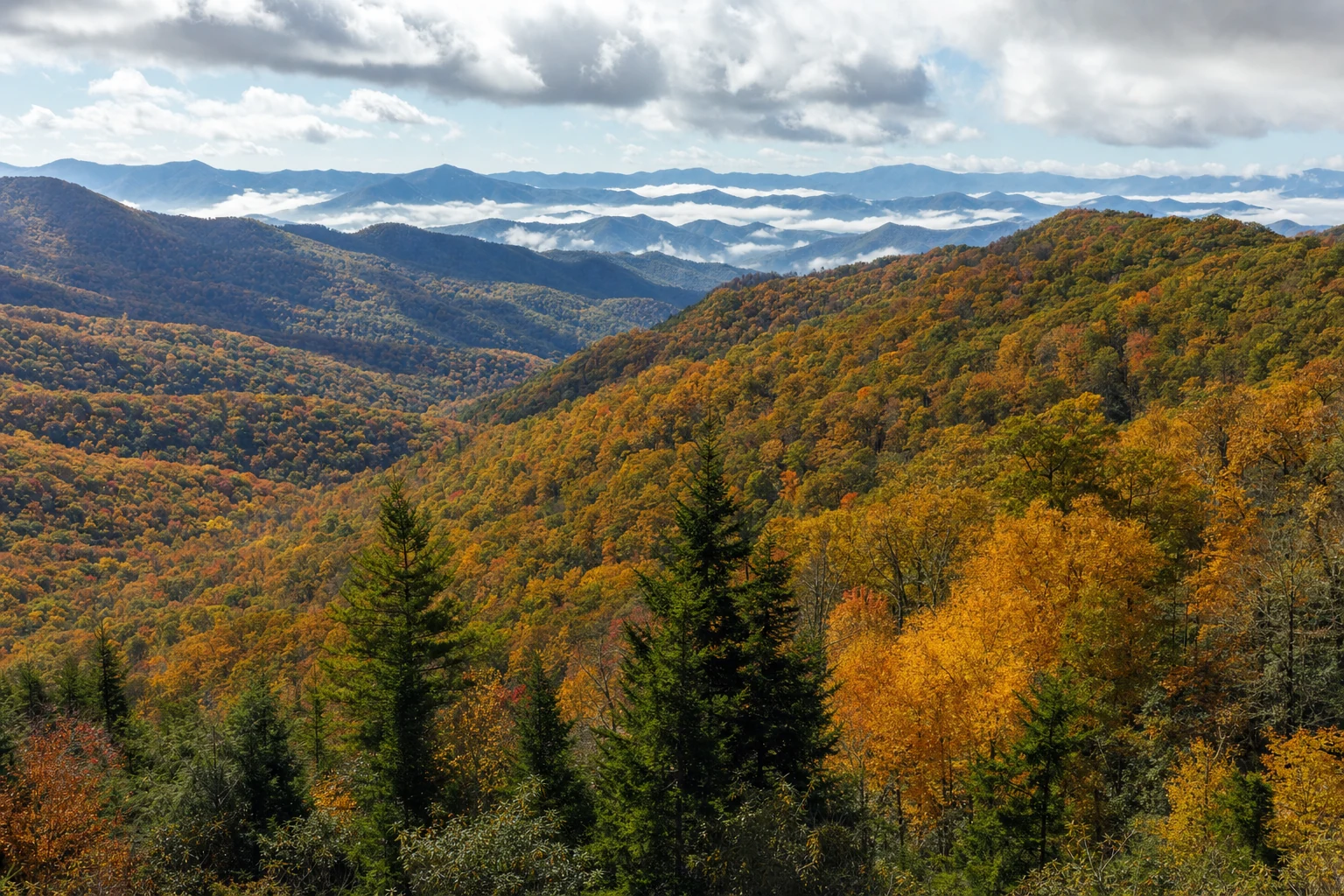
The gorge itself is part of the experience. Steep, forested slopes of the Nantahala National Forest rise dramatically on both sides, the canopy keeps the air cool even in mid-summer, and the light that filters down through the leaves gives the gorge an almost temperate-rainforest feel.
Season by season
Commercial rafting generally runs from April through October, with meaningful differences between the shoulders and the peak.
- Spring (April-May) — Cooler air, fewer crowds, fresh green foliage. Wetsuits are essential. A quieter, more contemplative window.
- Summer (June-August) — Peak season. Daily dam releases, the warmest air temperatures, and the largest crowds. Reservations are not optional on weekends. The cold water becomes a feature rather than a liability when air temps climb into the 90s.
- Fall (September-October) — A favorite window for experienced rafters. Fewer people, crisp air, and the gorge at peak fall color through mid-October. Wetsuits are again strongly recommended. Late-October schedules can thin out — confirm operating dates with the outfitter before booking late.
The outfitters
Six established outfitters run guided raft trips and rent self-guided "ducky" (inflatable kayak) equipment on the commercial section. All provide helmets, life jackets, pre-trip safety briefings, and shuttle service from base camp to the put-in.
- Nantahala Outdoor Center (NOC) — 13077 US-19, Bryson City, NC. The largest operation on the river, effectively an adventure resort built around the take-out. Guided rafts, funyak rentals, and performance raft rentals for experienced paddlers. On-site restaurants (including riverside dining at River's End), a large retail store, lodging, and a deep roster of non-rafting activities: ziplining, ropes courses, mountain biking, flatwater paddling, and a lake adventure park. Best choice for families who want a full multi-activity day under one roof.
- Wildwater Nantahala — 10000 Hwy 19 W, Bryson City, NC. A long-established operation with a reputation for family-friendly guiding. Guided trips, inflatable kayak rentals, zipline canopy tours, jeep tours, and on-site lodging. Changing rooms, restrooms, and a gift shop at base camp.
- Rolling Thunder River Company — 2000 US-19, Bryson City, NC. Friendly, well-regarded outfitter focused on a classic whitewater experience. Guided trips and funyak rentals, often praised for knowledgeable guides and smaller group feel.
- Adventurous Fast Rivers Rafting — 13177 US-19, Bryson City, NC. Located very close to NOC, known for competitive pricing and a no-frills focus on the paddling itself. Guided rafts and inflatable kayaks.
- Carolina Outfitters — 715 US-19, Andrews, NC. Slightly further down US-19 from the main cluster, appealing to visitors coming from the Andrews or Murphy direction. Guided rafts, inflatable kayaks, and cabin rentals on-site for those who want lodging and adventure bundled together.
- USA Raft Nantahala — 12975 US-19, Bryson City, NC. Part of a larger regional rafting company, with modern equipment and experienced guides. Guided trips and inflatable kayak rentals.
Reservations are strongly recommended across all outfitters, and essential on summer weekends, holidays, and during peak fall color. Online booking is standard. Combo packages bundling rafting with ziplining, ropes courses, or mountain biking are common at NOC and Wildwater and often represent meaningful savings over a la carte booking.
Age, weight, and family logistics
The Nantahala's Class II-III rating makes it the most family-friendly whitewater in the region, but all outfitters enforce minimum age and weight requirements for safety. The standard is 7 years old OR 60 pounds minimum for guided trips, though specific cutoffs vary slightly between operators. Confirm directly with the chosen outfitter before booking — some may require both conditions for particular trip types, and kids between five and seven can sometimes paddle with a parent on private or specialty trips.
For a commercial guided run, plan on about three hours on the water plus an hour of pre-trip logistics (check-in, gear fitting, shuttle to put-in, safety briefing). Budget four to five hours total from arrival to dry clothes.
What to wear, what to bring
The Nantahala punishes anyone who underdresses. What to pack:
- On the river — Swimsuit or quick-drying synthetic shorts and top (no cotton), secure water shoes with straps (no flip-flops or loose sandals), sunglasses with a retainer strap, sunscreen, and a hat. Wetsuits and splash jackets are available for rent at every outfitter and are the single most important comfort decision for shoulder-season trips.
- For after — A complete dry change of clothes, a towel, and a sealable bag for wet gear.
- Optional — Waterproof camera or GoPro (securely mounted — the river will eat anything loose), a water bottle with a leash, and a small dry bag.
Leave the wallet, phone, and car keys in the vehicle or with a non-paddler. Outfitters often have lockers at base camp, but belongings in a raft get wet, period.
Self-guided options and advanced paddling
For visitors with prior paddling experience or a desire for more autonomy, every major outfitter rents inflatable kayaks — variously called "duckies" or "funyaks." Renters receive the same safety briefing and shuttle service as guided rafters, then paddle the same 8.5-mile commercial run independently, often in the company of guided rafts. It is the most immediate way to experience the river; Nantahala Falls in a ducky is a meaningful step up in challenge from the same drop in a commercial raft.
Beyond the commercial section, the Upper Nantahala runs at Class III-IV and requires advanced skills, private equipment, and a thorough understanding of self-rescue. It is not offered by commercial outfitters and is for expert paddlers only. Most visitors need never think about it.
The gorge beyond rafting
The area supports a broader adventure culture worth a half or full day of its own. Post-rafting, River's End Restaurant at NOC offers riverside dining with a direct view of Nantahala Falls — a long lunch watching other rafts take the drop is a quintessential Nantahala afternoon. The Tsali Recreation Area a short drive away offers roughly 40 miles of world-class mountain biking singletrack on four alternating loops. Sections of the Appalachian Trail pass near the gorge, and Fontana Lake is 30 minutes west for fishing, houseboating, and boat-shuttle access to the Smokies' south shore. Bryson City itself has a walkable downtown with breweries, shops, and the Great Smoky Mountains Railroad depot.
Getting there from the Smokies
From Gatlinburg or Pigeon Forge, the drive takes 1.5 to 2 hours, most commonly via US-441 south through Great Smoky Mountains National Park to Cherokee, then west on US-74/US-19. From Cherokee, figure 45 minutes to the outfitter cluster at Wesser. From Bryson City, 20-30 minutes.
Visitors combining a rafting day with any stop inside the national park should plan for the Park-It-Forward parking tag, required for any vehicle parked more than 15 minutes within GSMNP. Tags are $5 daily, $15 weekly, or $40 annual — purchase online at recreation.gov before the trip. The tag is not required for the Nantahala itself, which sits in the Nantahala National Forest rather than the park.