
Atlanta to Gatlinburg is about 210 miles, which works out to roughly 3 hours 30 minutes of drive time when traffic is clear. That's the right distance for a weekend trip, not a day trip; by the time you account for the return drive, a same-day visit burns more hours in the car than it saves in the park.
The drive from Atlanta
The standard route is I-75 North to I-40 East, running through Knoxville before turning south toward the mountains. From Knoxville, I-40 curves toward Sevierville, and US-441 south carries you through Pigeon Forge and into Gatlinburg. Most of the miles are flat interstate; the driving changes character once you clear Knoxville and the ridgelines start rising ahead of you.
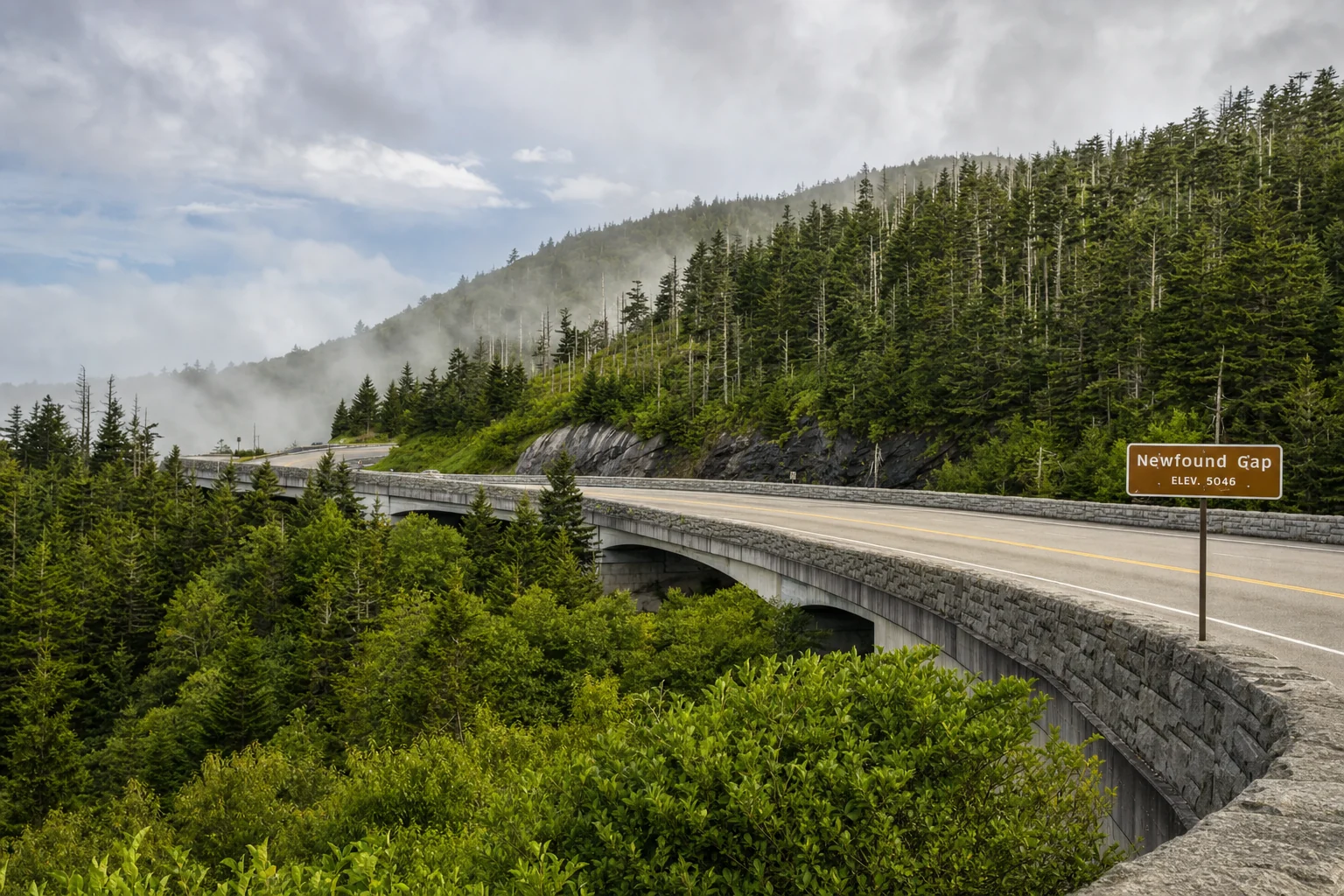
The alternative is worth knowing if you're willing to add an hour: US-441 through Cherokee, NC, then Newfound Gap Road over the crest of the park and down into Gatlinburg. That road passes the turn-off for Kuwohi (Clingmans Dome, 6,643 feet) and gives you an entry through the park itself rather than approaching from the Tennessee side.
Two chokepoints tend to slow things down: Atlanta's I-75 on Friday afternoons and the I-40 corridor through Knoxville on Saturday mornings. Leaving Atlanta before 7 a.m. or after 7 p.m. on Friday makes a real difference.
How long to plan for
With 3 hours 30 minutes each way, a day trip from Atlanta puts roughly 7 hours of driving around a few hours in the park. That math doesn't hold up. Two nights is the practical floor; it gives you two full days, enough to drive Cades Cove's 11-mile loop, walk to Laurel Falls or Abrams Falls, and spend an evening in Gatlinburg. Three or four nights opens up Cataloochee Valley, the North Carolina gateway towns, and a proper drive over Newfound Gap without feeling like you're checking boxes.
What to do when you arrive
Gatlinburg is the Tennessee entry point and puts you at the park boundary in minutes. Roaring Fork Motor Nature Trail starts just outside downtown and connects to Grotto Falls and Rainbow Falls trailheads. Laurel Falls, a 2.6-mile paved round trip off Newfound Gap Road, is the park's most visited waterfall.
Alum Cave Trail (4.4 miles one way) is the standout half-day hike, gaining serious elevation toward Chimney Tops. Andrews Bald, a 3.6-mile round trip from Clingmans Dome Road, tops out on an open bald above 5,800 feet with views on all sides.
Cades Cove is worth a dedicated morning, not a quick stop on the way to something else. The 11-mile one-way loop passes log cabins, open meadows, and the Abrams Falls trailhead; weekday visits move considerably faster than summer weekends.
All in-park parking requires a Park-It-Forward tag for any vehicle stopped 15 minutes or longer: $5 for a day, $15 for a week, $40 for the year. There's no separate gate entrance fee.
Where to stay
Gatlinburg is the obvious base for park access: walkable, close to trailheads, with restaurants along the Parkway. US-441 through town congests heavily on summer and fall weekends.
Pigeon Forge, 5 miles north, has more cabin inventory, Dollywood, and a louder commercial character. Townsend, on the southwest side of the park, is quieter and the right base if Cades Cove is your priority. On the North Carolina end, Cherokee sits at the base of Newfound Gap Road with access to Cataloochee; Bryson City, 10 miles west, is the departure point for Deep Creek rafting and Great Smoky Mountains Railroad excursions.
Use the map below to compare live cabin and hotel prices across the gateway towns before booking.
Best time to make the trip
Summer is peak season by volume, and parking lots at Cades Cove and Laurel Falls fill by 9 a.m. on summer weekends. The exception worth planning around: the Elkmont firefly synchronous display runs roughly two weeks in late May or early June and requires a lottery permit.
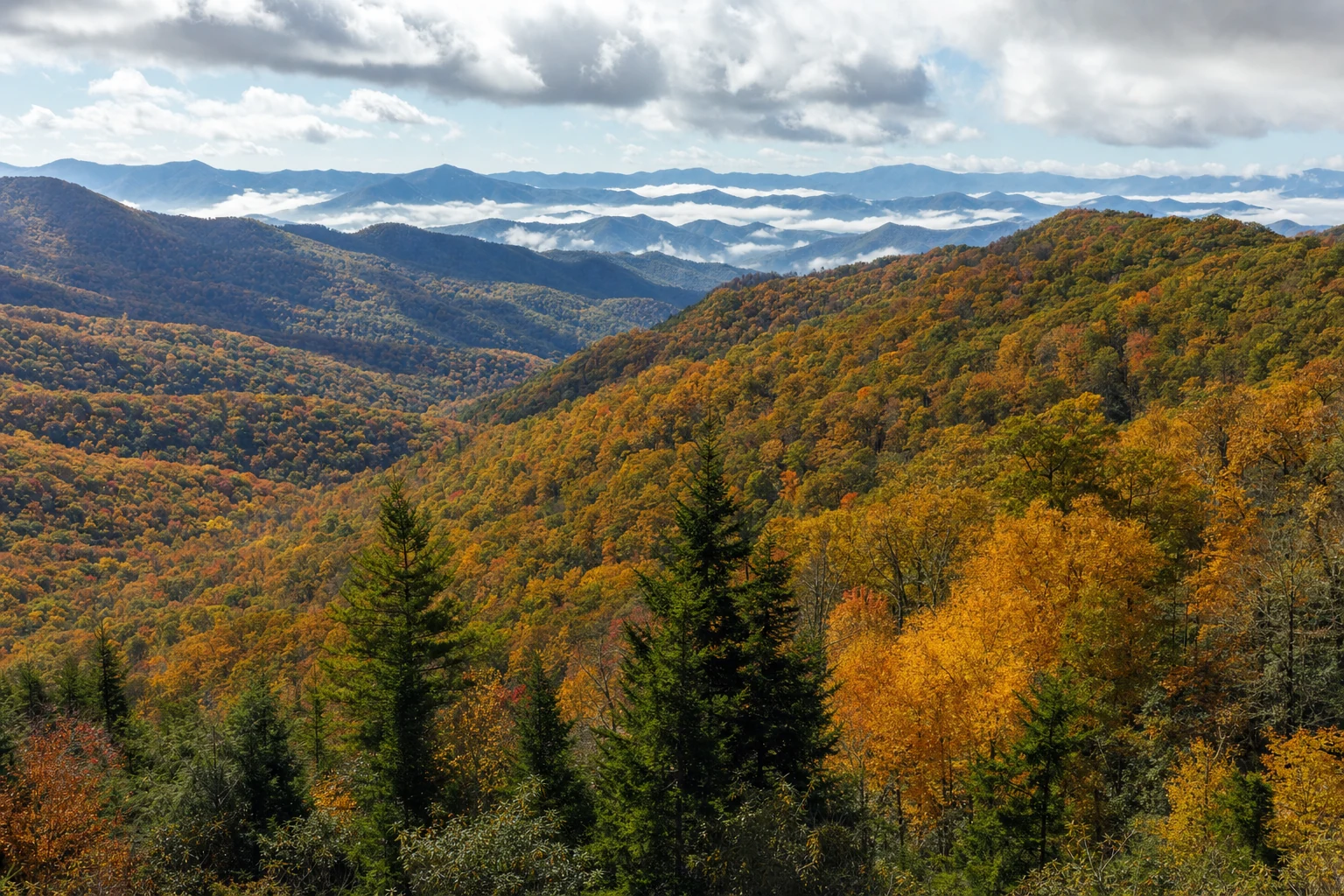
Fall is the best season for the drive from Atlanta. High-elevation color starts turning in late September; mid-elevation peaks around mid-October; the lower valleys hold color into early November. The Cataloochee elk rut runs concurrently with peak foliage, making that valley worth the extra drive.
Spring, specifically April into early May, brings wildflower blooms through the lower elevations with crowds well below summer levels. Winter is the emptiest season; Newfound Gap Road closes after significant snow, but Cades Cove and the lower trails typically stay open.