
Chattanooga sits about 150 miles from Gatlinburg, which puts the drive at roughly 2 hours and 45 minutes under normal traffic. It's close enough to feel accessible, but the round trip alone rules out a day-trip approach — this is a weekend destination at minimum, ideally three nights or more.
The drive from Chattanooga
Take I-75 North out of Chattanooga and stay on it until you pick up I-40 East near Knoxville. From there, follow I-40 East to the Sevierville exits — you'll have options for Sevierville itself (exit 407 for TN-66), or continuing a few miles further to reach Pigeon Forge and Gatlinburg. The whole route stays on interstate until the final stretch into the mountains corridor, which makes navigation easy to follow.
Traffic is the main variable. The Pigeon Forge/Gatlinburg strip backs up badly on Friday afternoons and Saturday mornings, especially in summer and during fall foliage season. Leaving on a Thursday evening or arriving Saturday midday cuts the worst of it. Once you're off I-40, real-time navigation will reroute you around Parkway congestion when conditions warrant.
How long to plan for
At nearly three hours each way, a day trip isn't worth it — you'd spend as much time in the car as you would in the park. Two nights is a reasonable floor; three opens up time to cover both the Tennessee and North Carolina sides without backtracking. Four or five nights lets you combine proper trail days with town time in Pigeon Forge or Gatlinburg without cramming everything.
What to do when you arrive
Gatlinburg is the main entry point from the Chattanooga direction. The Parkway runs through town and the density of attractions is high — Ripley's Aquarium of the Smokies is right on the strip, Anakeesta sits above town on a gondola ride with good mountain views, and the Gatlinburg SkyLift Park spans the ridge above the main drag. Pigeon Forge, 10 minutes north, is where Dollywood is; plan a full day there if that's on the agenda.
For the park itself: no entry fee, but vehicles parked 15 minutes or longer need a Park-It-Forward parking tag ($5/day, $15/week, $40/year). Buy it online before you go.
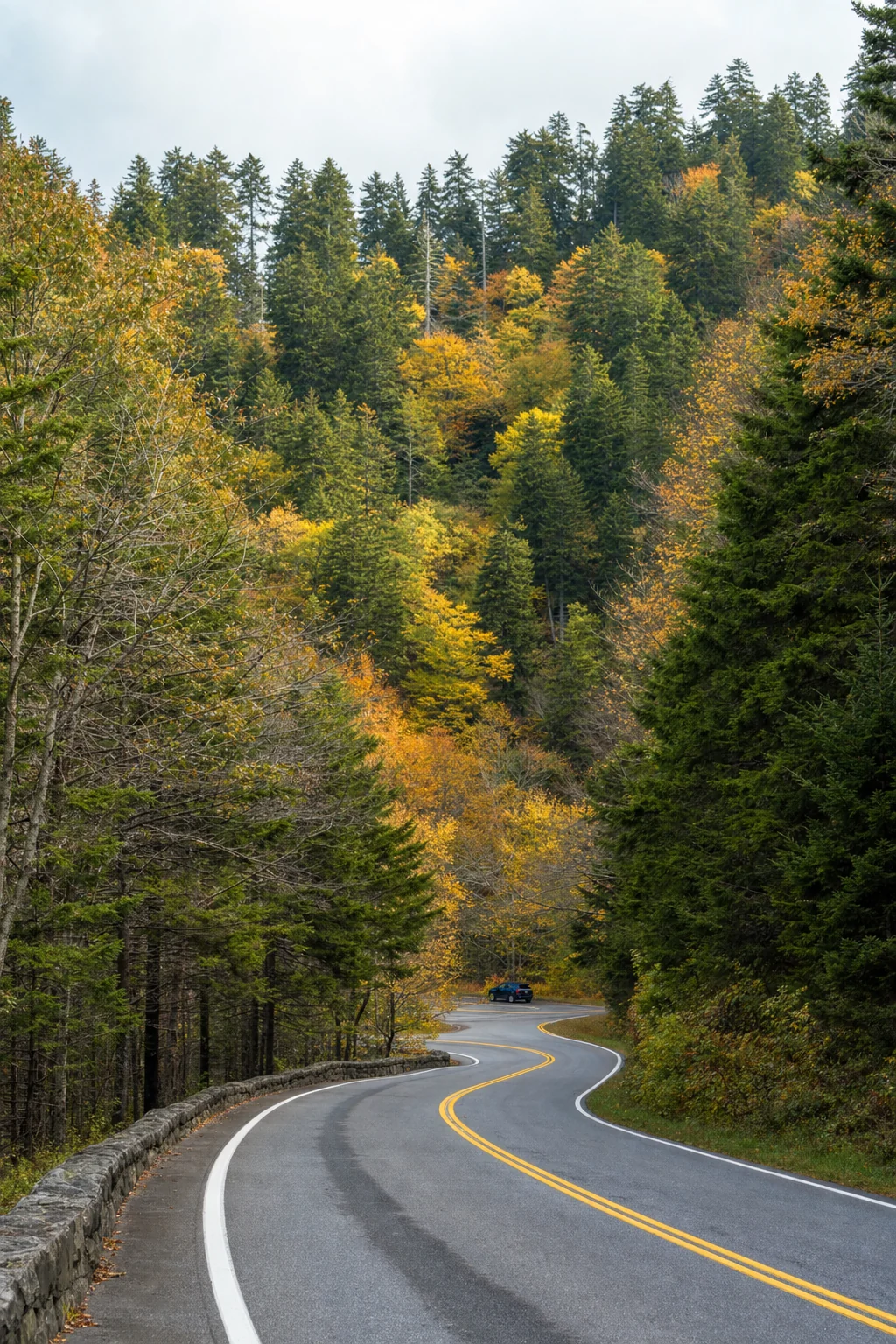
The Cades Cove 11-mile loop is the most visited drive in the park. Wildlife sightings are reliable — deer, black bear, turkey — and the preserved homesteads and churches make the valley feel distinct from the rest of the park. Go early on weekends; it jams up fast. Newfound Gap Road crosses the ridge at 5,046 feet and connects the Tennessee side to North Carolina, with the Kuwohi (Clingmans Dome) spur branching off near the top at 6,643 feet. On the Tennessee side, Alum Cave Trail is one of the better moderate hikes; Grotto Falls and Laurel Falls are shorter and heavily trafficked. Roaring Fork Motor Nature Trail is a good alternative to Cades Cove if you want a scenic drive with fewer cars.
Cherokee, NC is about an hour from Gatlinburg via Newfound Gap Road — the Qualla Boundary has a different character than the Tennessee side, and the Oconaluftee elk herd is reliable there. Bryson City is another 30 minutes west, sitting at the park edge near Deep Creek for tubing and rafting.
Where to stay
Gatlinburg has the highest concentration of cabins and the best park access. Pigeon Forge has more hotel inventory at generally lower prices and works well if Dollywood is a priority. Townsend, on the west side of the park, is the starting point for Cades Cove access and runs considerably quieter than the Parkway towns — worth considering if you want a slower pace.
For trips that cross into North Carolina, one night in Cherokee or Bryson City saves a long early-morning drive back across the ridge to reach Cataloochee Valley. The map below shows live cabin and hotel availability across all these towns; prices shift quickly on weekends, so checking early matters.
Best time to make the trip
Summer is peak season, and the parking situation reflects that. Lots at Alum Cave and Laurel Falls fill by 9am on summer weekends — plan accordingly or pick lower-traffic trailheads. The Elkmont firefly display runs in late May and early June; demand for prime viewing areas is high, and the park uses a vehicle reservation system on peak nights.
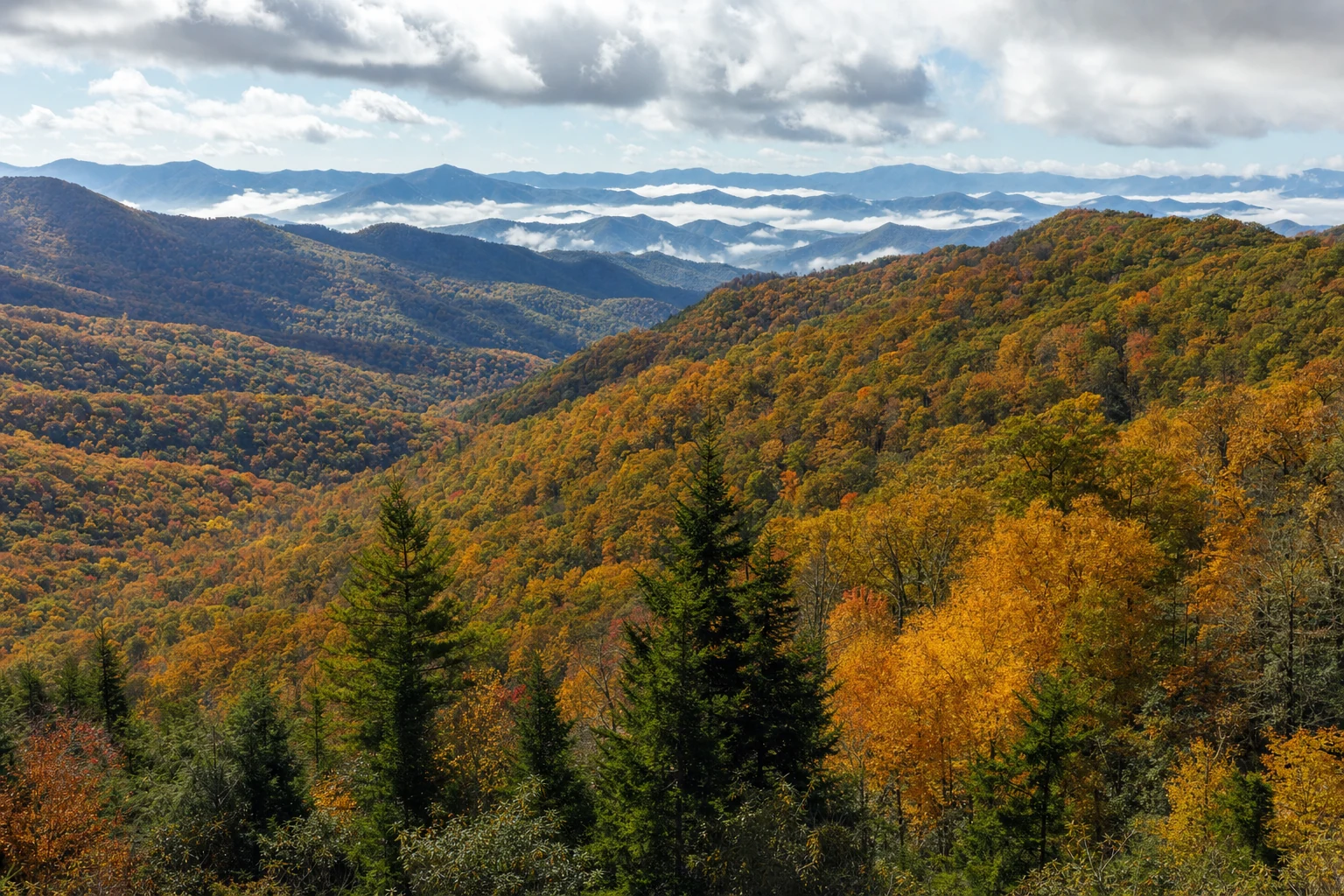
Fall is when the region earns its reputation. High-elevation color arrives in late September on the ridgelines and works down through October; lower elevations typically peak in the first two weeks of November. The Cataloochee elk rut is active through October and worth planning around.
Spring gets less credit than it deserves. April wildflower season is excellent, and trails before Memorial Day are far less crowded than they'll be by July. Winter is about as peaceful as this park gets — Cades Cove is striking with frost on the fields, though Newfound Gap Road and the Kuwohi spur close during icy weather.