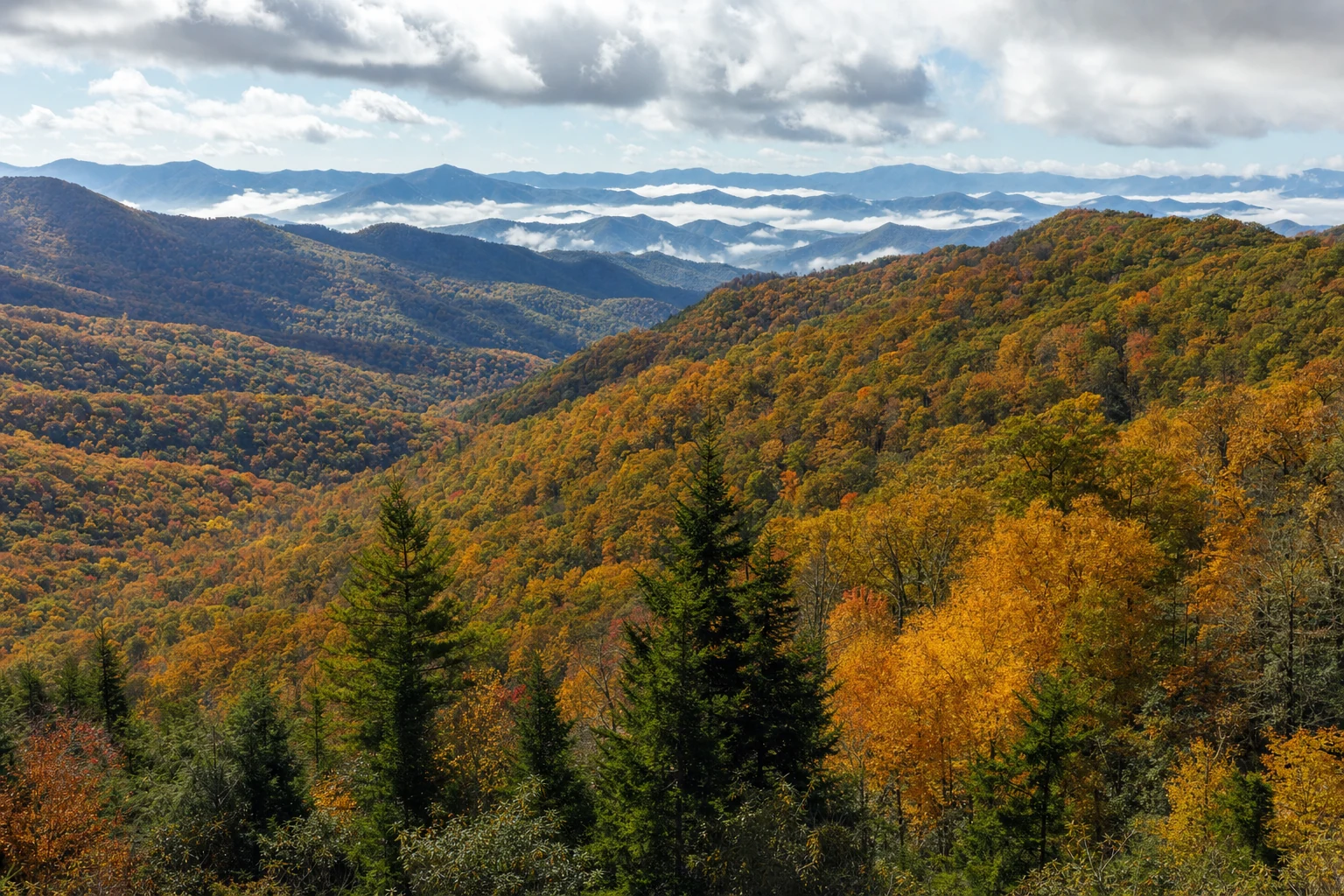

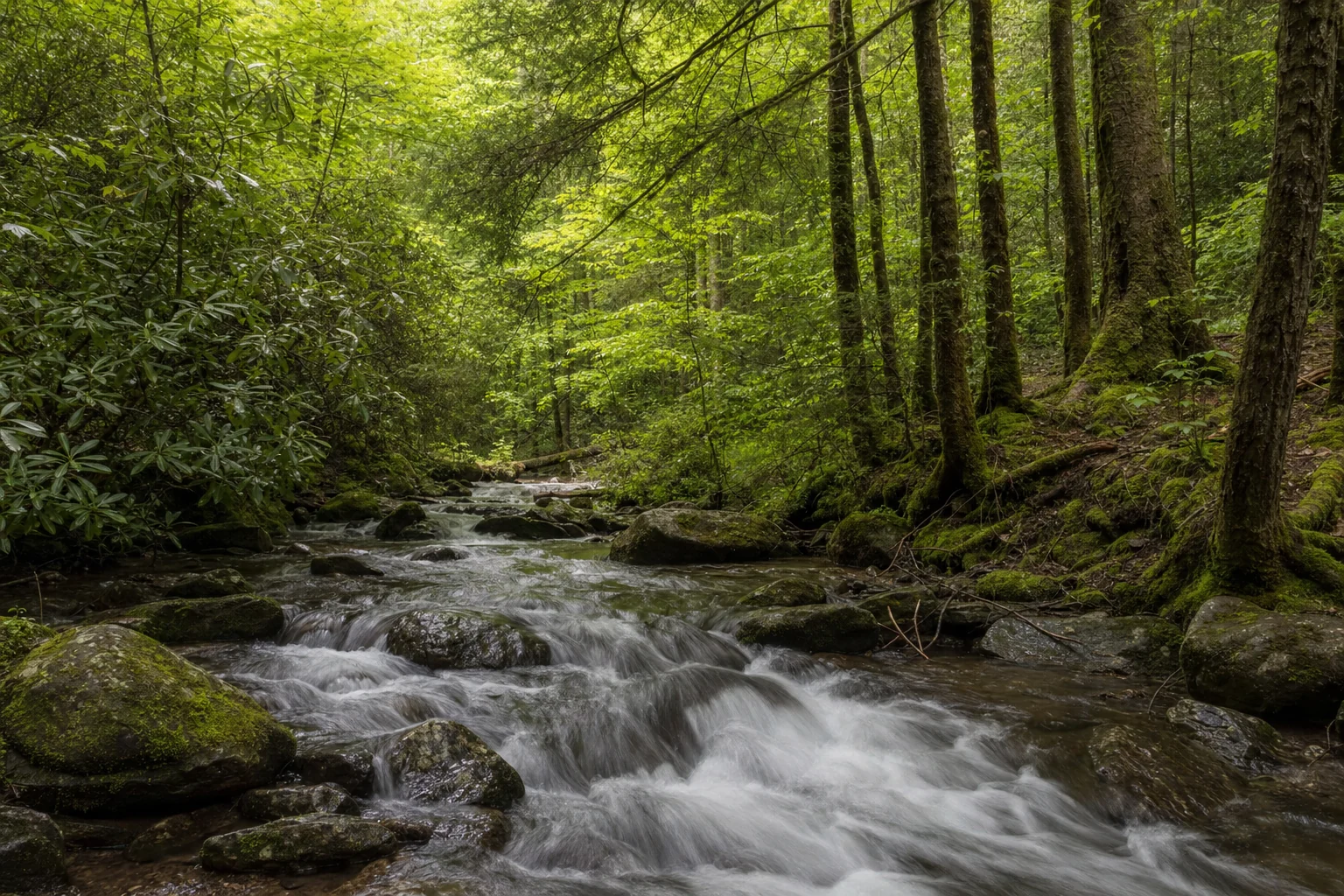
Cincinnati to Gatlinburg runs about 320 miles, and the drive typically takes around 5 hours under normal traffic conditions. That puts the Smokies firmly in long-weekend territory for Cincinnatians — close enough that the drive doesn't dominate the trip, far enough that a one-day turnaround makes little sense.
The drive from Cincinnati
Take I-75 South through Kentucky to Knoxville; it's a clean, divided highway with no complicated navigation until you get close to the park. From Knoxville, merge onto I-40 East, then exit onto US-441 South, which takes you through Sevierville and Pigeon Forge directly into Gatlinburg. The last 30 miles on US-441 slow considerably in peak season. Pigeon Forge in particular compresses to a crawl on summer Saturdays and holiday weekends, so if you're arriving on a Friday afternoon in July or October, budget an extra 45 to 60 minutes once you clear Knoxville.
The drive through Kentucky is easy going. Lexington sits about 80 miles in — a natural stop for fuel roughly a third of the way through — and eastern Tennessee opens up into broad river valleys before the road starts rising toward the park's edge.
How long to plan for
A day trip isn't a realistic option. The round trip is about 640 miles and 10 hours of driving, which leaves maybe four hours on the ground if everything goes perfectly. Two nights is the practical minimum; it gives you one full park day, which is barely enough to get oriented.
Three nights hits a more comfortable pace: a day for the park interior (Cades Cove, Newfound Gap Road, a longer trail), a day for the gateway towns, and a morning buffer for whatever didn't fit. If you're chasing fall foliage or planning to wake up early for the elk at Cataloochee Valley on the North Carolina side, four or five nights is worth it.
What to do when you arrive
The park has no entrance fee, but a Park-It-Forward parking tag is required for any vehicle parked 15 minutes or longer at trailheads and overlooks. A day pass is $5, a week pass $15, an annual pass $40. You can buy them at kiosks near major parking areas or in advance online.
Laurel Falls draws the highest trail traffic in the park; it's a 2.6-mile round trip on a paved path to a 75-foot cascade. For something harder, Abrams Falls is a 5-mile round trip in Cades Cove that ends at a wide, powerful drop into a deep pool. The Alum Cave Trail is worth doing in stages: the lower 4.4-mile round trip to Alum Cave Bluffs is manageable for most visitors, while the full route continues up to Mount LeConte for those with more time and legs.
Kuwohi (formerly Clingmans Dome) sits at 6,643 feet, the highest point in the park. A steep half-mile paved ramp from the parking lot off Newfound Gap Road leads to the observation tower. Cades Cove runs an 11-mile one-way loop through a historic valley; white-tailed deer are common in the mornings. Roaring Fork Motor Nature Trail, just above Gatlinburg, passes old-growth forest and several cascades in about five miles.
In the gateway towns: Anakeesta in Gatlinburg has a gondola and a treetop walk above the main strip; Ripley's Aquarium of the Smokies is a strong option if you're traveling with kids; Pigeon Forge has Dollywood, which merits a full day on its own. The map below lets you compare live cabin and hotel rates across all the gateway towns.
Where to stay
Gatlinburg is the closest base to the park's main Tennessee entrance and the Newfound Gap Road corridor. Pigeon Forge generally runs cheaper for cabin rentals and puts you adjacent to Dollywood. Townsend, on the western edge of the park, has direct access to the Cades Cove entrance road and far less traffic than the other Tennessee towns. On the North Carolina side, Cherokee works well for Cataloochee and the Oconaluftee Visitor Center, while Bryson City sits close to Deep Creek and the Great Smoky Mountains Railroad. Sevierville has outlet shopping and tends to be the most affordable of the Tennessee options.
Best time to make the trip
Summer is peak season by a wide margin. July brings the heaviest crowds, and trailhead parking fills before 9 a.m. on weekends. Elkmont's synchronous fireflies in late May to mid-June are worth planning around, though a lottery permit is required well in advance.
Fall is the most sought-after season, and the trade-off is real: high-elevation foliage peaks in late September, valley color runs into early November, and October is congested throughout. Cades Cove can back up for hours on weekends. Spring wildflower season runs March through May with moderate crowds and strong waterfall flow from snowmelt. Winter brings genuine quiet; Newfound Gap Road closes periodically after snow, but most of the park stays accessible, and a clear weekday in January can give you trails with almost no other visitors.