
Columbus sits about 360 miles from Gatlinburg, putting the Smokies well within weekend range but past the point of a comfortable day trip. Drive time runs roughly 5 hours and 30 minutes under normal conditions, with the last hour winding through the East Tennessee foothills — a decent warmup for what the mountains look like once you arrive. Plan for at least two nights; the park rewards extra time.
The drive from Columbus
Take I-71 South toward Cincinnati, then pick up I-75 South after crossing into Kentucky. Hold that until you catch I-40 East near Knoxville, and follow it into the foothills toward the Sevierville and Gatlinburg exits. The route is almost entirely freeway until the last 15 to 20 miles, where four-lane highway gives way to the winding Parkway through Gatlinburg.
The Cincinnati-to-Knoxville stretch is the longest and least eventful leg; stock the car before you get there. Knoxville has good food options if you want a mid-drive break. Once past Knoxville, traffic through Sevierville and down the Gatlinburg Parkway can back up significantly on Friday afternoons, summer weekends, and fall foliage weekends in October. Leaving Columbus before 7 a.m. on Friday sidesteps most of it.
How long to plan for
360 miles each way is too much for a day trip without turning the drive into the main event. A two-night weekend gives you one full day in the park plus time to see a gateway town or two. Three nights is more comfortable, especially if hiking is the priority; a week is not excessive if you want to cover both the Tennessee and North Carolina sides of the park.
What to do when you arrive
The park charges no entrance fee, but any vehicle parked 15 minutes or longer inside park boundaries needs a Park-It-Forward tag: $5 for a day, $15 for a week, $40 for a full year. Buy it online before you arrive to avoid the kiosk lines.
Newfound Gap Road is a good first drive. It crosses the park from Gatlinburg to Cherokee, NC, giving you access to the Appalachian Trail at Newfound Gap and the road up to Kuwohi (Clingmans Dome), the park's high point at 6,643 feet. Alum Cave Trail is one of the best hikes on the Tennessee side; Abrams Falls at Cades Cove is shorter but consistently satisfying.
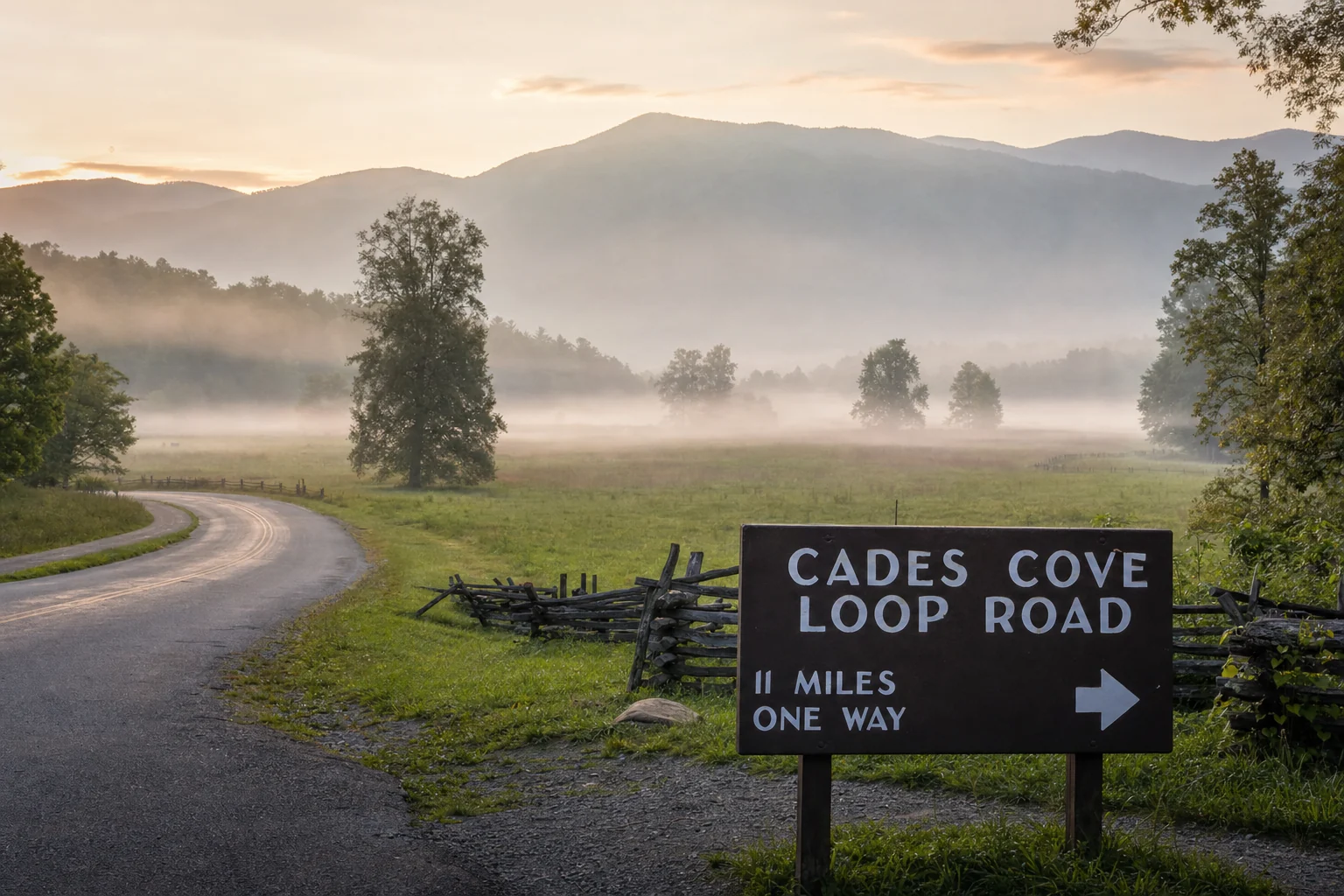
Cades Cove deserves its own half-day: the 11-mile driving loop passes old homesteads and open meadows, and deer and black bear show up regularly in early morning. Roaring Fork Motor Nature Trail and the hike to Grotto Falls offer a quieter alternative on the Gatlinburg side of the park.
Outside the park, Gatlinburg has the SkyLift Park, Anakeesta, and Ripley's Aquarium of the Smokies for non-hiking days. Pigeon Forge hosts Dollywood and a dense strip of go-karts and shows. If that scene isn't your preference, Townsend on the western edge is considerably quieter and offers direct Cades Cove access without driving through Pigeon Forge.
On the North Carolina side, the Qualla Boundary at Cherokee operates as sovereign tribal land with its own character; the Museum of the Cherokee Indian is worth a stop, and Oconaluftee is one of the more reliable places in the park to spot elk at dusk. Bryson City is farther west: the Great Smoky Mountains Railroad runs there, and Deep Creek is good for tubing.
Where to stay
Gatlinburg puts you closest to the main park trailheads and Newfound Gap Road, which matters if hiking is the priority. Pigeon Forge has more lodging at lower prices, with the trade-off of considerably more traffic on the main strip. For quieter mornings and direct Cades Cove access without the Pigeon Forge congestion, Townsend is a better base. Cherokee and Bryson City make sense if the North Carolina side of the park is getting most of your time.
Cabin rentals dominate this area; most visitors book them rather than hotels. Compare current availability and rates using the map below.
Best time to make the trip
Summer is the busiest season, and the crowds are real: parking fills at popular trailheads by 9 a.m., and Gatlinburg gets loud on weekends. Going early and having a backup trail ready when the first lot is full makes a significant difference.
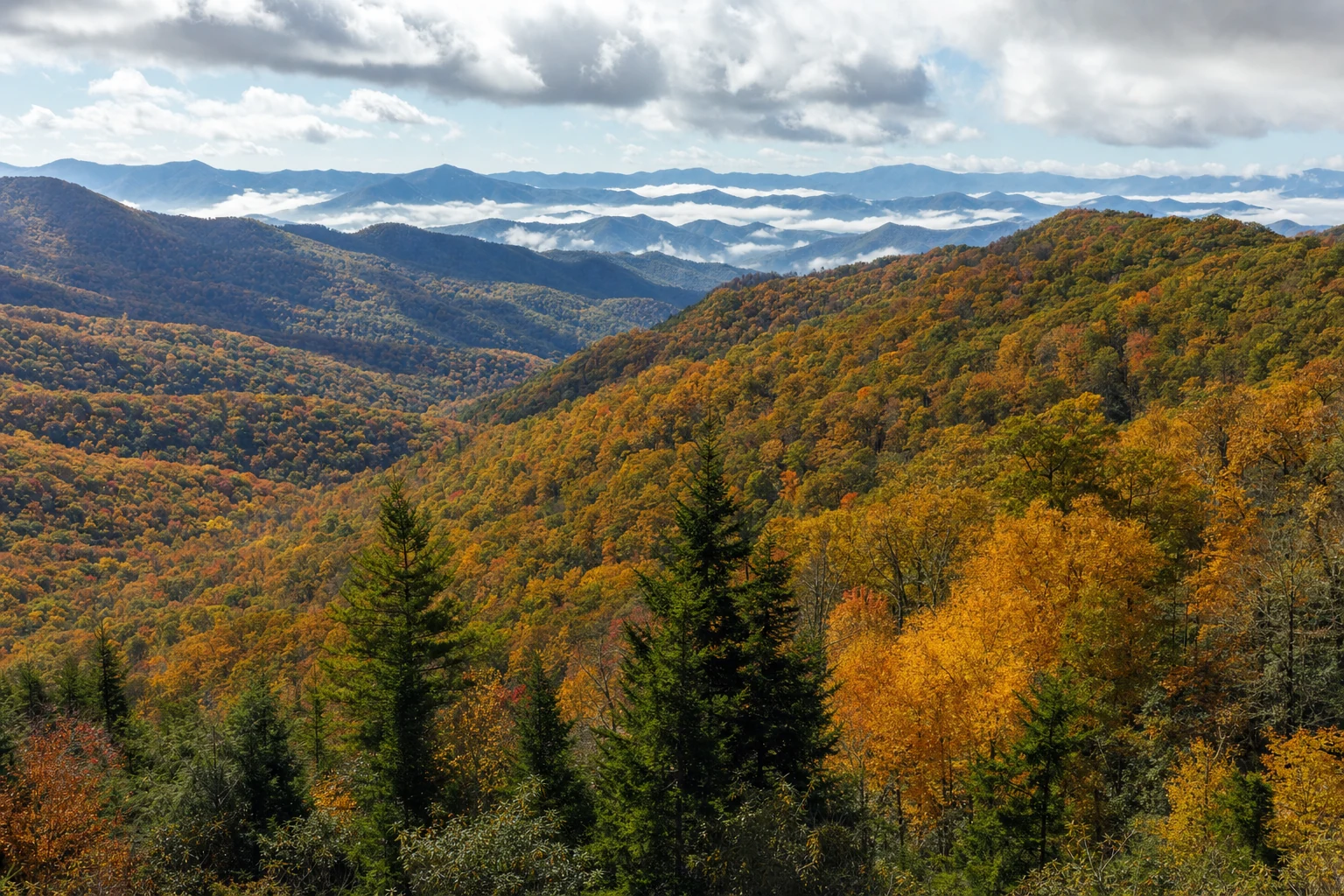
Fall draws the most visitors of any season. High-elevation foliage peaks in late September; lower elevations and the Gatlinburg area tend to hit color in mid to late October. The Clingmans Dome road and Newfound Gap Road see serious congestion on October weekends. The color is worth it, but book lodging months ahead.
Spring brings waterfalls running at full volume and the Elkmont firefly synchronization in late May or early June, though that event requires a lottery permit. Winter is quiet, with some roads closing above 5,000 feet during ice events; the lower trails stay accessible most of the season.