
Greenville sits about 115 miles from Gatlinburg, and under normal traffic conditions the drive takes right around two hours. That puts the Smokies firmly within day-trip range, though most first-timers who get there and see what's actually on offer end up wishing they'd blocked more time.
The drive from Greenville
The most direct route north follows US-25 through Hendersonville, then picks up I-26 before connecting to I-40 West toward Knoxville. Exit 407 drops you into Sevierville, and the Parkway runs straight into Gatlinburg from there. The drive through the Asheville corridor is legitimately scenic, and stopping there for an hour adds almost nothing to the total trip.
An alternative worth knowing swings through Asheville and takes US-74 west to US-19 north, entering the park from the Cherokee, NC side via Newfound Gap Road. This approach adds some time but delivers a different first impression; you arrive at elevation rather than working uphill from the Gatlinburg side.
Traffic on the Gatlinburg end backs up badly on summer weekends and during fall foliage season. Arriving before 10am makes a real difference, especially if you want to park near trailheads. Heading home after 6pm is typically cleaner than leaving mid-afternoon on Sundays.
How long to plan for
A day trip from Greenville is realistic. Two hours each way leaves six to eight hours on the ground, which is enough for one or two trails, lunch in Gatlinburg, and a drive through the park on Newfound Gap Road.
A weekend is closer to what the park deserves. It opens up Cades Cove (the 11-mile loop takes about two hours without stops, longer if wildlife is active), a longer trail like Alum Cave or Abrams Falls, and an evening on the Gatlinburg Parkway. Some people use a long weekend to cover both the Tennessee and North Carolina sides in one trip, staying in different towns along the way.
A full week works well if you want to go slow: multiple trail days, a day at Dollywood in Pigeon Forge, the Great Smoky Mountains Railroad out of Bryson City, and time at Anakeesta above Gatlinburg.
What to do when you arrive
The park charges no entrance fee, but any vehicle parked for 15 minutes or longer inside park boundaries requires a Park-It-Forward tag: $5 for a day, $15 for a week, $40 for an annual pass. Rangers do check, so buy one before hiking.
Gatlinburg is the natural starting point. The Roaring Fork Motor Nature Trail loops five miles from the edge of town past Grotto Falls and gets you into the forest without a long approach. Rainbow Falls and the Chimney Tops are also accessed from Gatlinburg. Laurel Falls is the most-visited waterfall trail in the park; it's paved, under three miles round trip, and draws crowds fast on weekends.
Cades Cove sits on the Tennessee side near Townsend, which has a reputation as the quieter approach to the park. The cove is a wide valley with preserved historic structures and reliable wildlife sightings: white-tailed deer year-round, black bears often in spring and fall. The loop road closes to vehicles on Wednesday and Saturday mornings for cyclists and walkers.
Cherokee, NC anchors the southern entrance and is worth the stop. Elk are regularly visible near the Oconaluftee Visitor Center at dusk. Bryson City, about 20 minutes west, offers Deep Creek tubing, Class II-III rafting, and the scenic railroad.
Where to stay
Pigeon Forge has the highest concentration of cabin rentals and chain hotels; it works well as a base if you're splitting time between the park and the commercial strip. Gatlinburg runs smaller and puts you closer to trailheads, though the Parkway stays noisy into the evening during peak season. Townsend is noticeably quieter and well-positioned for Cades Cove. Cherokee and Bryson City make more sense if most of your time is on the North Carolina side of the park.
Compare live cabin and hotel rates for any of these towns using the map below.
Best time to make the trip
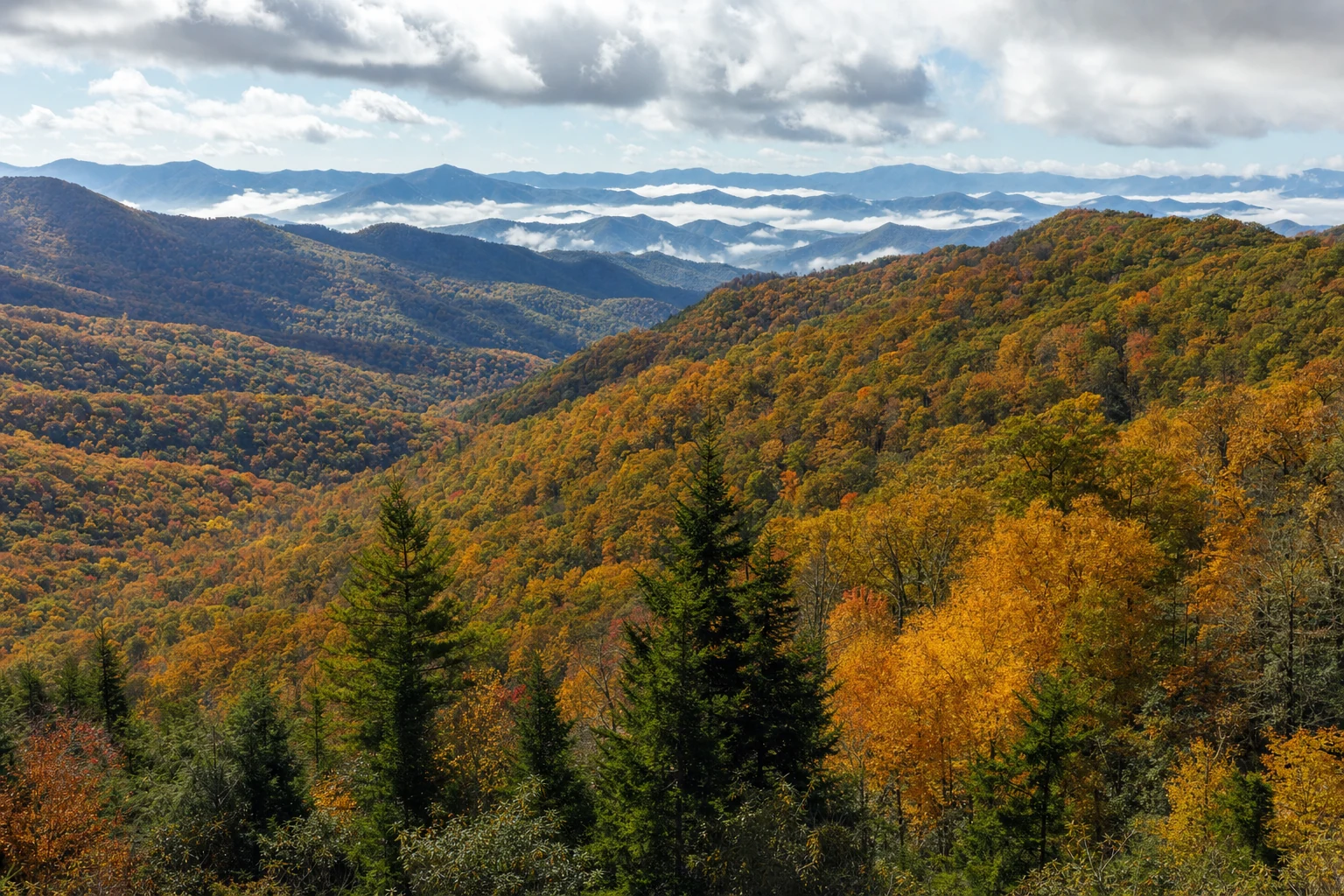
Summer is the park's busiest stretch, with July drawing the largest crowds. Trails on the Tennessee side feel congested by late morning on weekends; early arrivals and weekday visits help considerably. Fall foliage starts at the highest elevations, including Kuwohi (formerly Clingmans Dome, at 6,643 feet), as early as late September, and the color works its way downhill through October into early November. Accommodations book out months in advance during peak foliage weeks.
Spring brings wildflowers and the synchronous firefly event at Elkmont in late May or early June; firefly viewing requires a permit issued by lottery, and demand is high. Winter is the quiet season. Newfound Gap Road closes during ice and snow events, but the park stays open, crowds thin sharply, and the ridge views without foliage cover are their own reward.