
Johnson City sits about 95 miles from Gatlinburg, making it one of the nearer launch points for the Smokies in northeast Tennessee. The drive runs about 1 hour 45 minutes under normal conditions, most of it on open interstate before US-441 takes over near Sevierville. That last corridor through Pigeon Forge and into Gatlinburg is the part worth planning around.
The drive from Johnson City
Head west on I-26 toward Kingsport, then pick up I-40 West through Knoxville; the I-640 bypass helps if you're hitting rush hour. Exit onto US-441 South at Sevierville and follow it straight through Pigeon Forge and into Gatlinburg.
The interstate miles move quickly; US-441 is where schedules fall apart. Summer Saturdays can add 20 to 40 minutes through the Pigeon Forge strip, and leaving before 8 a.m. sidesteps most of it. October weekends during fall foliage are the other problem spot, and there's no real shortcut: the strip is the road.
How long to plan for
A day trip is realistic. Leave Johnson City by 7 a.m. and you can be on a trail by 9, with enough daylight left to hike, eat lunch in Gatlinburg, and still make it home. One full day works well for a single destination: a hike like Laurel Falls or Alum Cave Trail, plus a few hours in Gatlinburg.
Two nights makes more sense if you want to reach both sides of the park. Cades Cove is an 11-mile loop best experienced at dawn; Cataloochee Valley, on the North Carolina side, is a two-hour drive from Gatlinburg even without traffic. Plan at least one night if either is a priority. A week suits people who want to combine Dollywood, several trails, shows in Pigeon Forge, and time in both Cherokee and Bryson City without feeling rushed.
What to do when you arrive
The park charges no entrance fee, but any vehicle parked 15 minutes or longer inside park boundaries needs a Park-It-Forward parking tag: $5 for a day pass, $15 for a week, $40 for a year. Rangers check, so buy one before you need it.
Newfound Gap Road connects Gatlinburg to Cherokee on the North Carolina side, crossing the Appalachian crest at Newfound Gap; the turnoff for Kuwohi (Clingmans Dome), at 6,643 feet, is along the way, and the summit walk is short but steep. Roaring Fork Motor Nature Trail is an easy one-way scenic loop out of Gatlinburg that passes Grotto Falls.
For hiking, Alum Cave Trail and Laurel Falls are reliable first choices; Abrams Falls in Cades Cove adds up to about 5 miles round-trip but delivers. Chimney Tops and Andrews Bald both reach above the treeline, which most lower trails don't.
In Gatlinburg, Anakeesta and the SkyLift Park put you above the ridgeline; Ripley's Aquarium of the Smokies is a solid option when rain arrives. Dollywood in Pigeon Forge takes a full day on its own if that's the plan.
Where to stay
Gatlinburg puts you closest to the trailheads, but prices run highest there and the Parkway gets congested by mid-afternoon. Pigeon Forge has more inventory at better rates, just a few miles north on US-441. Sevierville is quieter and more removed from the strip.
Townsend, on the west side of the park, is worth considering if Cades Cove is a priority — it's the natural access point and sees a fraction of Gatlinburg's traffic. Cherokee on the North Carolina side makes sense if you're spending significant time on the south half of the park. Compare live cabin and hotel rates across all these towns on the map below.
Best time to make the trip
Summer runs June through August and draws the heaviest crowds, with trailhead parking lots filling by 9 a.m. on busy days. The high elevations near Newfound Gap and Kuwohi stay considerably cooler than the valleys.
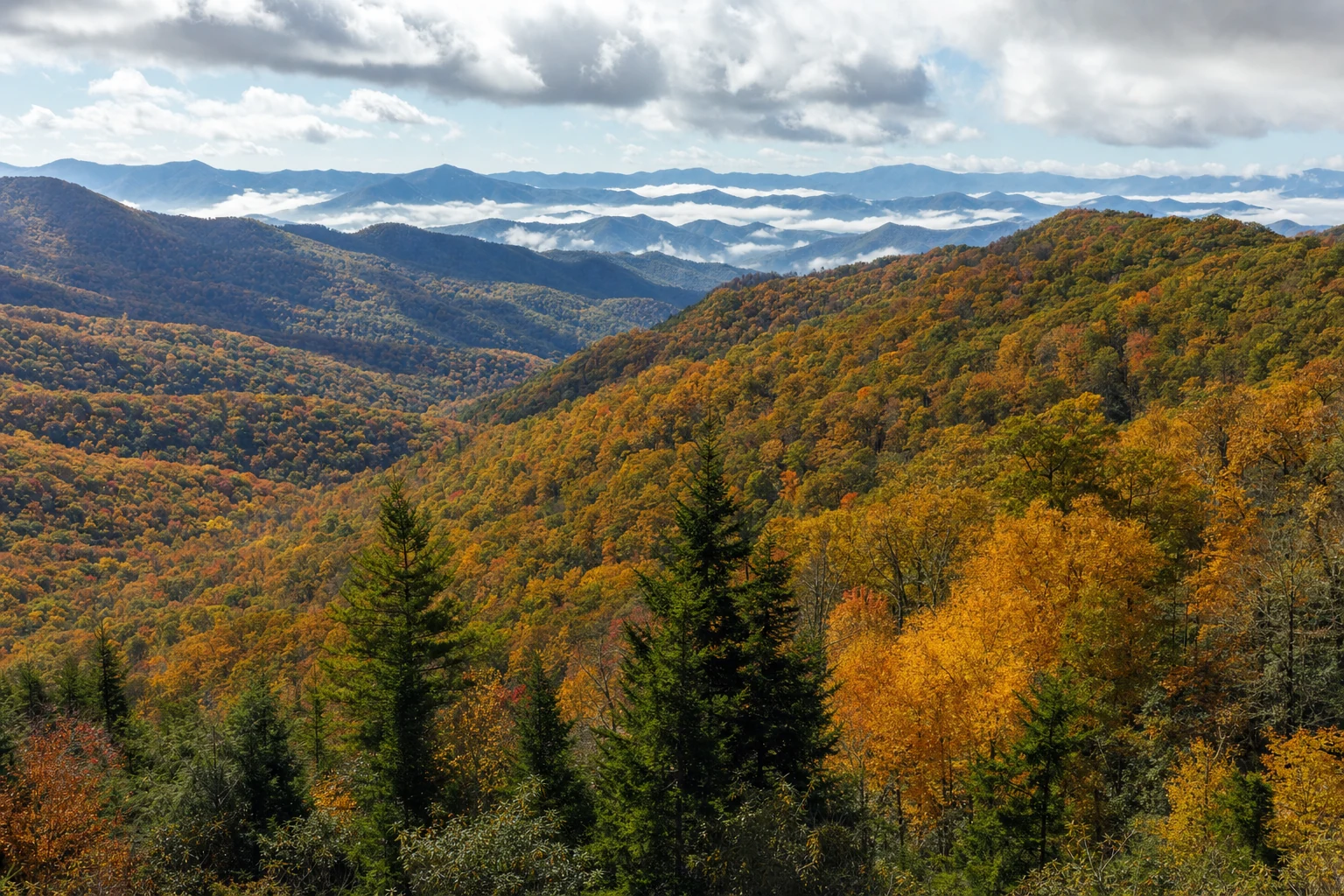
Fall is the most sought-after window. High-elevation areas near Kuwohi see color change starting in late September; lower elevations and the Gatlinburg corridor typically peak through mid to late October. October weekends are genuinely crowded, and there's no way around that without adjusting your dates.
Spring is underrated. Wildflowers along Roaring Fork and at lower elevations bloom from April into May, and crowds are lighter than summer. Newfound Gap Road can close for late snow into early spring, so check conditions before making it the centerpiece of the trip.
Winter is quiet. Some higher roads close periodically, and Newfound Gap Road can shut with little warning. For anyone who can plan around closures, the trails are nearly empty.