
Knoxville sits about 42 miles from Gatlinburg, which puts the park entrance under an hour away by car. Most drivers make it in 50 minutes without traffic, following I-40 East before cutting south on US-441 through Sevierville and Pigeon Forge. That proximity reshapes the math: a day trip from Knoxville to the Smokies is realistic, not aspirational.
The drive from Knoxville
The route is straightforward: east on I-40, then south on US-441 through Sevierville and Pigeon Forge before arriving in Gatlinburg at the park's north entrance. The highway portion moves fast; the US-441 corridor through Pigeon Forge is where time disappears. That stretch is one of the most traffic-heavy roads in Tennessee on summer weekends, with stoplights and commercial traffic slowing things considerably. Budget an extra 15 to 20 minutes on Saturday mornings in July and August, or on any fall weekend during peak foliage. Weekday mornings before 9 a.m. are usually quick.
If you're flying in rather than driving, McGhee Tyson Airport (TYS) is about 45 minutes from Gatlinburg and sits practically on the way.
How long to plan for
A day trip works. Forty-two miles is close enough that you can leave Knoxville at 7 a.m., be on a trail by 8, hike Laurel Falls or Alum Cave before the crowds arrive, grab lunch in Gatlinburg, and get home by 5. That said, one day rarely feels like enough once you're actually there. The park covers 522,000 acres and Gatlinburg is just one entry point.
A weekend lets you cover both the Gatlinburg side and Cades Cove, which sits on the opposite end of the park near Townsend. If Cataloochee Valley elk viewing, Bryson City's Deep Creek rafting, or the Cherokee side via Newfound Gap Road interests you, two nights makes more sense than one.
A full week opens up the longer itineraries: Roaring Fork Motor Nature Trail, Abrams Falls, Andrews Bald via the Appalachian Trail, Grotto Falls, and time in Cherokee on the Qualla Boundary.
What to do when you arrive
Gatlinburg is the main north-side entry point, with the park visitor center on the edge of town. Parking inside the park requires a Park-It-Forward tag for any vehicle staying 15 minutes or longer: $5 for a day, $15 for a week, $40 for a year. The park itself charges no entrance fee.
For trails near Gatlinburg, Alum Cave is the best intermediate hike on the Tennessee side, about 4.4 miles round-trip to the bluff with an option to continue to LeConte. Chimney Tops is closed to the summit after fire damage but the lower trail remains open. Roaring Fork Motor Nature Trail loops through old-growth forest with short spur walks, including the approach to Grotto Falls.
Pigeon Forge is 10 minutes north. Dollywood runs daily through October; Ober Mountain has a gondola from Gatlinburg for skiing, ice skating, or bear habitat viewing depending on the season. Ripley's Aquarium of the Smokies and Anakeesta are both on the Gatlinburg Parkway when the weather doesn't cooperate, and Gatlinburg SkyLift Park spans the Parkway on a pedestrian bridge with open-air views of the ridgeline.
Where to stay
Gatlinburg puts you closest to the trailheads and has the widest range of cabin rentals and small inns. Pigeon Forge has more chain hotels and more total room capacity, which works better for families, and it's also the right base for Dollywood. Sevierville, a few miles north, tends to run cheaper and sees far less foot traffic. Townsend on the western side is the quietest of the four gateway towns and the logical base for Cades Cove access. Compare live cabin and hotel rates on the map below.
Best time to make the trip
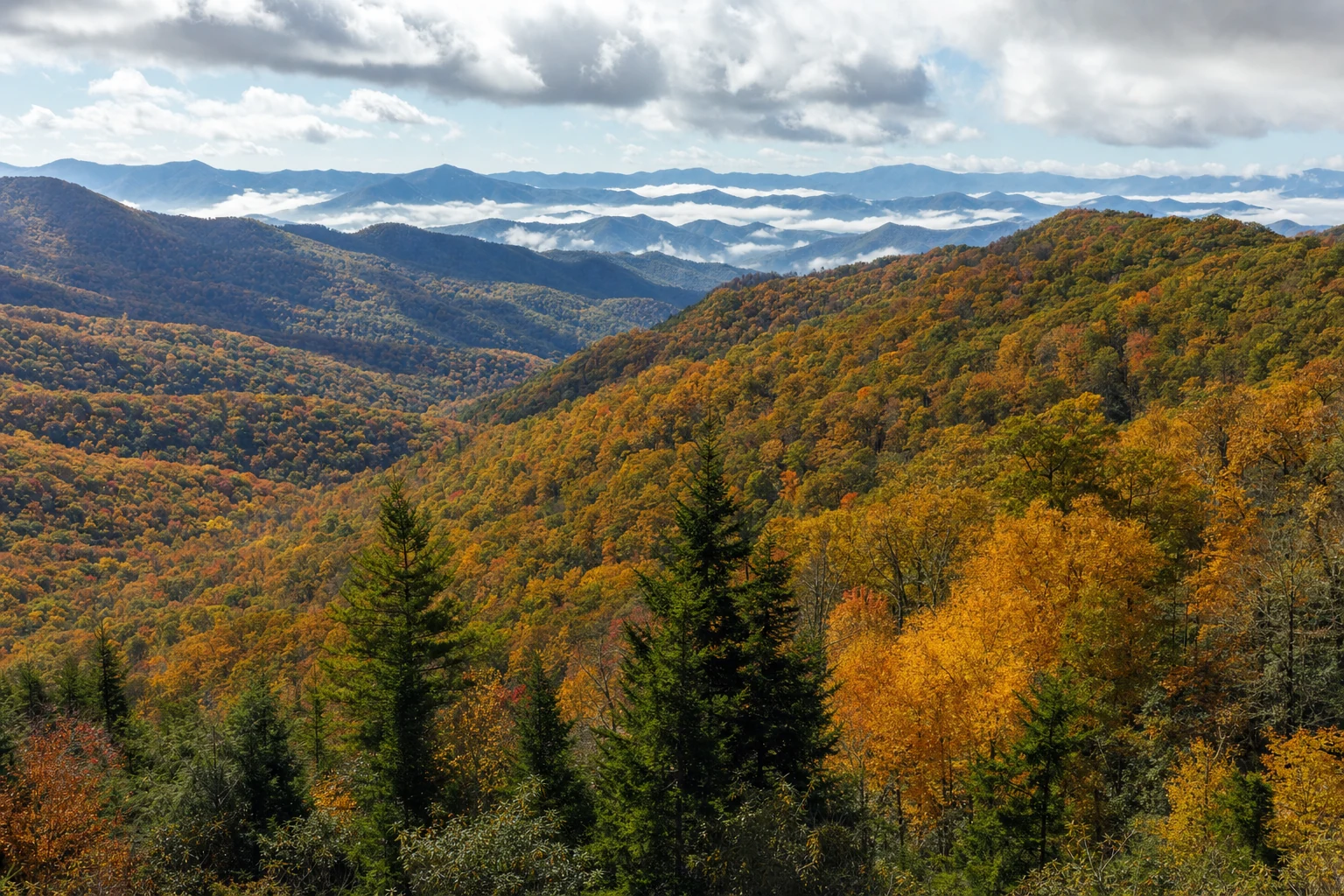
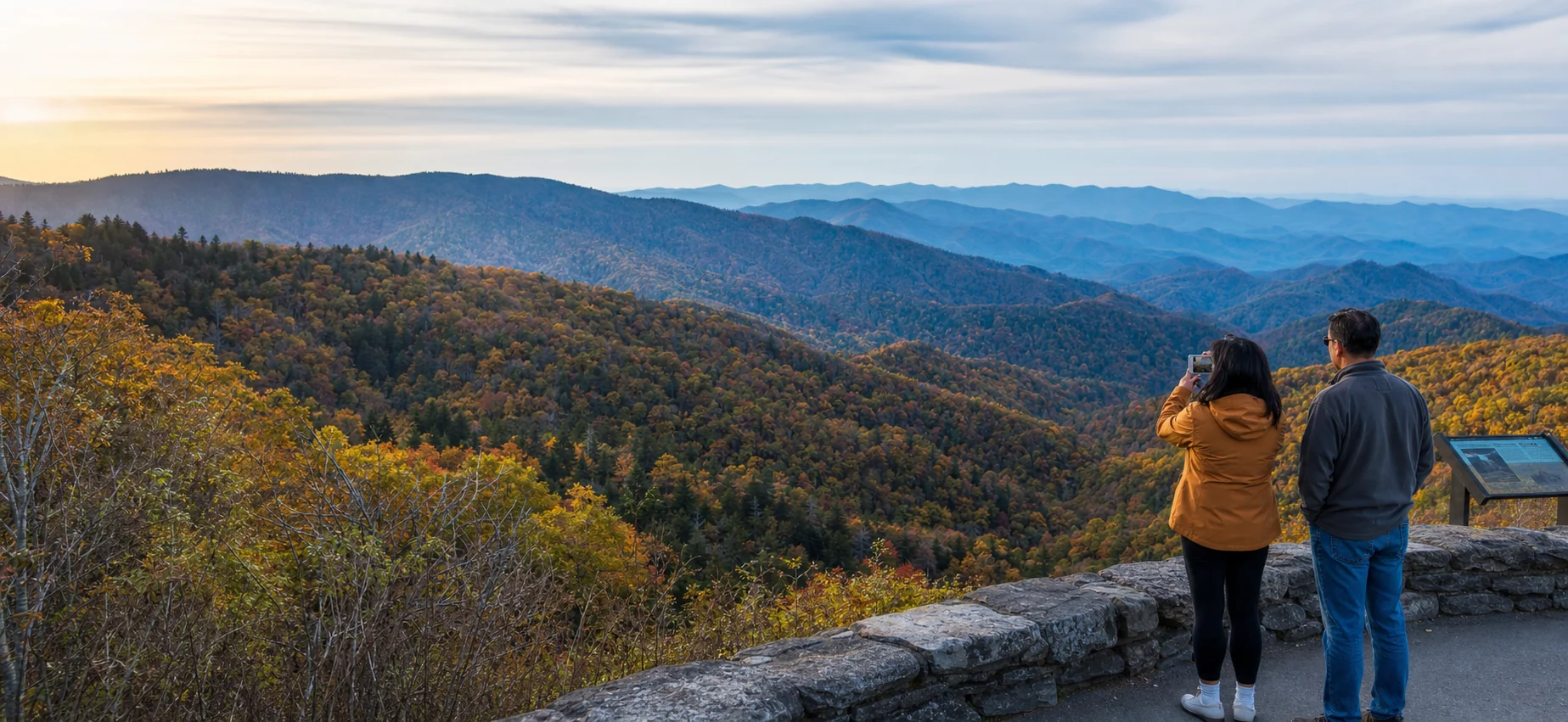
Spring arrives at lower elevations by late April, with wildflower blooms on trails like Alum Cave and Laurel Falls before summer humidity sets in. Summer means full foliage, open waterfalls, and serious crowds; Newfound Gap Road can back up 45 minutes on peak July weekends. Fall is the most popular season by a significant margin. High-elevation color starts near Kuwohi (Clingmans Dome, 6,643 feet) in late September and works down to the valleys through early November. Checking real-time foliage reports before committing to a specific weekend will save a lot of frustration during October. Winter quiets everything down considerably, and while Newfound Gap Road can close during snow events, the lower trails and the Cades Cove 11-mile loop remain accessible most of the time.