
Louisville sits about 290 miles from Gatlinburg, which translates to roughly 4 hours and 30 minutes of driving under normal conditions. Plan for a weekend at minimum, because this is too far to drive both ways in a single day and still come away feeling like you actually saw the place.
The drive from Louisville
The most direct route runs I-65 South to Nashville, then picks up I-40 East all the way into the mountains. An alternative goes I-75 South through Lexington and Knoxville before connecting to I-40 East; that path skips Nashville entirely, which can matter on Friday afternoons when I-65 south of the city backs up.
Once you're past Knoxville and onto US-441, the ridgelines fill the windshield fast. The stretch through Sevierville and Pigeon Forge into Gatlinburg is where things slow down; US-441 through that corridor can add 30 to 45 minutes in summer or on peak fall weekends, so leaving Louisville by 6 or 7am is usually enough to roll in before the gridlock builds.
How long to plan for
A day trip isn't worth the math. With 290 miles each way, you'd spend over nine hours in the car for maybe four hours in the park, assuming no delays. Two nights is the practical minimum; you get one full day in the park and enough time to actually see a gateway town without the whole trip feeling like a race. Four nights or more is where the trip stops feeling rushed, and a full week makes sense if you want to cross into the North Carolina side — Cataloochee, Bryson City, the Cherokee stretch.
What to do when you arrive
Newfound Gap Road is the main artery through the park from Gatlinburg, crossing the ridge at 5,046 feet with pull-offs the entire length. A 7-mile spur from the gap leads to Kuwohi (Clingmans Dome), the highest point in the park at 6,643 feet, and the walk up to the observation tower is worth the effort on a clear day.
For trails: Alum Cave is 4.4 miles round trip to the bluffs, with views most of the way and a longer extension to Mount LeConte's summit for those who want a full day out. Laurel Falls is paved and the most visited trail in the park; Abrams Falls, reached from Cades Cove, covers 5 miles round trip and ends at a wide plunge pool. Rainbow Falls and Grotto Falls are solid choices on the Gatlinburg side.
Cades Cove runs an 11-mile one-way loop past 19th-century homesteads and usually turns up black bear, deer, and turkey; get there before 9am, because by late morning in summer it becomes a slow caravan with nowhere to turn around.
Any vehicle parked inside the park for 15 minutes or more needs a Park-It-Forward parking tag: $5 per day, $15 per week, or $40 per year. Buy it at nps.gov or through the app before leaving Louisville.
Outside the park, Dollywood in Pigeon Forge is a full-day outing and one of the better regional theme parks in the country. Anakeesta sits on a ridgeline above Gatlinburg with gondola access and long views over the Parkway. On rainy days, Ripley's Aquarium of the Smokies on the Gatlinburg Parkway is a reliable option.
For the North Carolina side, Cataloochee Valley has an established elk herd; arrive around dusk for the best sightings. Bryson City connects to Deep Creek for tubing and whitewater, and the Great Smoky Mountains Railroad runs excursion trips from town. Cherokee, on the Qualla Boundary, has the Oconaluftee Visitor Center where elk frequently graze in the meadow right outside.
Where to stay
Gatlinburg puts you closest to the main park entrance, with cabin rentals dominating and hotels lining the Parkway. Prices run higher and the Parkway gets loud on weekend nights. Pigeon Forge has more hotel options at lower rates and sits about 20 minutes from the park entrance. Townsend, on the western side, is quieter and cuts driving time to Cades Cove considerably; it's the right base if that loop is your focus. For the North Carolina side, Cherokee and Bryson City are practical for anyone splitting time across both ends of the range. The map below lets you compare live cabin and hotel rates across all these towns for your specific dates.
Best time to make the trip
Summer packs the park from late June through August, July 4th weekend most of all. Trails crowd by 9am and US-441 through Pigeon Forge can be stop-and-go for long stretches — manageable, but far from quiet.
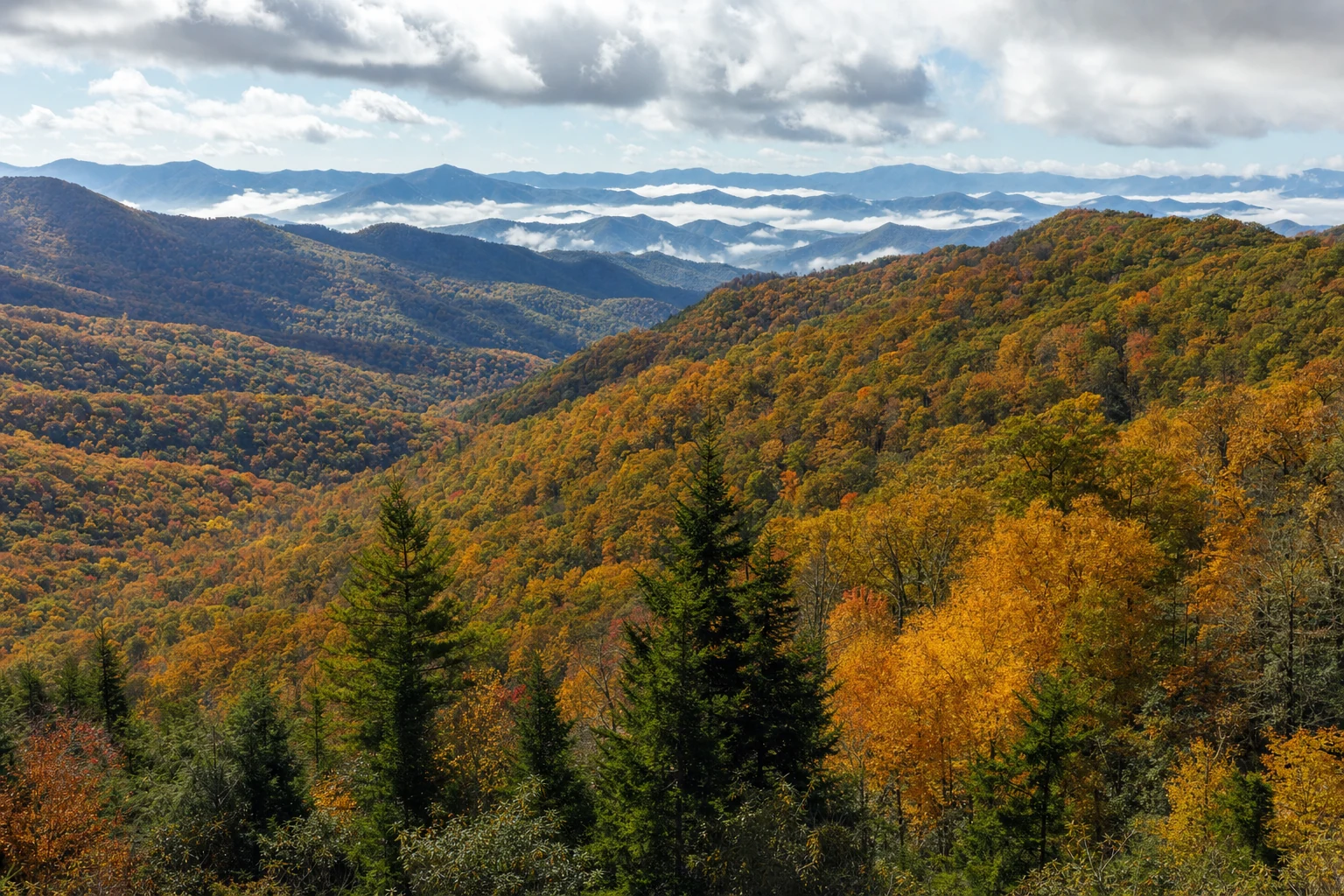
Fall draws the most visitors overall. High-elevation color starts turning in late September; the valleys and mid-elevations peak from mid-October into early November. Arriving Sunday through Wednesday avoids the worst of fall weekend traffic on Newfound Gap Road and the Cades Cove loop.
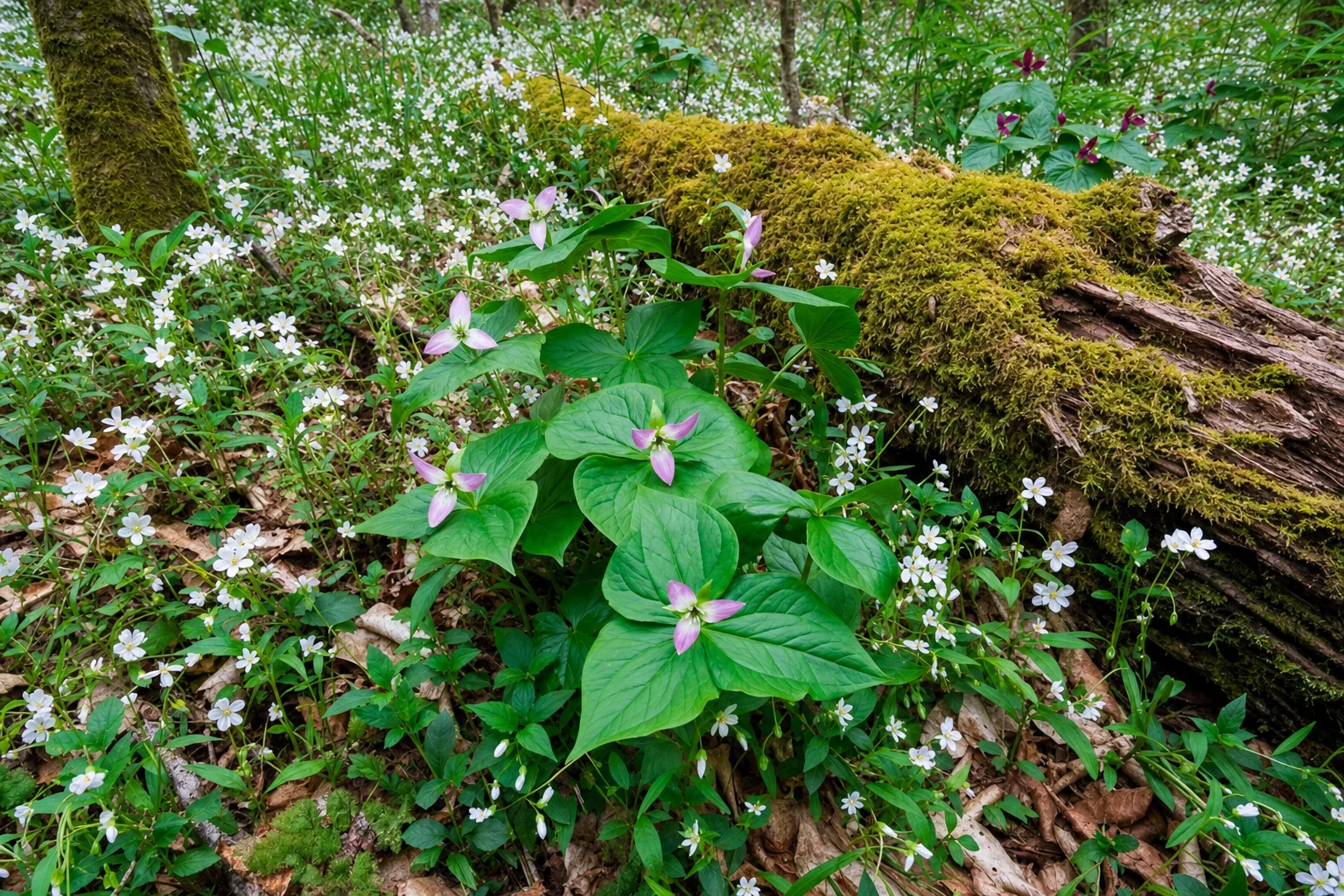
Spring gets overlooked. Wildflower blooms on the lower trails run through April into early May, and the park's synchronous firefly display at Elkmont in late May or early June is worth planning around — tickets through recreation.gov sell out well in advance.
Winter is the quietest stretch by a wide margin. Newfound Gap Road closes occasionally for ice, but Cades Cove is generally accessible, and the bare trees open up ridge views that disappear under summer foliage.