
Nashville to Gatlinburg runs about 215 miles, which translates to roughly 3 hours and 30 minutes of driving under normal conditions. That's close enough for a genuine weekend trip without burning most of Saturday on the road, but far enough that a single-day run doesn't leave you with enough time on the ground to make it worthwhile.
The drive from Nashville
Take I-40 East from Nashville and stay on it for nearly the entire distance. The highway handles most of the work; you'll exit near Sevierville and Pigeon Forge, then follow US-441 South into Gatlinburg and the park entrance. The stretch through Pigeon Forge is the only real friction point: the commercial strip corridor can add 20 to 30 minutes on busy summer weekends or during peak fall foliage weeks. Arriving before 10 a.m. on a Saturday helps considerably. Popular trailheads inside the park fill their parking areas by mid-morning during peak season, and once they're full, rangers turn vehicles away.
How long to plan for
At 215 miles each way, this isn't a day-trip route. You'd spend 7 hours in the car and have maybe 5 or 6 hours on the ground, which isn't enough to get inside the park and do anything substantial. Two nights is the minimum that makes the drive worthwhile: arrive Friday evening, spend all of Saturday in the park, and leave Sunday after a morning stop. Three or four nights opens up more of the park, a drive through Cherokee on the North Carolina side, and time to actually slow down instead of chasing the next stop.
What to do when you arrive
The national park has no entrance fee, but any vehicle stopped 15 minutes or more needs a Park-It-Forward parking tag: $5 for a day, $15 for a week, $40 for the year. Worth buying before you leave Nashville if you plan to stop anywhere inside the park.
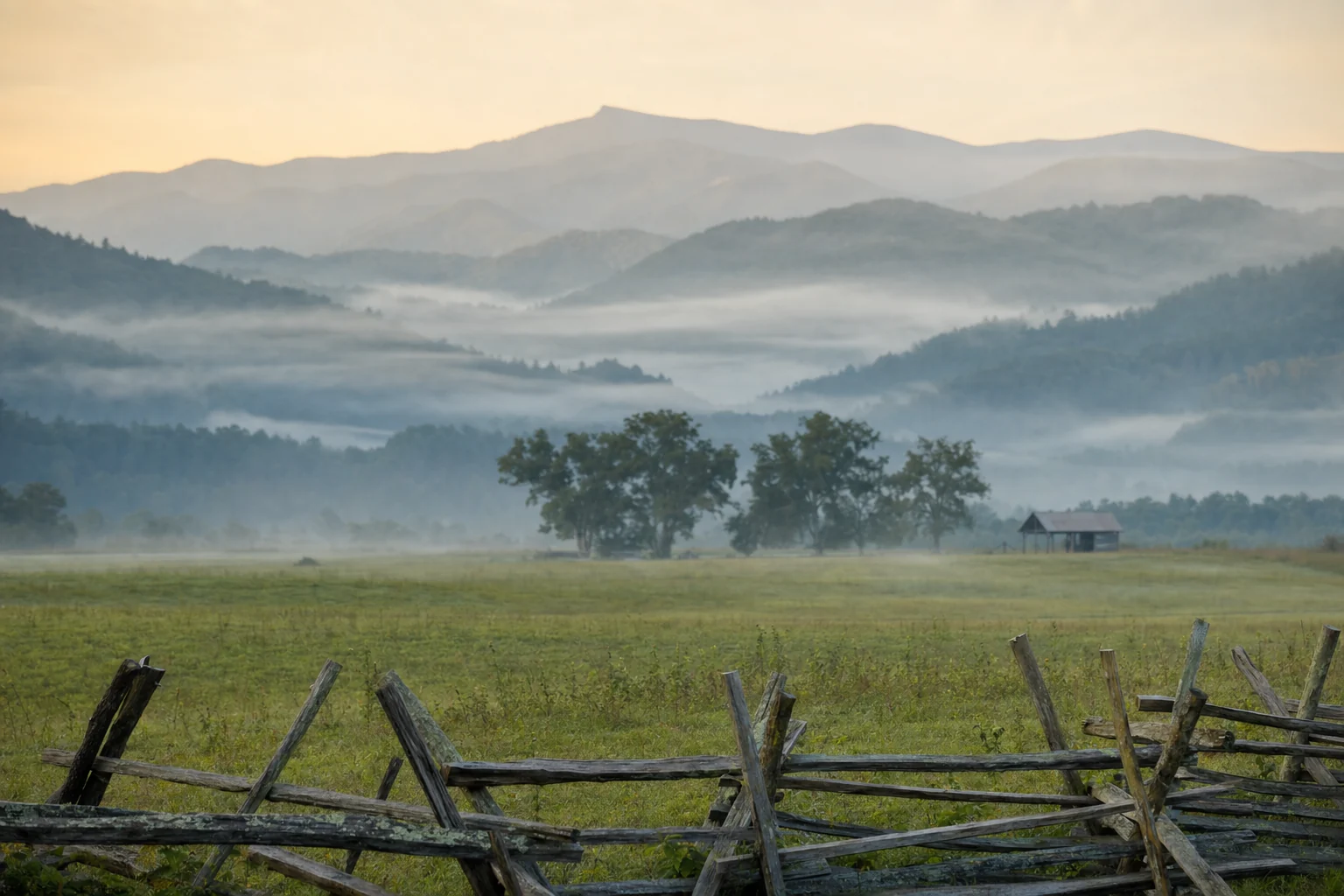
The Cades Cove 11-mile loop is the standard starting point for first-timers, with deer, black bears, and preserved 19th-century homesteads along the route; go early, before the cars back up behind each other at every wildlife sighting. Laurel Falls is the most-walked paved trail in the park, manageable in under an hour and worth doing before lunch. Abrams Falls takes more effort at roughly 5 miles round-trip, but the wide plunge pool at the base makes it a better destination on hot days. For elevation and views, Newfound Gap Road crosses the park's spine and tops out near Kuwohi (formerly Clingmans Dome) at 6,643 feet; the walk from the parking area to the observation tower is short but steep.
In Gatlinburg proper, Anakeesta offers ridge views above town via gondola, and the SkyLift Park spans a pedestrian bridge across a gorge on the main Parkway. Ripley's Aquarium of the Smokies works well as an afternoon option when thunderstorms roll through, which happens regularly in summer. Pigeon Forge runs on a different energy: Dollywood operates through most of the year including fall, the live entertainment shows draw large crowds, and the go-kart tracks and outlet shopping along the strip fill the time between park days.
Where to stay
Gatlinburg is the quietest of the main gateway towns and the closest to the park's north entrance. Pigeon Forge has more options at every price point, particularly for larger groups renting cabins. Sevierville is a few miles farther out but has a cluster of chain hotels that typically run cheaper than in-town alternatives.
Townsend, on the park's western approach, is consistently underestimated. It's quieter than Pigeon Forge by a significant margin, puts you close to the Cades Cove entrance, and the Little River corridor between Townsend and the park is one of the nicer approaches into the mountains. Cherokee, just across the park on the North Carolina side, is worth a night if you want Cataloochee Valley in the morning; fall elk viewing there is reliable, and the Oconaluftee area adds solid roadside wildlife sightings.
The map below shows live cabin and hotel availability across all the gateway towns.
Best time to make the trip
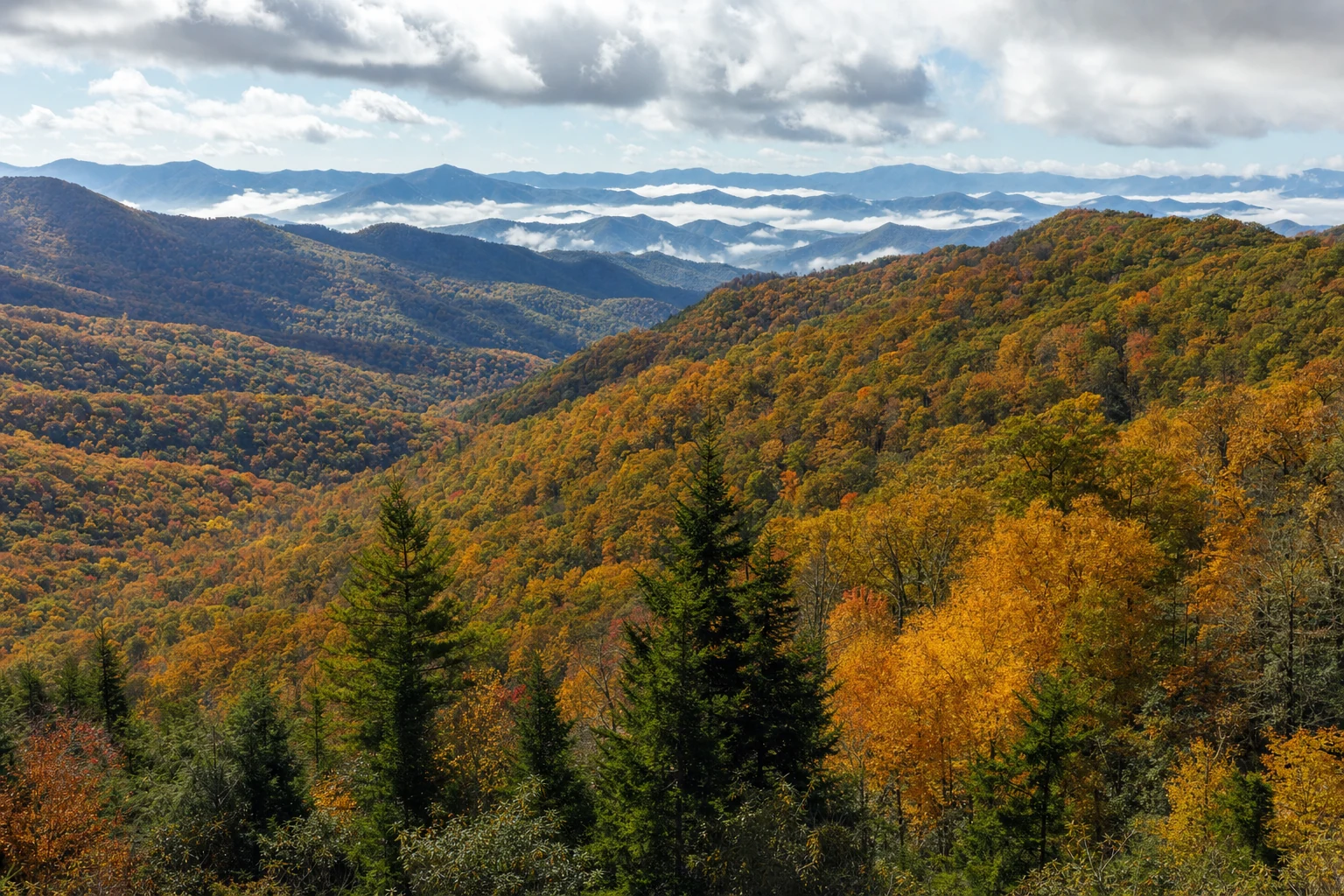
Summer is reliable for weather but heavy on crowds; lodging books out well in advance on holiday weekends. Fall is the Smokies' signature season. High-elevation color starts in late September on the ridgelines near Kuwohi, then works down through October into early November in the lower valleys. October weekends on US-441 are the single most congested stretch of the year in this corridor.
Spring wildflowers peak in April and pull their own crowds, though the park feels less frantic than summer. The Elkmont firefly synchronization in late May or early June is worth planning around, but entry permits are allocated by lottery months in advance. Winter is underrated: when Newfound Gap Road is open, the park is nearly empty.