
Raleigh sits about 285 miles from Gatlinburg, which works out to roughly 4 hours and 30 minutes of driving without stops. Factor in a couple of rest stops and the near-certain slowdown on I-40 through Asheville, and 5 hours door-to-park is a more realistic estimate. That distance makes a day trip impractical; plan for at least a full weekend.
The drive from Raleigh
One highway handles the whole trip: I-40 West from Raleigh to the edge of the mountains, with no route changes required. You'll pass through Asheville roughly 45 minutes before reaching Gatlinburg, and that's the one segment worth planning around; on summer Fridays or during October leaf season, Asheville traffic can add 30 to 45 minutes, so leaving Raleigh by 7 a.m. cuts most of it. Raleigh-Durham (RDU) is the nearest major airport if flying is under consideration, but there's no large hub close to Gatlinburg, so a rental car and mountain roads come with that option regardless, and most Raleigh travelers find driving the simpler choice.
Past Asheville, the descent toward Waynesville and the Tennessee line brings curves, slower speeds, and tighter lanes for the last 50 miles or so, which is worth flagging if anyone in the car gets motion sickness.
How long to plan for
A two-night weekend (Friday arrival, Sunday departure) is the practical minimum: one full day in the park, one day for a gateway town. That's enough to see what the Smokies are about, though not enough to feel settled. Three to four nights is where the trip starts to feel proportionate to the drive, with time for the 11-mile Cades Cove loop, a hike to Abrams Falls or Laurel Falls, and an evening wandering the Gatlinburg Parkway without a hard turnaround deadline.
A full week opens the North Carolina side: Cataloochee Valley for elk, the Oconaluftee area outside Cherokee, Bryson City and the Great Smoky Mountains Railroad, and longer climbs like Alum Cave Trail or Andrews Bald up near Kuwohi (Clingmans Dome, the park's high point at 6,643 feet).
What to do when you arrive
Most visitors from Raleigh enter near Gatlinburg, which puts Newfound Gap Road directly ahead, the main paved corridor crossing the park from Tennessee into North Carolina. Roaring Fork Motor Nature Trail and the trailheads for Rainbow Falls and Grotto Falls branch off within a few miles of downtown.
Pigeon Forge, a few miles north on US-441, runs a different kind of trip: Dollywood, live show theaters, go-karts, and outlet shopping in nearby Sevierville. For a mixed group with varying interests, it fills in a rainy afternoon or an evening when the hiking is done.
If crowds are a concern, Townsend offers a quieter approach to the Cades Cove loop without passing through the larger commercial strips. On the North Carolina side, Cherokee has the Oconaluftee Visitor Center (the best spot to watch elk at dusk near the park's southern entrance), the Qualla Boundary, and Harrah's Cherokee Casino. Bryson City, about 20 minutes from Cherokee, has white-water rafting on Deep Creek and the Great Smoky Mountains Railroad.
Any vehicle parked 15 minutes or more at a park trailhead or pullout needs a Park-It-Forward tag: $5 for a day pass, $15 for a week, $40 for the year. There's no admission fee to enter the park itself. Buy the tag online before leaving Raleigh; trailhead kiosks sell out on busy weekends.
Where to stay
Gatlinburg has the widest lodging range, from downtown hotels walkable to Anakeesta and Ripley's Aquarium of the Smokies to cabin rentals in the ridges above town. Pigeon Forge undercuts it on chain-hotel prices and makes more sense if Dollywood is on the itinerary. Townsend stays quiet and books fast for fall weekends. Cherokee has hotel options near Harrah's for travelers focused on the North Carolina side of the park.
You can compare current cabin and hotel rates using the live map below.
Best time to make the trip
Summer (late June through August) draws the biggest crowds, and popular trailhead lots fill before 10 a.m. on weekends. Arriving early or using the Gatlinburg trolley system avoids most of the parking crunch.
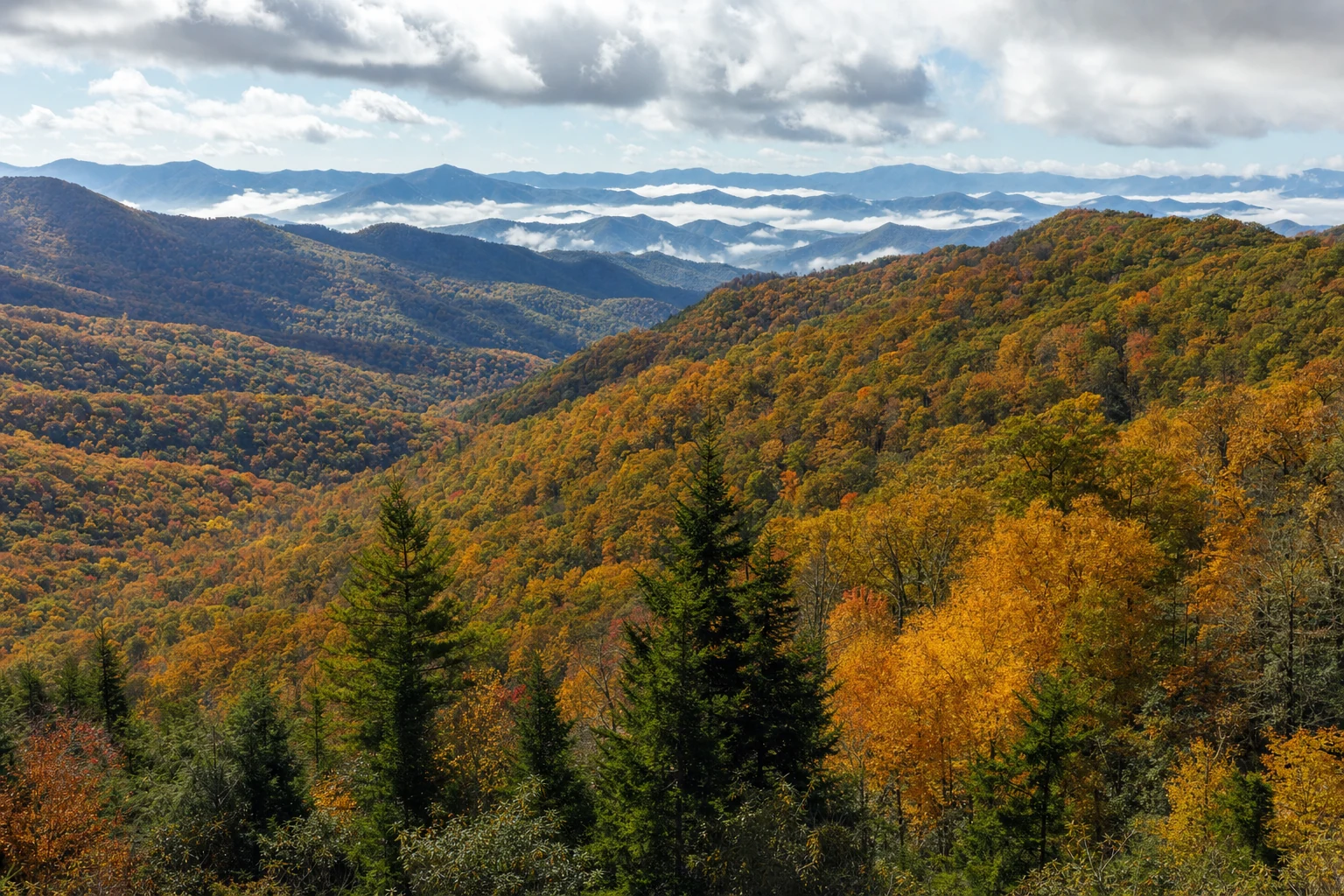
Fall brings most Raleigh visitors, and the window is wider than people expect: color starts at the high elevations in late September and moves downslope through early November. October weekends in Gatlinburg are extremely congested; mid-October on a weekday hits peak color with a fraction of the crowd.
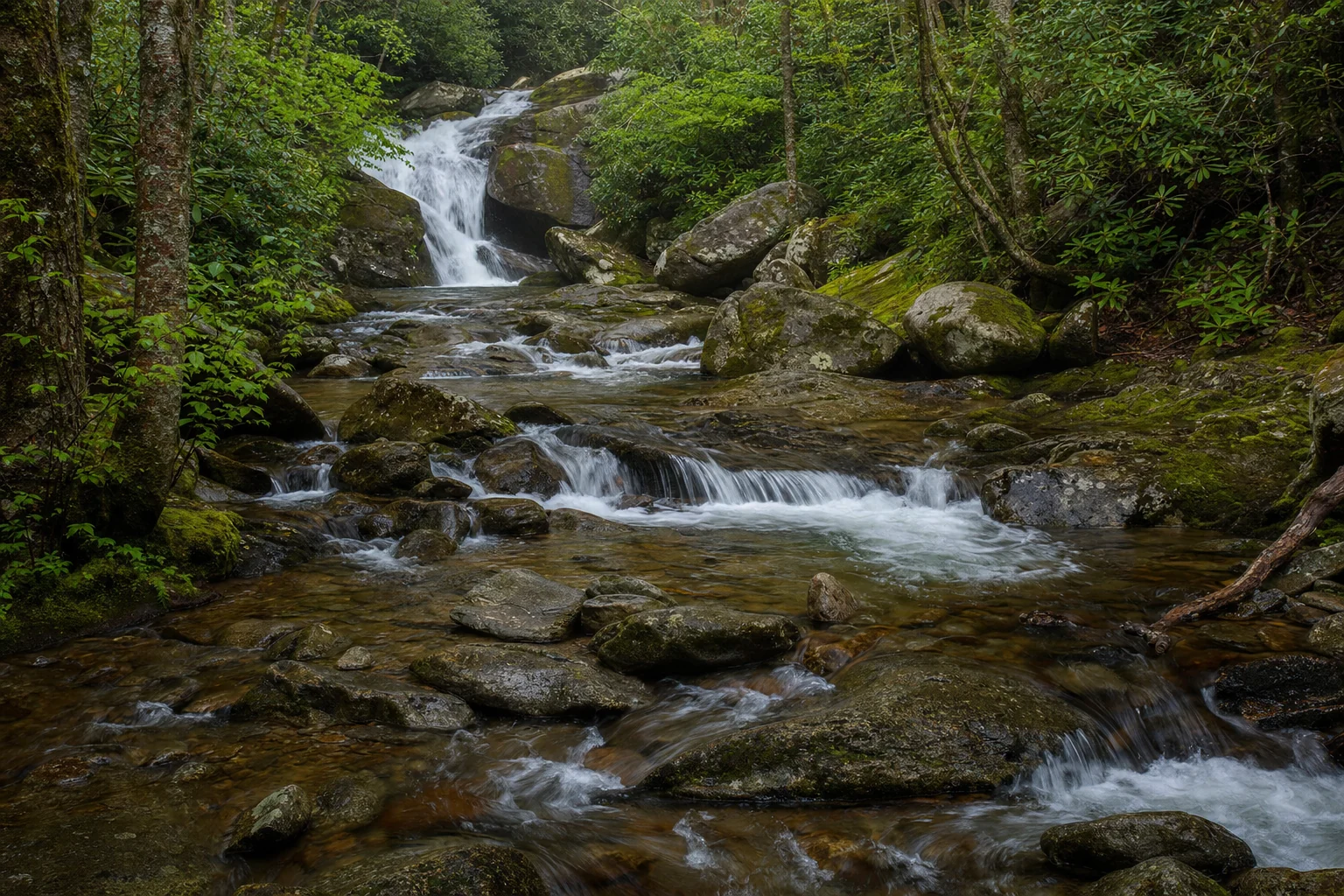
Spring (April and May) gets overlooked. Wildflowers peak from mid-April through May, snowmelt keeps the waterfalls running hard, and the crowds that pack summer and fall are largely absent. Winter closes certain roads, including the Cades Cove loop for maintenance in January and February, but the park stays open and the bare canopy opens ridge-line views that summer foliage hides entirely.