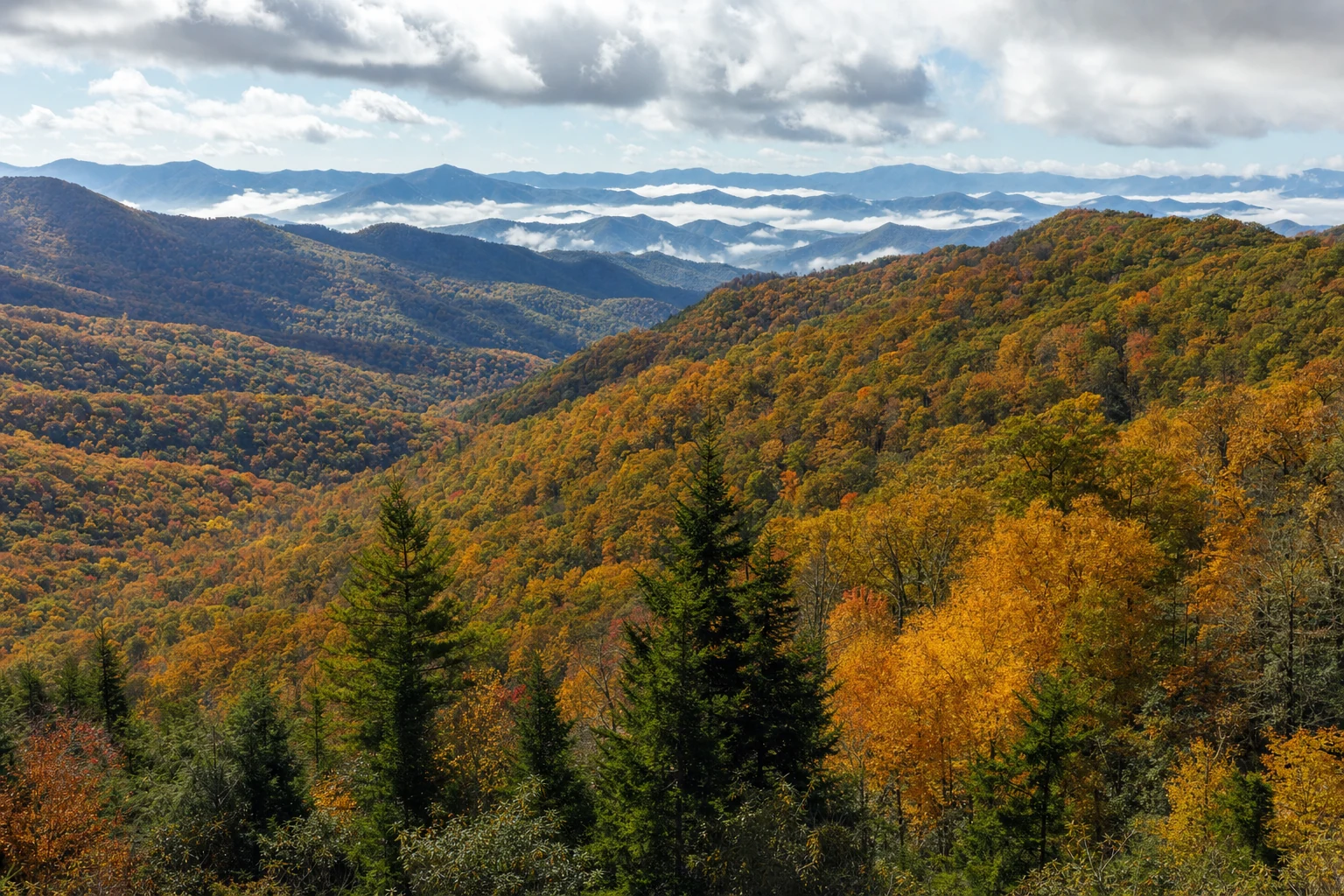

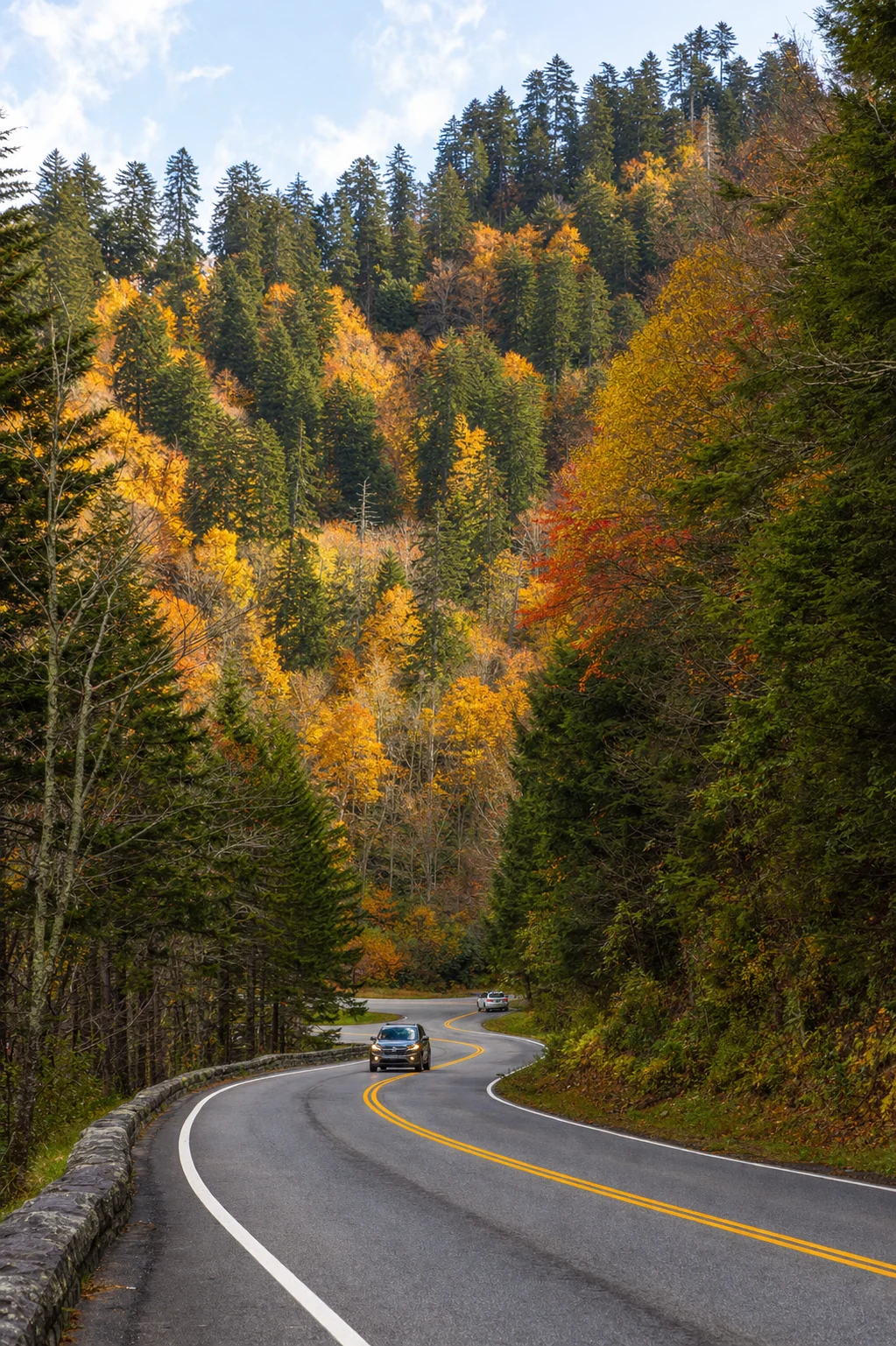
Winston-Salem is about 200 miles from Gatlinburg, and the drive runs roughly 3 hours and 15 minutes under normal conditions. That puts the Smokies squarely in long-weekend territory: close enough to be practical, far enough that you'll want to stay for at least two nights to make the round trip worth it.
The drive from Winston-Salem
The route runs west on I-40 through Asheville, then continues into the foothills toward Sevierville before dropping south on US-441 into Gatlinburg. It's a straightforward drive with good signage, and almost entirely highway until the last 20 miles. The one variable worth planning around is Asheville: traffic through the city backs up on Friday afternoons and Sunday evenings during peak season, so leaving Winston-Salem by 7 a.m. on a Saturday, or adding buffer time to Sunday's return, makes the difference between a smooth trip and a frustrating one. Once you're past Asheville the road climbs noticeably, and the ridgeline comes into view well before you reach Sevierville. The final stretch through Pigeon Forge follows a busy commercial strip that slows considerably on summer and fall afternoons.
How long to plan for
A day trip doesn't add up at this distance. You'd log more than six hours of driving round-trip and arrive with maybe four hours before you'd need to turn around; that's enough time for Newfound Gap Road and a short walk, and not much else. A two-night weekend is the practical minimum. Three nights is more comfortable: one full day in the park, one day in the gateway towns, and some margin for rain or a slow morning. Four nights is worth considering if you want to cover both the Tennessee side (Gatlinburg, Pigeon Forge, Cades Cove) and the North Carolina side (Cherokee, Bryson City, Cataloochee Valley).
What to do when you arrive
The park has no entrance fee, but every vehicle parked for 15 minutes or longer requires a Park-It-Forward tag: $5 per day, $15 per week, or $40 for the year. Tags are sold at entrance kiosks and many local retailers. Trailhead lots along Newfound Gap Road routinely fill before 9 a.m. on summer and fall weekends, so morning arrivals matter.
For the park itself, Cades Cove is the 11-mile one-way loop that produces the most reliable wildlife sightings; black bear and deer are common in early morning and evening. Roaring Fork Motor Nature Trail offers a shorter, wooded alternative with access to Grotto Falls, one of the few waterfalls in the park where the trail passes directly behind the water. For elevation, the Alum Cave Trail climbs toward Kuwohi (Clingmans Dome) at 6,643 feet, the highest point in the park. Laurel Falls and Rainbow Falls are both well-traveled; Abrams Falls requires more vertical gain and stays somewhat less crowded for it.
Outside the park, Dollywood in Pigeon Forge runs a full-season theme park that holds up well on its own merits, with strong rides and live entertainment. Anakeesta sits above Gatlinburg's main strip with ridge views and a via ferrata course. Ripley's Aquarium of the Smokies draws families steadily for the shark tunnel alone. On the North Carolina side, Cherokee on the Qualla Boundary has the Oconaluftee visitor center area, where bison and elk graze near the meadow; Harrah's Cherokee is a short drive away if that's of interest. Bryson City offers Deep Creek tubing and rafting, plus the Great Smoky Mountains Railroad.
Where to stay
Gatlinburg is the most walkable option and has the densest cluster of cabin rentals and restaurants, which makes it the default base for most first-timers. Pigeon Forge runs larger and more commercial along the Parkway; it's convenient for Dollywood but the strip itself wears thin after a day or two. Townsend sits on the park's southwestern edge and operates at a distinctly quieter pace, with direct access to Cades Cove and none of the evening crowds. Cherokee on the North Carolina side works best if Cataloochee Valley, Oconaluftee, or Bryson City is the focus. Use the map below to compare current cabin and hotel availability across all the gateway towns and find live pricing.
Best time to make the trip
Summer is the busiest period; July in particular fills trailhead parking before 9 a.m. on weekends and weekends in Gatlinburg feel notably congested. Fall draws the largest crowds of the year: color starts at high elevations in late September and holds through early November in the valleys, with the third week of October typically being the single most crowded stretch. Spring is the underrated option, with wildflower blooms running from late March through May and far fewer visitors than summer or fall; weather at elevation is variable through March. Winter quiets everything down considerably, and while Newfound Gap Road closes during ice events, Cades Cove stays accessible most days and the gateway towns are far easier to navigate.