
About Bald River Falls
Ninety feet of free-falling water, a roadside pull-off, and a bridge that puts you within spray distance of the crest — Bald River Falls is one of the most accessible waterfalls in the southern Appalachians. It sits along Tellico River Road (Forest Service Road 210) in Cherokee National Forest, near Tellico Plains, Tennessee, roughly an hour from Gatlinburg. Travelers doing a wider regional loop will find it slots naturally into a day that also takes in the Ocoee River corridor or a drive through GSMNP.
The Falls
The Bald River drops 90 feet over a broad rock face directly beside the FR 210 bridge, so you can look straight down into the gorge from above or pick your way to the bank below for a low-angle view. Both perspectives earn their time; the bridge gives you the full vertical sweep, while the bank puts the rush of water up close in the foreground. The river runs at good volume all year. Spring snowmelt from the ridgeline pushes flow up considerably through April, but even late summer produces a solid curtain rather than a trickle. Photographers don't need to stress about timing: the gorge orientation allows usable light throughout the day, so you're not racing to arrive at a specific hour.
One administrative note worth knowing before you plan: Bald River Falls is in Cherokee National Forest, not Great Smoky Mountains National Park. The two share a border and are often grouped together by visitors, but they're administered by separate federal agencies with different fee structures and different rules around pets.
Getting There
The trailhead coordinates are approximately 35.3410° N, 84.1480° W on FR 210. Starting from Gatlinburg, plan roughly an hour of driving through or past the park before heading southwest toward Tellico Plains. Confirm your route before leaving — GPS loses reliability in the mountains, and mid-drive rerouting is slow on these roads.
Tellico Plains is a small town with gas stations and restaurants. It's worth fueling up and grabbing food there rather than assuming you'll find services on FR 210 itself. The road is paved under normal conditions, but winter is genuinely unpredictable: snow and ice can close it outright, and the bridge at the falls becomes slick underfoot when temperatures drop. Check road status through the Cherokee National Forest or the Ocoee-Hiwassee Ranger District before any cold-weather visit.
Parking is a pull-off directly at the bridge. No fee, no reservation, no entry permit required. This is a meaningful difference from GSMNP, where the "Park It Forward" day-use tag ($5/day at kiosks or recreation.gov) is required for stays over 15 minutes. At Bald River Falls, you pull over and walk.
Trail Options
The roadside view covers everything for most visitors. Walk out onto the bridge, lean over the rail, and you have the whole picture in under five minutes from the car. If you want more, a trail follows the Bald River upstream from the trailhead: 5.6 miles out-and-back with about 800 feet of elevation gain, classified as moderate rather than the easy roadside visit. The route moves through old-growth forest with the river audible for most of the walk. Waterproof footwear matters after any rain, since the path stays damp in the lower stretches well after a storm passes.
Seasonal Conditions
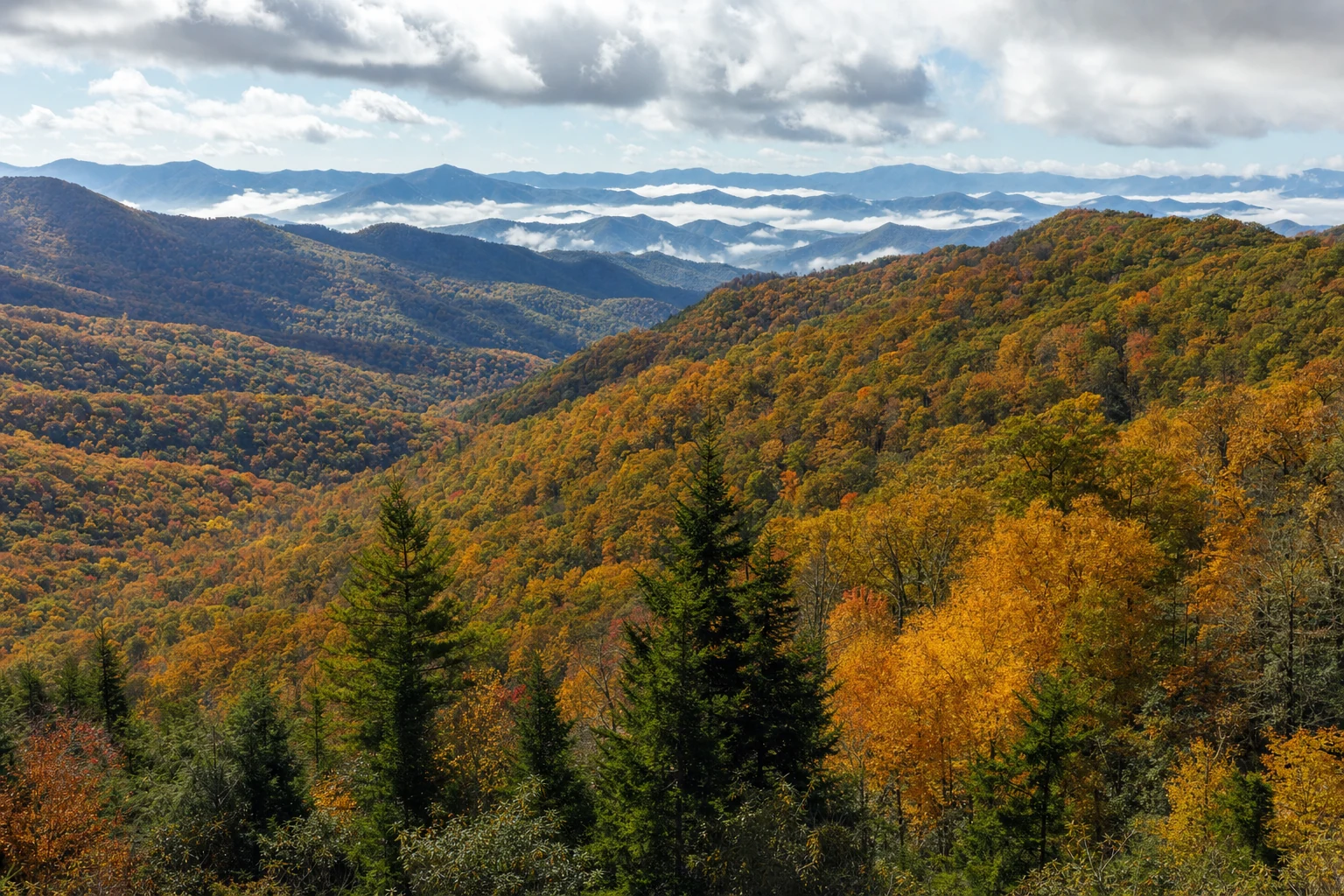
Spring is the loudest. Snowmelt from the higher elevations pushes the Bald River to its peak volumes through April and into early May, and the surrounding forest comes in bright with new growth. Summer pulls flow down slightly and warms the gorge, though the old-growth canopy keeps temperatures manageable even in July heat. Autumn adds color to the trees framing the falls, though the gorge's narrow orientation limits how much foliage you can capture in a single frame; the ridge roads elsewhere in Cherokee National Forest offer better panoramic leaf views.
Winter is the wildcard. Ice builds on the rock face in a way that's genuinely striking photographically, and the leafless trees open up sight lines that stay closed the rest of the year. But FR 210 is not always passable, and the bridge surface can be dangerous. If you're planning a winter visit, check road conditions the morning you plan to go.
Dogs
Cherokee National Forest welcomes leashed dogs on trails and in developed recreation areas, including Bald River Falls. Leashes must be 6 feet or shorter; pack out waste and keep dogs out of the water at the base of the falls, where currents aren't always obvious from shore. Carry water for both of you, since there are no facilities at the pull-off. Compared to GSMNP, where pets are restricted to paved surfaces and developed areas, the national forest offers considerably more flexibility for dog owners doing a Smokies-area trip.
Know Before You Go
Black bears range through this forest. Keep food in your vehicle or in bear-resistant containers, make noise on the trail if you continue past the falls, and treat any sighting the way you would in the national park: maintain distance, don't feed, don't approach. The national forest generally sees lower bear encounter frequency than the busier GSMNP corridors, but they're present and active.
The pool at the base of the falls is where the real hazard sits. The mist from a 90-foot drop soaks the surrounding rocks, and what looks like a stable scramble down to the water's edge is often significantly more slippery than it appears. People have gotten hurt here. If you want a closer look, move slowly and test each foothold before committing weight; the spray radius is larger than it looks from the bridge.
Cell coverage along FR 210 is poor to nonexistent. Download offline maps before leaving Tellico Plains and let someone know your intended route if you're hiking beyond the falls. Mountain weather in this part of Tennessee can shift quickly, so pack a rain layer regardless of what the forecast says when you leave.
Frequently asked questions
- How tall is Bald River Falls?
- Bald River Falls drops approximately 90 feet.
- Is it safe to swim at the falls?
- No. Swimming, wading, and climbing near waterfalls in the Smokies is dangerous and often fatal. Hidden currents, slick algae, and submerged rocks cause most waterfall deaths in the park. Enjoy the view from designated lookouts.