
About Dewberry Falls
Dewberry Falls drops roughly 20 to 25 feet over a rocky ledge in Panthertown Valley, fed by Dewberry Creek in the mountains of western North Carolina. The approach is 1.5 miles one way through a moderate but navigationally demanding landscape — Panthertown Valley rewards visitors who arrive with a detailed map and a tolerance for unmarked junctions. The payoff is a waterfall in a setting that sees considerably less traffic than more accessible falls closer to the main park corridors, and a flow that responds noticeably to recent rainfall.
The Falls
Dewberry Creek spreads across dark rock here before dropping between 20 and 25 feet, depending on where you stand and how full the creek is running. The falls aren't a towering single plunge — they're wide enough to create a layered spread of whitewater that reads best from the base where the creek levels off. After several days of rain, the flow fills out and earns the location its reputation; in a dry stretch, the falls run thinner but still reward the hike. The surrounding forest in Panthertown Valley tends to hold color later into autumn than exposed ridge trails at higher elevation, giving the falls a wooded frame that extends the visual interest well past peak foliage on the higher peaks.
The Hike
The East Panthertown Valley Trailhead near Cashiers, NC is your starting point. From there, it's approximately 1.5 miles one way to reach the falls — moderate in terms of physical effort, but Panthertown Valley's trail network is more complex than a single well-signed path. Multiple intersecting routes cross the valley, and navigating them accurately requires a good printed or downloaded map and some experience reading trail junctions. Blaze marking can be inconsistent in sections, so don't count on signage alone to keep you oriented.
The terrain doesn't involve extreme elevation change, but expect rocky footing and possible stream crossings depending on season and route. Sturdy footwear matters more here than on a compacted interpretive trail — waterproof hiking boots are the sensible choice, since wet conditions that bring the falls to their best also make the footing slippery. The surface is rooted and uneven in stretches, and the valley stays damp longer after rain than open ridgeline paths do.
If you're considering a longer loop, Panthertown is one of those places where combining Dewberry Falls with other valley destinations works well. The 1.5-mile figure is one way; plan your total distance based on your entry and exit points, and leave a buffer for the extra time navigation takes in a less-regimented trail system.
Best Time to Visit
Flow is the key variable. Dewberry Falls runs throughout the year but reaches its best volume in the 24 to 72 hours after substantial rain. If you're planning the trip specifically to see the falls at full width, check precipitation forecasts for the Cashiers area before you go. Spring brings reliable water from snowmelt and seasonal rain. Late summer and early fall can see lower flow during dry stretches, though a storm system can restore it quickly.
For photography, mid-morning is the recommended window. The valley's tree cover diffuses harsh direct light, but mid-morning gives you better color temperature and enough ambient light to render the whitewater clearly without blowing out the exposure. The creek foreground and surrounding canopy benefit from dappled light rather than flat midday illumination.
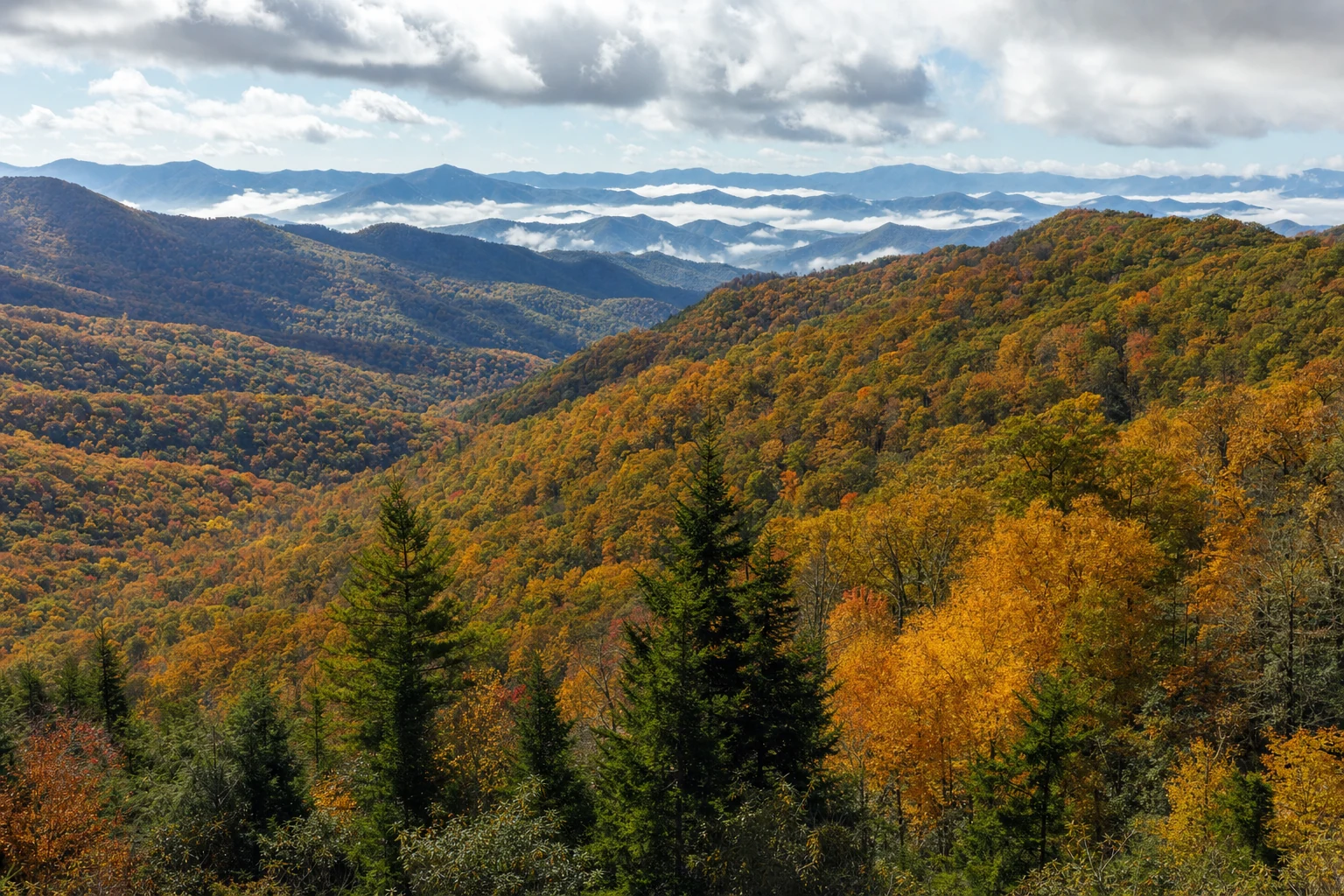
Autumn deserves a separate note: the valley's mixed forest tends to color later than the exposed ridges above, which can extend your foliage window if you arrive after the high-elevation peaks have passed. The contrast between colored canopy and the falls is the best visual the location offers.
Winter Conditions
Dewberry Falls carries a real winter hazard, and the remote character of Panthertown Valley amplifies it. Trails can ice over after freeze-thaw cycles, and the rocks at the base of the falls become treacherous when coated. Unlike a roadside waterfall where a misstep means stepping back to a parking lot, a fall here — a mile and a half from the trailhead, with limited cell service — is a genuinely serious situation.
If you hike to Dewberry Falls in winter, microspikes are practical insurance. Trekking poles add stability on iced creek crossings. Tell someone your route and expected return time before you leave. The valley's remoteness means a recovery operation takes time, and you won't be able to call for help from most points along the trail.
The shoulder seasons — late March through April, and October through early November — typically offer the best combination of accessible trails, reasonable temperatures, and decent water. These windows see fewer visitors than summer peak, which improves the experience at the falls themselves.
Getting There
Dewberry Falls is reached from the East Panthertown Valley Trailhead in the Cashiers, NC area of western North Carolina. Cashiers sits in Jackson County, roughly 90 minutes from Asheville and a longer drive from the Tennessee side of the mountains. If you're arriving from the Gatlinburg or Cherokee corridor, expect to cross a significant ridgeline — the road miles between the main GSMNP entrances and Cashiers take more time than the map distance suggests. Allow extra time and plan fuel stops before heading into the valley.
The access road to the trailhead may be unpaved; high-clearance vehicles handle it more comfortably after rain or in winter conditions. Check current access and any road or gate closures through the forest service — conditions change seasonally and after storm events. The official page linked on this site is the authoritative source. Arrive early on weekends or during fall foliage peak: the Cashiers area attracts significant traffic from second-home visitors and regional travelers during those windows, and trailhead parking fills.
Know Before You Go
Water is the first consideration. A moderate 3-mile round-trip hike on a mountain trail in humid NC conditions burns more fluid than most visitors plan for. Carry at least two liters per person, more if temperatures are warm or you intend to extend the hike through the valley.
Mountain weather in western NC shifts faster than forecasts capture. A clear morning can turn into an afternoon thunderstorm from late spring through early fall. Pack a rain layer and a warm mid-layer regardless of what the morning looks like — the valley floor stays cooler than exposed ridges, and wet clothes remove heat faster than cold air alone.
Black bears are active throughout this region. Keep food inside your pack while moving and never leave a bag unattended with anything edible in it. Maintain at least 50 yards of distance if you see a bear, and make noise on the trail so you're rarely a surprise. Most bears move off well before you reach them.
Cell coverage in Panthertown Valley is limited to nonexistent at most points on the trail. Download offline maps — Gaia GPS and AllTrails both offer offline caching — before you leave the car. Given the valley's intersecting trail network, offline navigation is more important here than on a single-route path. Share your itinerary with someone before heading in.
The rock at the base of Dewberry Falls looks approachable, but it's slick under any flow, and currents that appear calm from the bank can trap a swimmer against the rock face. View the falls from the creek bank rather than wading in.
Frequently asked questions
- How tall is Dewberry Falls?
- Dewberry Falls drops approximately 20 feet.
- How do I get to the waterfall?
- The falls are reached via a 1.5-mile moderate hike from the nearby trailhead.
- Is it safe to swim at the falls?
- No. Swimming, wading, and climbing near waterfalls in the Smokies is dangerous and often fatal. Hidden currents, slick algae, and submerged rocks cause most waterfall deaths in the park. Enjoy the view from designated lookouts.