
About Hooker Falls (DuPont State Forest)
At 12 feet tall and a quarter mile from the parking lot, Hooker Falls is one of the most immediately rewarding waterfalls in DuPont State Recreational Forest. It runs on the Little River, pours wide across a broad shelf, and stays in strong flow all year. The short walk and easy terrain make it genuinely accessible, but the real case for making the drive is that Hooker Falls sits at a trailhead shared with two significantly larger waterfalls—meaning a half-day here covers far more ground than the modest stats suggest.
The Falls
Hooker Falls is built wide rather than tall. The 12-foot drop spreads across a full shelf of rock, giving the water room to fan out before it hits the pool below. In stronger flow periods—especially late winter and spring—that width becomes the defining feature: a broad, even curtain rather than a narrow plunge. Because flow on this stretch of the Little River is reliable year-round, you won't arrive to a disappointing trickle regardless of when you visit.
The pool at the base is calm and close enough to observe at a measured distance, but the surrounding rocks stay perpetually wet and slick. That's true in July and it's especially true in January. In winter, ice builds on the approach trail and on the rocks flanking the falls—sometimes in thick, deceptive patches. The falls remain active through cold weather, but the footing around them becomes genuinely hazardous. If you're visiting between December and early March, wear boots with actual grip, carry trekking poles if you have them, and assess the trail surface before you move toward the water's edge.
The Trail
The walk from the Hooker Falls Access Area to the falls is 0.25 miles one-way—flat, well-maintained, and easy in any reasonable conditions. There's no sustained elevation, no scrambling, and no complex route-finding. It's a legitimate option for visitors with young children or those with limited mobility, provided trail surfaces are dry and clear.
DuPont State Recreational Forest is a North Carolina state forest, separate from Great Smoky Mountains National Park. The access area is near Cedar Mountain, NC. The Park-It-Forward parking tag required for GSMNP parking does not apply here; consult the NC Forest Service (ncforestservice.gov) for current access notices before your visit.
Pairing With Triple Falls and High Falls
This is the reason to plan a full visit rather than a quick stop. The Hooker Falls Access Area is the shared trailhead for three distinct waterfalls on the Little River, and the trail network connects all three without requiring separate drives.
Triple Falls is 0.5 miles one-way from the trailhead (easy to moderate) and drops roughly 120 feet in three separate tiers down the rock face. The stepped structure gives it a completely different character than Hooker—more vertical, more dramatic, and longer to take in.
High Falls is 1.2 miles one-way (easy to moderate) and reaches approximately 125 feet, making it one of the tallest falls in the forest. The additional distance involves more elevation change than the Hooker Falls trail, but the difficulty is still firmly in the moderate range rather than strenuous.
If you're making the drive to this part of DuPont, visiting only Hooker Falls and turning around is underselling the day. The round trip to Triple Falls adds under a mile from the same starting point. Take High Falls into the plan and you cover three waterfalls with very different characters—a wide 12-foot cascade, a tiered 120-foot drop, and a 125-foot plunge—in a single half-day outing.
Best Time to Visit
Flow on the Little River is consistent enough that water levels don't drive the timing decision here. The variables that matter more are crowds, light, and trail conditions.
Photography: Mid-day is the recommended window at Hooker Falls. The canopy along this section of trail allows overhead sun to reach the falls and the pool directly. That even, frontal light is easier to work with than the backlit or heavily shadowed conditions common at falls deeper in the forest. Aim to arrive around midday for the clearest light on the water.
Spring: Runoff from late-winter snowmelt and spring rainfall pushes volume up noticeably from roughly March through May. The surrounding hardwoods flush out fully by mid-spring, which changes the visual context of the falls from bare winter branches to full green canopy.
Summer: This is the peak crowd period for DuPont. The Hooker Falls Access Area handles traffic for all three waterfall trails, and the parking lot fills on summer weekends. An early start—well before 9 a.m.—is the most reliable way to avoid competition for spots and congestion on the trail.
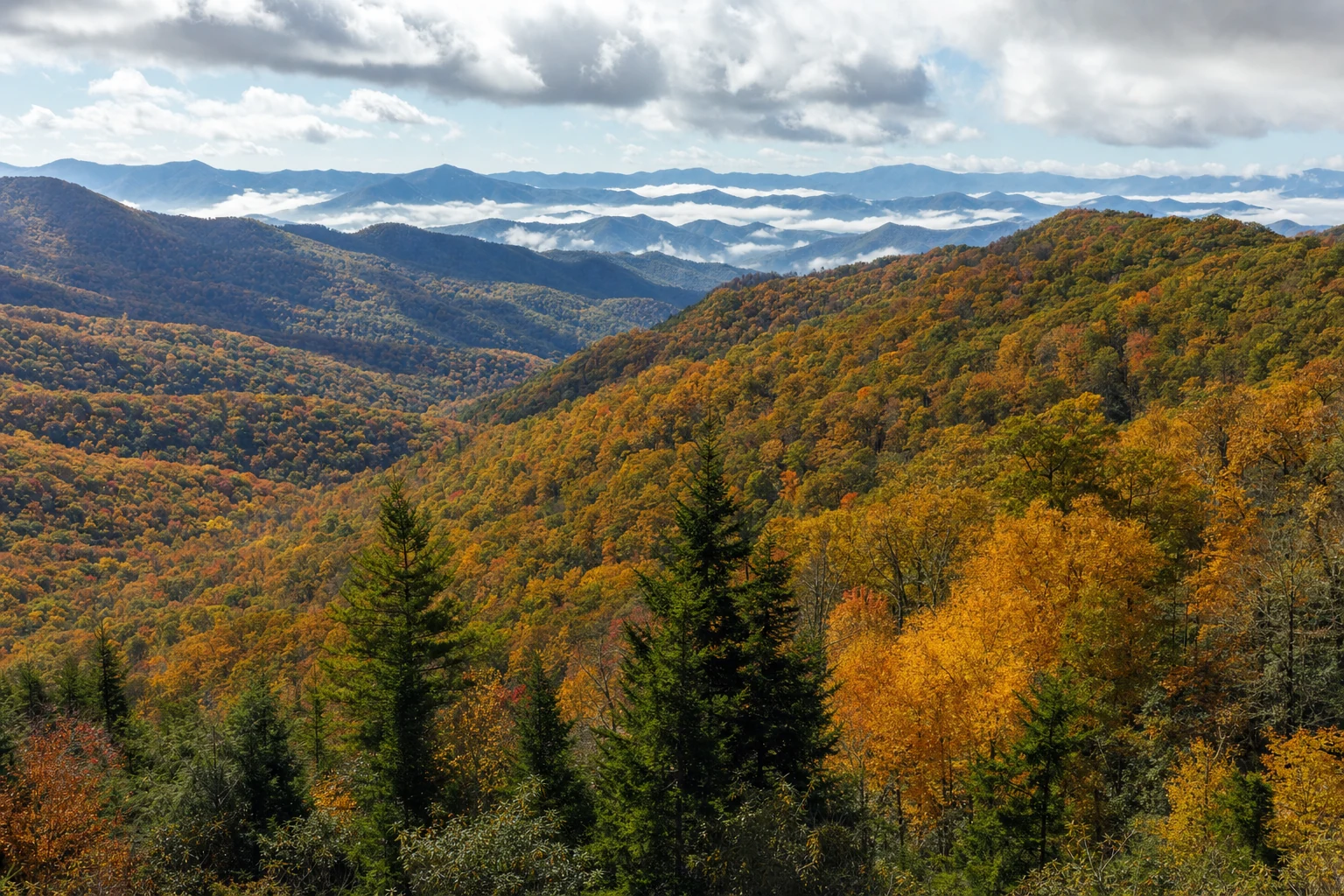
Fall: Leaf color moves through the surrounding forest in October, and the combination of colored foliage and reliable flow makes this a strong photography window. Crowds are lighter than summer but still present on weekends.
Winter: Ice formations are common around the falls and on the approach trail from December through early March. The trail is not automatically closed in cold weather, but conditions can deteriorate quickly. Check before you go, and be conservative about what you're willing to attempt on icy trail surfaces.
Getting There
Hooker Falls is in DuPont State Recreational Forest near Cedar Mountain, NC—a separate destination from Great Smoky Mountains National Park that requires its own dedicated drive. From the main Smokies corridor, allow adequate travel time and plan this as a standalone excursion rather than a quick add-on to a GSMNP day.
The access point is the Hooker Falls Access Area, which is clearly marked and provides parking for all three waterfall trails in this section of the forest. Download offline maps and navigation before you arrive—cell coverage in DuPont is limited and unreliable for real-time routing once you're on forest roads.
Know Before You Go
- Footwear. Smooth-soled shoes and sandals are consistently risky at Hooker Falls. The rocks at the base and along the trail edge stay wet. Shoes with actual grip are not optional, especially in cool or wet conditions.
- Wildlife. Black bears are active throughout DuPont State Forest. Secure food in your vehicle before hitting the trail, make noise as you walk to avoid surprise encounters, and keep significant distance if you spot one. Do not approach.
- Parking. The Hooker Falls Access Area is a shared lot for three waterfall trails. Weekend mornings in summer fill it quickly. Arriving early is the simplest way to avoid a full lot.
- Stay off the rocks at the water's edge. Wet rock surfaces and unexpected currents account for most serious accidents at forest waterfalls. The pool at the base looks accessible, but the footing there is consistently unstable.
- No cell coverage. Plan navigation, emergency contacts, and any research you need before you lose signal on the forest roads. Let someone know your rough itinerary if you're going solo.
Frequently asked questions
- How tall is Hooker Falls (DuPont State Forest)?
- Hooker Falls (DuPont State Forest) drops approximately 12 feet.
- How do I get to the waterfall?
- The falls are reached via a 0.25-mile easy hike from the nearby trailhead.
- Is it safe to swim at the falls?
- No. Swimming, wading, and climbing near waterfalls in the Smokies is dangerous and often fatal. Hidden currents, slick algae, and submerged rocks cause most waterfall deaths in the park. Enjoy the view from designated lookouts.