
About Lynn Camp Prong Cascades
Now I'll write the page body copy, applying the anti-slop directives throughout.
Lynn Camp Prong Cascades sit along one of the less-trafficked corridors of Great Smoky Mountains National Park, accessible via the Middle Prong Trail out of the Tremont area. What you'll find isn't a single waterfall at trail's end but a series of cascades stepping down over the same creek, each running roughly 5 to 15 feet before pooling briefly and spilling into the next. The creek drains high-elevation terrain, which keeps it flowing reliably regardless of season in a way that lower-elevation streams don't manage. If you've been disappointed by a waterfall that looked impressive in April but barely trickled by late summer, this one plays differently.
The Trail
The trailhead sits at the end of Tremont Road, off Little River Road near Townsend, with parking at the trailhead itself. From there, the path follows Lynn Camp Prong on relatively even ground through mature second-growth forest; the enclosed valley stays noticeably cooler than exposed ridgeline hikes elsewhere in the park, which matters considerably in July. Tulip poplars and hemlocks dominate the canopy and filter light well, which you'll notice both in terms of comfort and in how the cascades photograph.
The first mile is rated easy, and that holds across typical conditions. The trail surface stays wide enough for two people to walk side by side much of the way, footing is consistent, and the grade stays manageable. Families with young children handle this stretch without issue. Cascades appear repeatedly along the first mile rather than waiting at a single endpoint, so the experience unfolds throughout the walk rather than requiring you to bank everything on an arrival moment — the trail is the destination as much as any individual waterfall.
Going past the first mile shifts the character of the hike; difficulty increases as terrain climbs above creek level and the cascades thin out. For most visitors, the initial stretch covers the best of what's here.
The Cascades
The drops along Lynn Camp Prong vary considerably in character. Some fall straight over bedrock ledges in a curtain-style drop; others fan wide and shallow across sloped rock before gathering again into a narrow chute. The creek bed alternates between tight, fast sections and broader, quieter pools where the light reaches differently and the water's surface changes texture entirely. None of the individual cascades rivals the sheer height of Rainbow Falls or Mingo Falls, but following an active creek through a sequence of them for a mile adds up to a distinct experience — more immersive, arguably, than the dramatic single-drop hikes that get more press.
Photographers tend to favor this trail for morning work. The forested valley creates diffuse, consistent light early in the day that suits long-exposure waterfall work; overhead midday sun introduces contrast problems on moving water that are difficult to manage in post-processing. Getting there before 9 a.m. puts you in the soft directional light through the trees during the best window. By late morning, direct sun starts reaching certain sections of the creek depending on the season.
When to Go
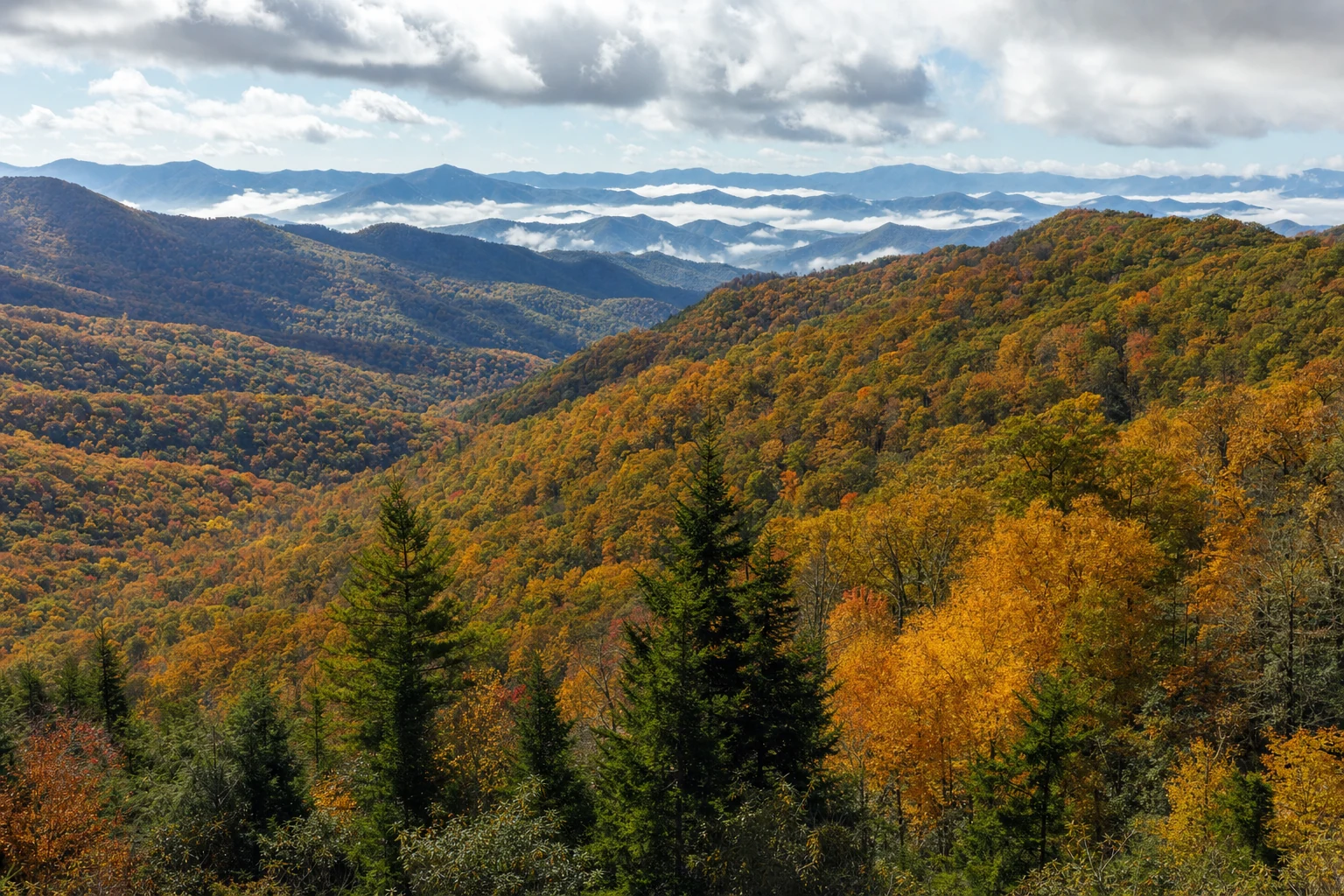
Year-round flow is the standout practical advantage here. Lynn Camp Prong's high-elevation drainage keeps it active through dry stretches that leave lower streams looking thin, which matters most in late summer when other park waterfalls lose their appeal. Spring snowmelt adds substantial volume; early spring visits before full leaf-out give photographers a clean look at the water without heavy foliage filling the frame. Autumn brings color into that frame instead: October and November put yellow and orange deciduous canopy alongside moving water, which photographs well and draws visitors specifically for that combination.
Winter requires more care. Ice forms on the bridges and in shaded sections of the trail after overnight temperatures drop hard, and the path through hemlock groves can stay glazed for a full day after surrounding areas have cleared. The falls themselves can partially freeze, which creates a visually different experience worth making the drive for if conditions cooperate. Microspikes or similar traction devices are worth carrying from December through February. Check the NPS site or recent reports before a winter visit; conditions after ice events shift significantly within 24 hours.
Summer draws the most overall park traffic, but the Tremont corridor tends to see less pressure than the Rainbow Falls route out of Gatlinburg. Weekend mornings are workable even in July and August, though the parking area fills by mid-morning on busy days.
Getting There
The Middle Prong Trailhead is accessed from the Townsend side of the park, not from the Gatlinburg entrance. From the Townsend Y, head into the park and look for Tremont Road turning off to the left; it follows the creek to the parking area at the trailhead. Coming from Gatlinburg, take Little River Road west through the park toward Townsend and watch for the Tremont Road turnoff, which is signed.
Some GPS applications suggest routes that don't match current road conditions in the Tremont area. NPS signage is reliable and worth following over navigation apps once you're inside the park.
A Park It Forward parking tag is required for any stop over 15 minutes anywhere in Great Smoky Mountains National Park. Tags cost $5 per day, $15 per week, or $40 annually, available at recreation.gov or at park entrance kiosks. The annual pass pays for itself quickly if you're spending more than three or four days in the park; the daily tag makes sense for a single visit.
Before You Go
Pack more water than a 1-mile easy trail might suggest. The enclosed valley and moderate exertion add up, particularly in summer, and the coolness of the forest is deceptive. A rain layer is practical in any month; afternoon thunderstorms move fast through the southern Appalachians, and the dense forest holds moisture long after rain stops. A warm layer handles the temperature drop that comes with stopping at a cascade for any length of time, even in warm weather.
Black bears are active throughout this part of the park. Keep 50 yards of distance if you see one, make noise on the trail to avoid surprise encounters, and store food in a closed vehicle or bear-resistant container at the trailhead. Standard protocol, but the Tremont corridor sees enough wildlife activity to take it seriously rather than treating it as a formality.
Creek rock in and around the cascades is consistently slippery regardless of how stable it looks from the bank. The NPS guidance against wading and scrambling near the falls reflects the actual accident record across the park. Most of the strong photography positions work without leaving the trail; the path offers clean sightlines to the main cascades that don't require getting into the water.
Cell coverage is poor throughout the Tremont area. Download offline maps before you leave the car.
Frequently asked questions
- How tall is Lynn Camp Prong Cascades?
- Lynn Camp Prong Cascades drops approximately 5 feet.
- How do I get to the waterfall?
- The falls are reached via a 1-mile easy hike from the nearby trailhead.
- Is it safe to swim at the falls?
- No. Swimming, wading, and climbing near waterfalls in the Smokies is dangerous and often fatal. Hidden currents, slick algae, and submerged rocks cause most waterfall deaths in the park. Enjoy the view from designated lookouts.