
About Mouse Creek Falls
Mouse Creek Falls drops 25 feet into Big Creek at the end of a 2-mile walk along one of the Smokies' quieter trails. The Big Creek area sits on the park's far northeastern corner, accessible from Exit 451 on I-40, far enough from Gatlinburg's commercial strip that most visitors don't make the drive. The trail follows a graded old logging railroad bed, keeping the grade gentle and Big Creek in earshot the entire way.
The Hike In
The Big Creek Trail is about as forgiving as waterfall hikes in the Smokies get. Starting from the Big Creek Trailhead near the campground, you gain roughly 400 feet over 2 miles on a route that was leveled by industrial equipment more than a century ago for hauling timber. The surface is wide and well-packed for most of its length, with Big Creek running alongside you through a dense canopy of hemlock and hardwoods.
At 1.5 miles, you'll reach Midnight Hole before you reach the falls. This is a naturally sculpted deep pool where the creek drops over a small ledge and collects in a cold, clear basin. It's popular on summer weekends, so expect company. The pool looks inviting, but swimming always carries risk here: currents in the Smokies aren't gentle, rocks stay slick year-round, and water temperatures stay cold enough to trigger cold shock well into June. From Midnight Hole, the remaining half-mile to Mouse Creek Falls goes quickly. You'll hear it before you see it.
The Falls
Mouse Creek Falls enters Big Creek at roughly a right angle — Mouse Creek itself descends from the adjacent ridge, spilling 25 feet before joining the main drainage. The result is a side waterfall viewed across the trail, with Big Creek in the foreground and the falls behind it. It's a compact drop, not a towering plunge, but the framing works in its favor: the wide creek, the surrounding forest, and the scale of the old-growth hemlocks create a composition that photographs well without requiring a wide-angle lens.
Flow holds up year-round, so there's no bad month in terms of water volume. Winter sometimes brings ice formations around the plunge pool and on the adjacent rock faces, which adds visual interest — though it also makes the trail significantly more hazardous in the final approach.
Timing Your Visit
Morning is the better choice for photography. The trail runs roughly east-west in the final approach, and morning light falls across the falls at an angle that softens contrast and avoids the harsh shadows that develop by midday. Overcast days work equally well; diffuse cloud cover is nearly ideal for waterfall shots since it eliminates blown highlights in the mist.
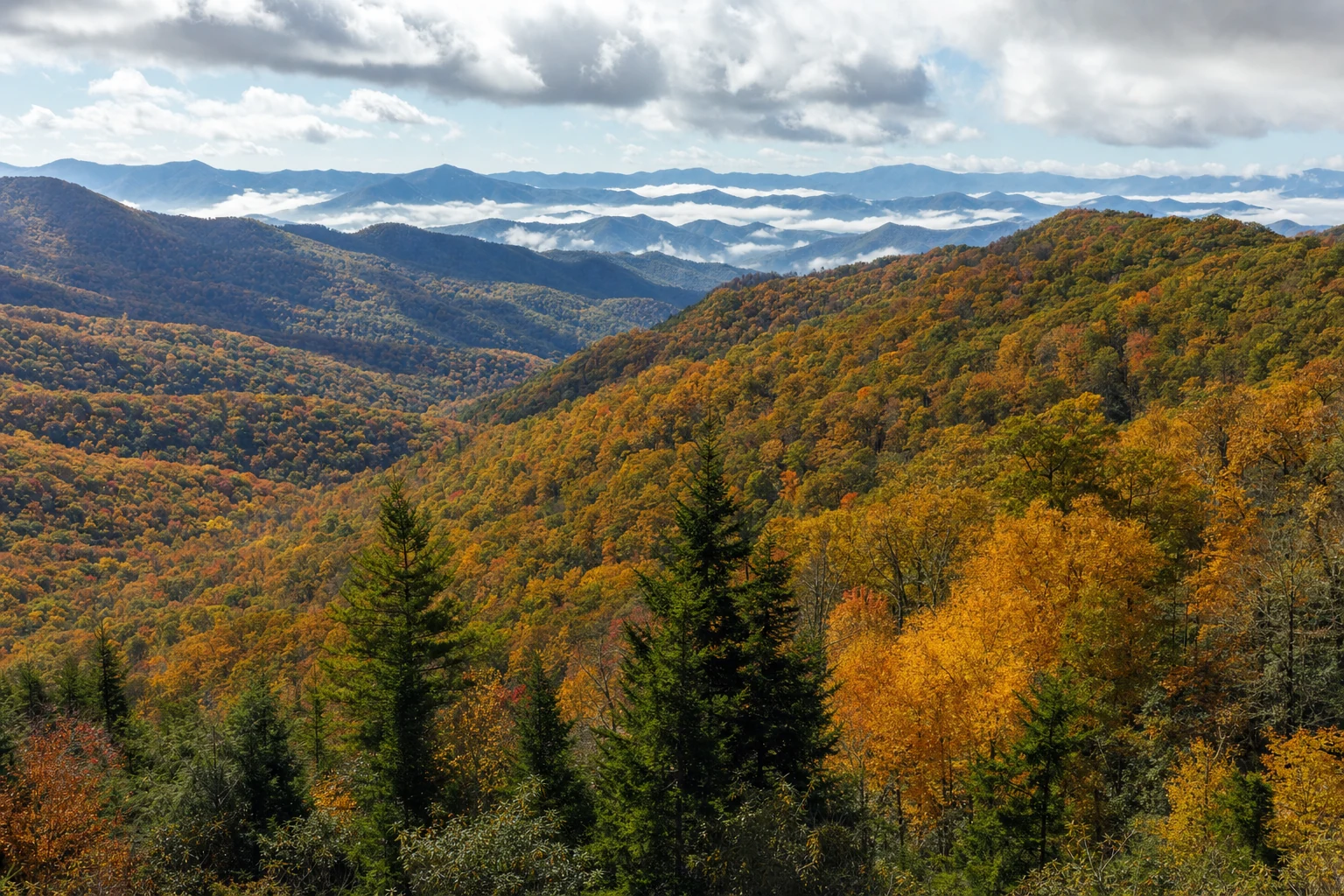
Spring and fall are the best seasons overall. Spring brings heavy snowmelt-fed flow and fresh green in the canopy; fall color along Big Creek peaks in mid-to-late October, and the crowds that swarm Clingmans Dome and Cades Cove rarely make it to this corner of the park. Midsummer is workable but warmer and busier, especially near Midnight Hole. Winter visits can be rewarding when conditions cooperate, but treat any shaded section of trail as potentially icy from November through March. Weekday mornings, regardless of season, offer the most solitude.
Getting There
The Big Creek Trailhead is not accessible from the Sugarlands entrance near Gatlinburg. To reach it, take I-40 East to Exit 451 (the Waterville exit, just across the North Carolina state line), then follow Big Creek Road approximately 2 miles to the Big Creek Campground and trailhead parking lot. The drive from Gatlinburg takes roughly 45 minutes.
A "Park It Forward" parking tag is required for any vehicle parked inside GSMNP for more than 15 minutes. Tags cost $5 per day, $15 per week, or $40 annually; purchase them at recreation.gov, at park entrance kiosks, or via the NPS app before you arrive. Rangers check the Big Creek lot. If the small trailhead parking area is full, limited overflow exists along Big Creek Road, but avoid blocking the road.
Extending the Hike
The trail doesn't end at Mouse Creek Falls. The Big Creek Trail continues beyond the falls and eventually connects with the Chestnut Branch Trail, which climbs toward the Appalachian Trail. For most day visitors, the 4-mile round trip to the falls and back is plenty. If you want a longer outing, plan ahead: the trail transitions from the easy railroad grade to real climbing once you pass the falls, and the Chestnut Branch junction is a full 4 miles one-way from the trailhead.
The Big Creek Campground, a short walk from the trailhead, makes a solid base for a multi-day stay. It's rustic by park standards — no electrical hookups, no dump stations — but it's quiet, small, and close to one of the park's better trail systems. Reservations fill quickly in summer and fall; book through recreation.gov well in advance.
Know Before You Go
Cell coverage is effectively nonexistent in the Big Creek corridor. Download offline maps before leaving the car and let someone know your plan and expected return time. The trail is well-marked, but the Smokies' back corners are where rescues happen.
Black bears frequent this section of the park. Keep 50 yards of distance if you encounter one; store all food, trash, and scented items in bear-proof containers or the bear boxes at the campground. Carry a rain layer and a warm layer regardless of the forecast — mountain weather doesn't announce itself, and even in June a passing storm can drop temperatures 20 degrees fast.
Water from Big Creek looks clear and cold and tempting on a hot day. Don't drink it without filtering or treating it; Giardia and other contaminants are present throughout the park's waterways. Trail conditions after heavy rain can be muddy, particularly near creek crossings — waterproof footwear earns its weight on wet mornings.
Frequently asked questions
- How tall is Mouse Creek Falls?
- Mouse Creek Falls drops approximately 25 feet.
- How do I get to the waterfall?
- The falls are reached via a 2-mile easy hike from the nearby trailhead.
- Is it safe to swim at the falls?
- No. Swimming, wading, and climbing near waterfalls in the Smokies is dangerous and often fatal. Hidden currents, slick algae, and submerged rocks cause most waterfall deaths in the park. Enjoy the view from designated lookouts.