
About Big Creek Campground
Big Creek Campground doesn't get the same foot traffic as Elkmont or Cades Cove, partly because it's reached from I-40 rather than from Gatlinburg's main park entrances, and partly because its 12 sites and tent-only setup keep it from attracting RV-touring crowds. What it offers instead is a campsite along a rushing creek in old-growth forest, with a trail out the front door that passes two worthwhile destinations within two miles.
What the Campground Is Actually Like
The 12 sites sit among large, mature trees close to the water. You can hear Big Creek from most spots in camp. Facilities are limited: flush toilets, no showers, no hookups of any kind. This is a tent camping setup, and it attracts people who want that specifically.
The campground is small enough that when it fills, it's noticeably full. Peak season (June through October) is when that matters; walk-up availability gets thin during those months. Reservations are made through recreation.gov and should be secured in advance for any summer or fall weekend. Outside peak season, the campground is quieter and walk-up sites are more realistic. The site is open from early April through late October, and weather can affect road access at either end of that window.
Pets are welcome on leash.
The Big Creek Trail
The trail starts at the campground, follows the path of an old logging railroad grade through its lower miles, and stays mostly flat longer than most Smokies trails allow before demanding elevation. That railroad history is why the first stretch feels more like a river walk than a mountain hike; the grade was built to carry out timber, and the gentle contours remain.
At 1.5 miles, Midnight Hole is a deep, clear swimming pool with a small waterfall — one of the more legitimate creek swimming spots in the park. The water is cold even at peak summer. At roughly two miles, Mouse Creek Falls drops 45 feet into the creek below. The falls photograph well in morning or late-afternoon light, and overcast conditions often produce the most even exposure. Both spots are reachable as a day hike without requiring an early start.
Beyond Mouse Creek Falls, the trail continues uphill and eventually connects to the Chestnut Branch Trail, then further on to the Appalachian Trail. Backpackers use Big Creek as a real entry point to the park's interior, so the trailhead pulls two different kinds of visitor: day hikers doing the out-and-back to the falls, and backpackers heading deep into the remote backcountry.
Swimming at Midnight Hole
The park doesn't lifeguard Midnight Hole or any natural swimming area in GSMNP. The pool is deep; the current increases significantly after rain; the surrounding rocks are slippery. People swim here regularly in summer, and it works well on low-water, clear-weather days. If the creek is running high or discolored, skip it. That's not overly cautious framing — it's a straightforward read of conditions you can assess on arrival.
The Old-Growth Forest
The Big Creek area contains stands of old-growth trees that survived the logging era that stripped much of the surrounding Appalachians in the early twentieth century. Those trees have been in place long enough to produce a forest that looks and functions differently than second-growth woodland: taller canopy, denser understory, more decayed wood on the ground feeding the soil. It's one of the reasons this section of the park draws people who care about forest ecology alongside those who just want to hike to a waterfall, and it's worth slowing down to notice rather than treating the walk as purely utilitarian.
Campground Details
- Sites: 12 total, tent-only; no RV hookups or dump station
- Toilets: Flush; no showers
- Pets: Allowed on leash
- Season: Early April through late October
- Reservations: recreation.gov, campground ID 232494
Food storage rules apply here as strictly as anywhere in the park. Everything scented, including coolers, cooking gear, trash, and toiletries, stays in your vehicle or the provided bear box whenever it's not in active use. Big Creek is active bear habitat; the food storage requirement isn't precautionary language, it's actual management practice for a corridor where bears move regularly.
Getting There
Big Creek is reached from I-40, not from Gatlinburg's park entrances. Take exit 451 (Waterville) and follow the signs toward the park. The drive from the interstate to the campground is short and the road is paved. That I-40 access makes it a practical stop for anyone traveling between Tennessee and North Carolina, not just for those making a dedicated out-and-back from Gatlinburg.
A Park It Forward parking tag is required for any vehicle parked inside the park for more than 15 minutes. The daily rate is $5, weekly is $15, and the annual pass runs $40; purchase at park kiosks or in advance through recreation.gov. Cell service at the campground is limited, so handle navigation and reservations before you leave the highway.
When to Go
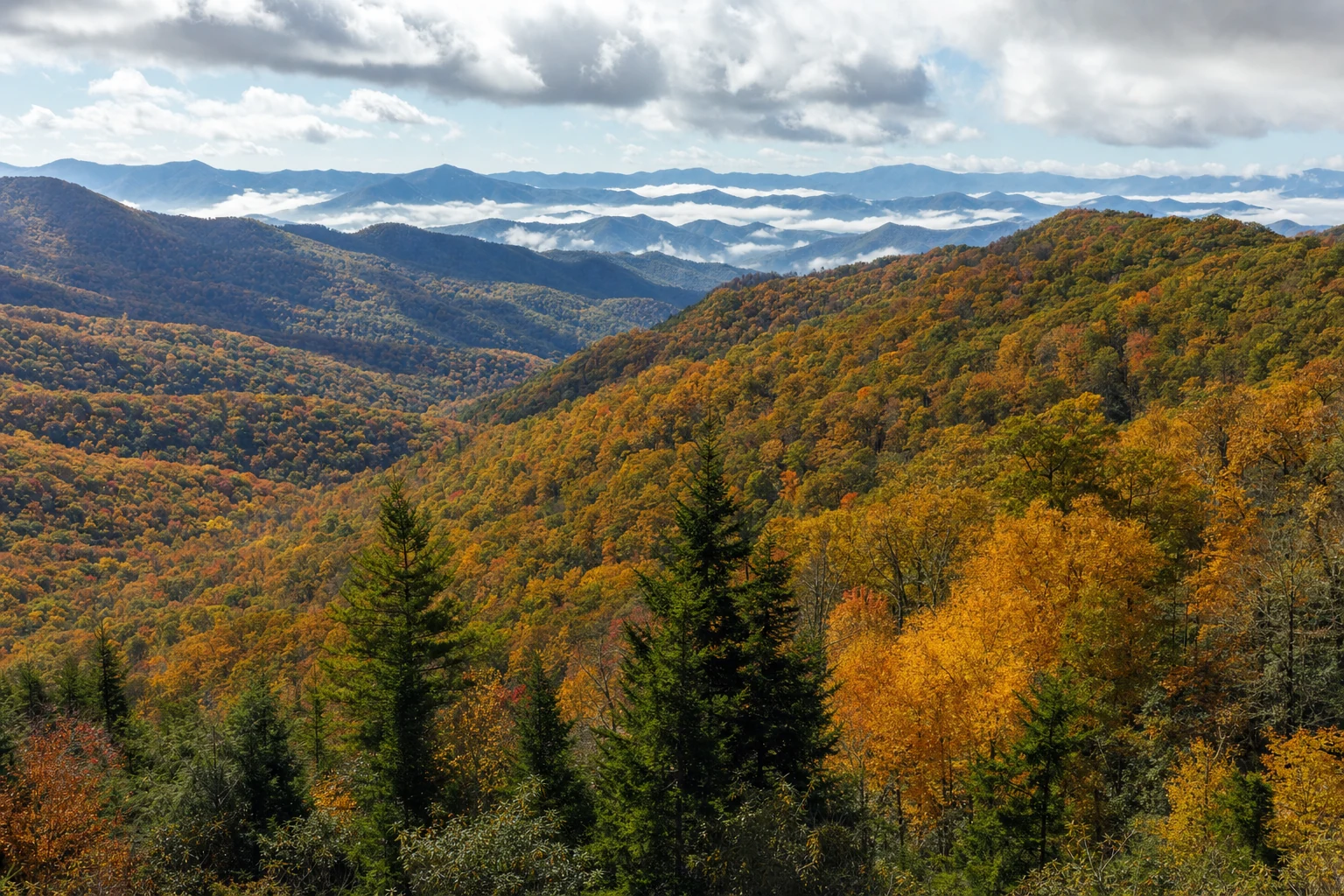
The spring window (early April through mid-June) tends to combine manageable crowds with full creek flow, which means better water levels at both Midnight Hole and Mouse Creek Falls. Wildflowers peak along the trail in April and May. July and August bring the warmest water for swimming but also the highest site demand; book well in advance for those months. Fall color in the Big Creek area typically hits mid-to-late October, close to the campground's seasonal closing. Winter access is not available.
Frequently asked questions
- How many sites are available?
- 12 sites total.
- Can I bring my pet?
- Leashed pets are welcome at most frontcountry campgrounds but are prohibited on most park trails.