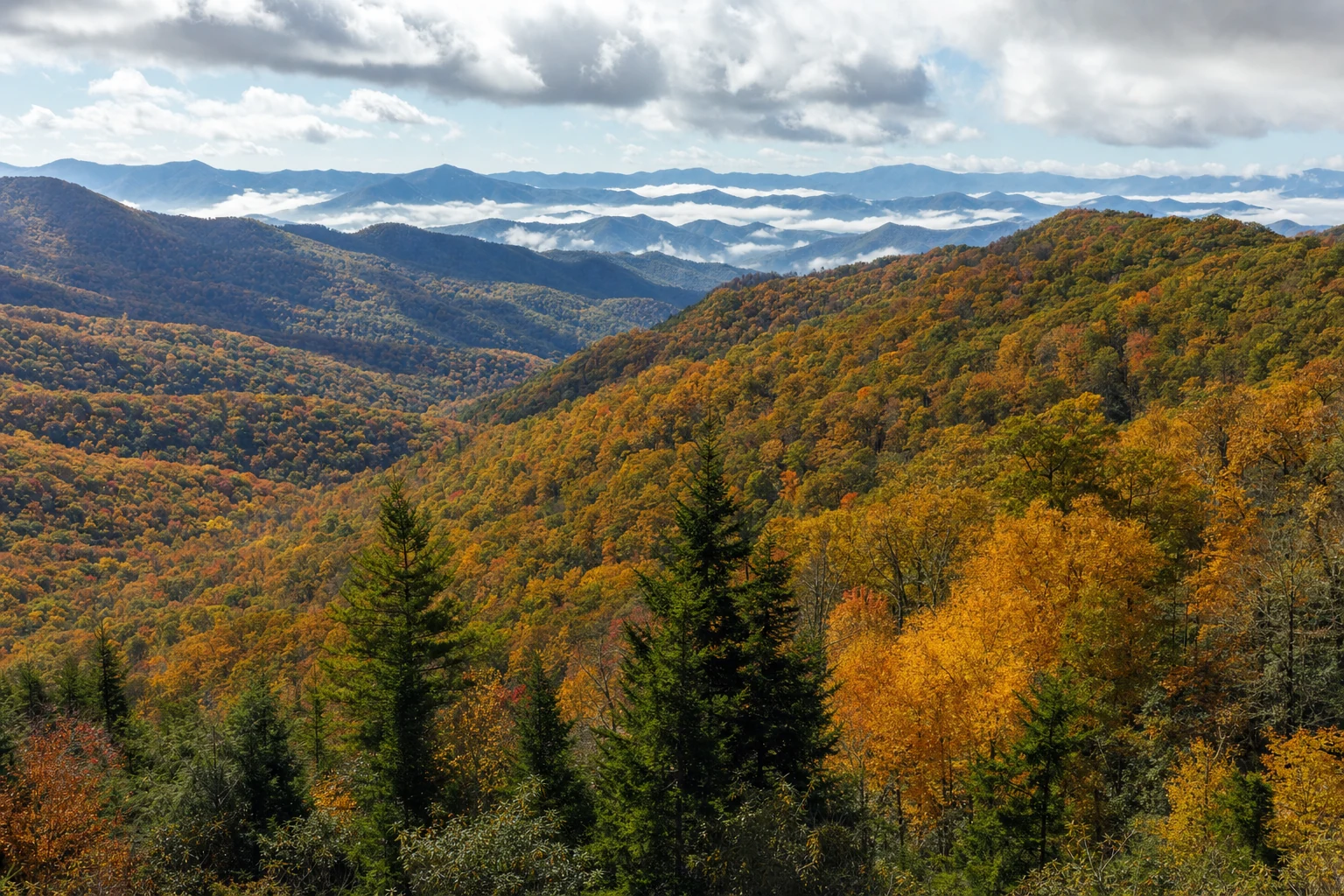

About Smokemont Campground
Good. Now I'll write the page copy, applying anti-slop rules throughout.
---
Smokemont sits on the North Carolina flank of Great Smoky Mountains National Park, along the Bradley Fork of the Oconaluftee River, a short drive from the town of Cherokee. At 142 sites and open every month of the year, it's one of the larger frontcountry campgrounds in the park. For hikers focused on the southern portion of GSMNP, it's a practical base that doesn't require long drives to either the main ridgeline or the NC-side trail system.
The Campground
The setup is developed but not pampered. Flush toilets are on-site, and a dump station handles RV waste; no electrical or water hookups run to any of the 142 sites, and there are no shower facilities. That combination catches some visitors off guard. If multiple nights without showers is a problem, plan a stop in Cherokee before arriving, since that's the nearest off-park option. For tent campers and dry-camping RV travelers, this is the standard national park arrangement.
The campground occupies a creek-bottom in a closed-in hardwood forest, which keeps temperatures cooler in summer but also means shade and real dampness after rain. Sites vary in size; larger rigs handle the layout fine without hookups, and the dump station covers waste needs. The campground allows pets throughout, which matters if you're traveling with a dog and want park access rather than a boarding alternative.
Getting There
From Cherokee, take US-441 (Newfound Gap Road) north into the park. Smokemont is clearly signed on the right after you pass the Oconaluftee area, before the road begins its long climb toward the state-line ridge. From Gatlinburg or Pigeon Forge, you'd drive the full length of Newfound Gap Road southbound, cross into North Carolina at Newfound Gap, and descend the steeper NC grade to the campground turnoff. The drive through the park is scenic and slow; count on more time than the mileage suggests during summer or fall color season.
A Park It Forward parking tag is required for any vehicle stop inside GSMNP lasting more than 15 minutes. Daily passes run $5, weekly $15, and an annual tag is $40; purchase through recreation.gov or at park entrance kiosks. The requirement applies at your campsite parking pad just as it does at trailheads.
Trails from the Campground
Three trailheads originate from or directly adjacent to Smokemont:
- Smokemont Loop Trail (6.1 miles, loop, Moderate) climbs above the campground through second-growth hardwood forest and returns via a long ridgeline section. It's a genuine half-day hike, and considerably less crowded than the waterfall routes on the Tennessee side — largely because it doesn't end at a dramatic destination. If you want a solid day on trail without navigating a full parking-lot scene, it delivers.
- Bradley Fork Trail (6.5 miles one-way, Moderate) follows the creek upstream through an unusually wide, flat valley before climbing toward Dry Sluice Gap and the Appalachian Trail at the ridgeline. You don't need to hike the full distance; the lower valley miles are accessible and worthwhile as a shorter out-and-back.
- Chasteen Creek Trail (2.2 miles one-way, Moderate) branches off Bradley Fork and climbs through rhododendron to a small waterfall, fitting comfortably into a morning as an out-and-back.
Nearby in the Park
The Oconaluftee Visitor Center sits just south of the campground on US-441 and is the best starting point for current road and trail conditions on the NC side. During shoulder seasons, Newfound Gap Road occasionally closes for ice or snow; visitor center staff know before most apps update.
Along US-441 between the campground and Newfound Gap, Kephart Prong Trail runs 4.2 miles out-and-back at a moderate grade through a former Civilian Conservation Corps camp from the 1930s, with stone foundations and water infrastructure still intact in the forest. It works well as a mid-day side trip when you want something with a bit of history rather than a summit.
Mingus Creek Trail begins near Oconaluftee and runs 5.8 miles one-way through mixed forest with remnants of pre-park settlements — a longer commitment, but a strong option for a second full day at camp.
Newfound Gap, further north along US-441, is the most-visited overlook in the park. From there, the Appalachian Trail runs east to Charlies Bunion, an 8-mile out-and-back rated strenuous, with exposed rock outcrops and ridge views that justify the elevation gain. The trailhead is always busy; the route thins out past the first mile.
Cherokee and the Southern Entrance
The town of Cherokee, NC, sits just outside the park's southern entrance on the Qualla Boundary and handles showers, groceries, and gas. It's also the southern terminus of the Blue Ridge Parkway, which runs northeast through North Carolina and Virginia. Driving a section of the Parkway from here adds a low-traffic scenic option to the trip — a real contrast to the busier Newfound Gap corridor.
Reservations and Timing
Book through recreation.gov (campground ID 232492). Smokemont's year-round status means it sees visitors in patterns different from the Tennessee-side campgrounds that close seasonally; summer weekends still fill quickly, and you should plan to book several weeks out at minimum for any Friday or Saturday between June and early September.
Spring and fall are the practical sweet spots: better availability, drier air than the humid summer valley floor, and in October, reliable hardwood color across the ridgeline. Winter camping here is a real option — the campground stays functional, flush toilets remain operational, and the visitor count drops sharply. The park in January looks and feels nothing like the July version, which is either a drawback or the point depending on what you're after.
Walk-up sites exist in limited numbers, mostly useful mid-week outside peak season. Don't plan a long drive around them.
Frequently asked questions
- How many sites are available?
- 142 sites total.
- Can I bring my pet?
- Leashed pets are welcome at most frontcountry campgrounds but are prohibited on most park trails.