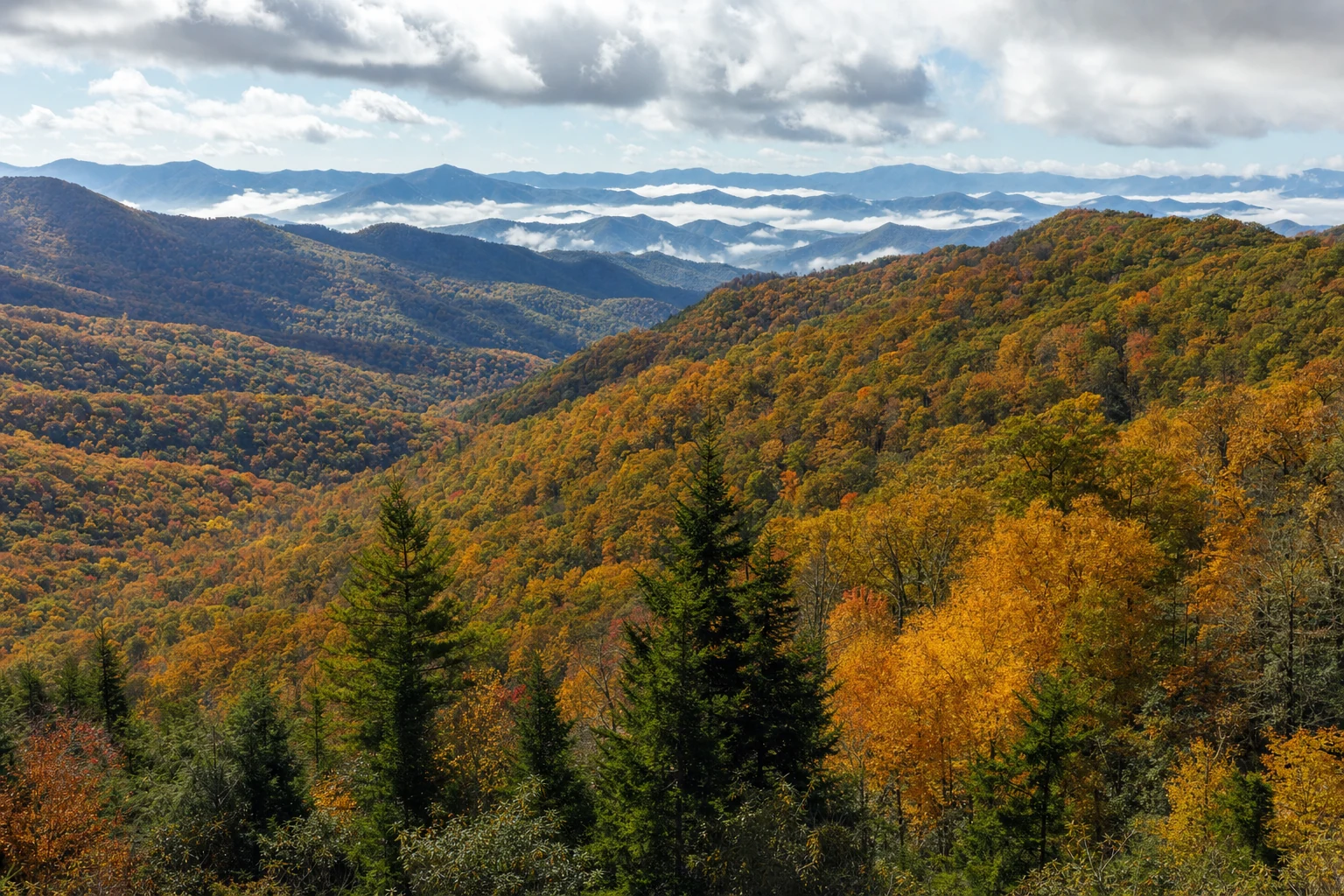

About Cataloochee Campground
Now I'll write the body copy applying all the anti-slop rules (no parataxis, max 1 em dash per 500 words, sentence length variety, concrete specifics only, no banned vocabulary, no rule-of-three defaults).
---
Cataloochee Campground occupies a slot inside one of the most isolated valleys in Great Smoky Mountains National Park: 27 sites, no electrical hookups, no showers, and an access road that reorients your expectations about what "remote" actually means. The payoff is proportional. Staying overnight puts you in position for the valley's two best wildlife windows — dawn and dusk — without navigating winding mountain roads in the dark the way day visitors do when they try to time those same hours.
The Campground Itself
Twenty-seven sites accommodate tents and RVs, though the size restrictions matter more here than at most campgrounds: 31 feet for the vehicle, 20 feet for a trailer. The access road enforces those limits on its own terms. There are no electrical, water, or sewer hookups, no dump station, and no showers; flush toilets and cold running water are available throughout the loop, along with potable water.
Nightly rates were $25 as of 2024; verify current pricing on Recreation.gov before booking, since GSMNP campground rates do adjust. The campground runs from early April through late October, with exact open and close dates varying year to year depending on conditions.
Booking a Site
Twenty-seven sites is not many. Demand at Cataloochee consistently exceeds supply, particularly in September and October when the elk rut draws serious wildlife watchers from across the region. Reservations are mandatory; walk-in availability is not a strategy you can rely on.
Book through Recreation.gov (campground ID 232495) as soon as the booking window opens. If you miss the window, monitor the site for cancellations in the week before your target dates — people do cancel, and even a shoulder-season slot is worth a few minutes of checking.
Elk: Timing and What to Expect
Cataloochee Valley is well known for its resident elk herd, and the reputation is earned. The animals move through the open fields near the creek at dawn and again in the hours before dark, visible from the valley floor in a way that forested terrain never allows. Staying at the campground means you're already inside those windows without a pre-dawn drive on the access road.
The rut peaks roughly through late September and into October. During those weeks, bulls bugle audibly across the valley in early morning — often before full daylight, well before most campgrounds are stirring. Day visitors who pull in around mid-morning regularly miss the significant activity entirely.
Dogs are welcome in the campground and picnic areas on a 6-foot leash but cannot go on trails. If your itinerary includes full hiking days, your dog stays at camp or in the car during those stretches; factor that into your planning before you arrive.
The Access Road
The road to Cataloochee is narrow, winding, and not recommended for large RVs — a fact worth absorbing before, not during, your arrival. The curves are tight, passing room disappears in places, and the road doesn't forgive distraction well. The campground's stated size limits (31 ft RV, 20 ft trailer) reflect the road's physical constraints, not bureaucratic preference. Drivers who push those limits are making their own problems.
Arrive before dark on your first visit. The road is passable at night, but learning it in the dark adds stress that's easily avoided. By your second morning, you'll have every turn memorized.
Parking Tags and Fees
Every vehicle parked inside Great Smoky Mountains National Park for more than 15 minutes requires a valid Park It Forward parking tag, including at the campground itself. Tags cost $5 per day, $15 per week, or $40 for an annual pass; buy them through Recreation.gov or at kiosks near park entrances. America the Beautiful passes satisfy the requirement as well.
This fee is separate from your campsite reservation — both apply. There's no kiosk inside Cataloochee Valley, so buy the tag before you turn off the main road.
Exploring the Valley From Camp
The valley's trail network connects to longer ridge routes and the surrounding park interior, and you're already positioned at the trailhead rather than making a day-trip drive. Fishing is permitted in the creek under standard GSMNP regulations. The historic structures left from the community that occupied this valley before the park's establishment are accessible on foot; the park maintains several of them, and walking among them early in the morning — before other visitors arrive — gives a concrete sense of what the settlement looked like when people actually lived here.
The mist that pools on the valley floor between the surrounding ridges typically lifts by mid-morning. Photographers should plan accordingly.
Before You Drive In
Cell service is unreliable to nonexistent inside the valley. Download your maps and reservation confirmation before leaving the highway; don't count on data once you're on the access road.
Bear activity throughout GSMNP is consistent and real. Food, coolers, toiletries, and anything scented go in your locked vehicle or the provided bear boxes when you're not actively using them. Leaving anything out overnight is not a gray area.
The campground has no store and nothing for sale on-site. Stock up in Maggie Valley or Waynesville before driving in. Night temperatures in the valley often drop more than the forecast lows for nearby towns suggest; cold air drains off the surrounding ridges after dark, mornings can be genuinely cold, and layers are worth packing regardless of what the calendar says.
Frequently asked questions
- How many sites are available?
- 27 sites total.
- Can I bring my pet?
- Leashed pets are welcome at most frontcountry campgrounds but are prohibited on most park trails.