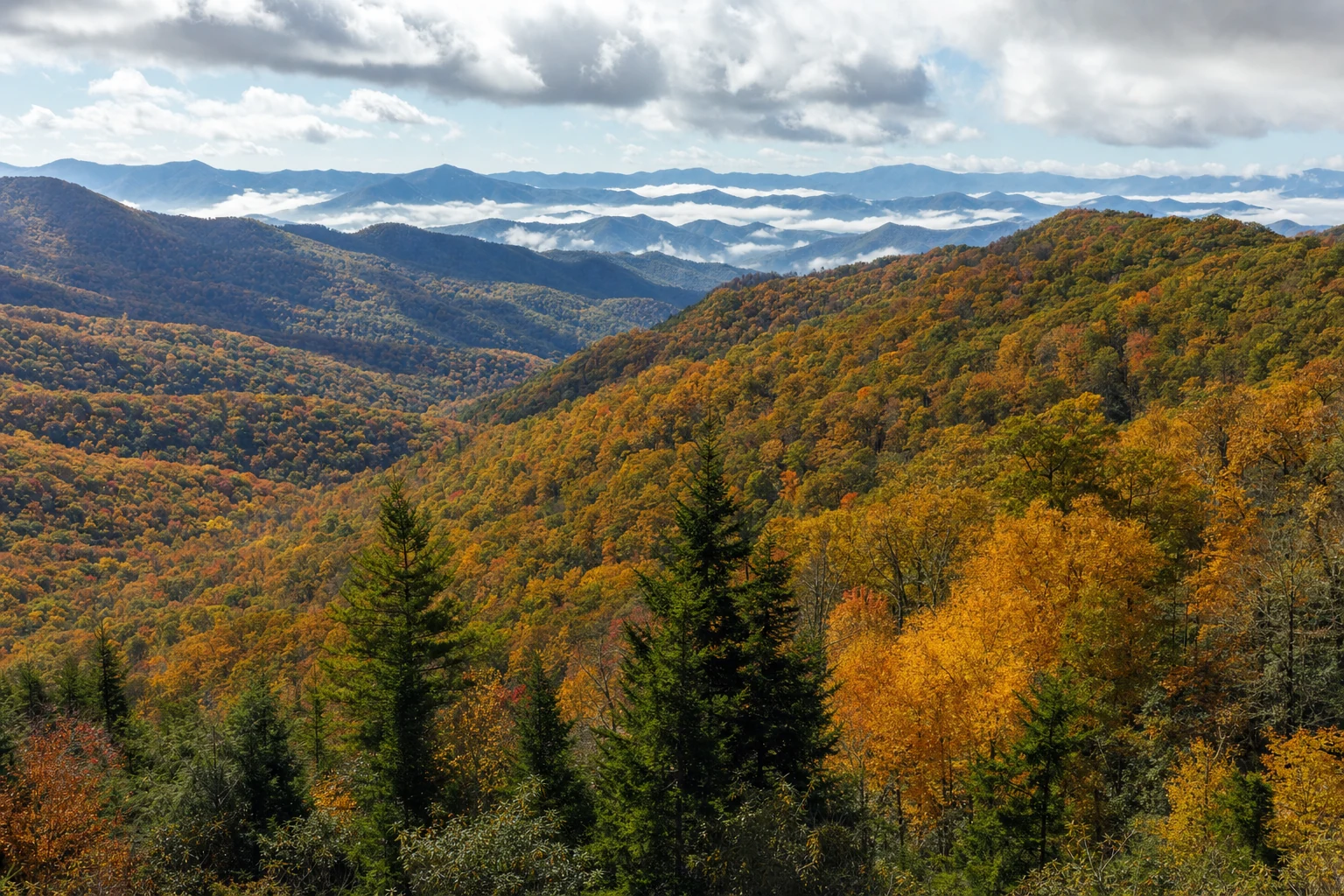

About Gorges State Park Campground
Gorges State Park Campground occupies the wild edge of the Blue Ridge Escarpment in Sapphire, North Carolina—a terrain defined by steep gorges, cascading waterfalls, and rainfall totals that rival temperate rainforests. The campground offers just 10 primitive backpacker sites, accessible only on foot after a hike in. This is not a campground for casual overnighters; it's a destination for experienced hikers who want full immersion in one of the most ecologically dramatic landscapes in the eastern United States.
The Setting
Gorges State Park sits at the convergence of the South Carolina piedmont and the Blue Ridge highlands, creating a dramatic topographic drop that channels enormous amounts of water through narrow gorges carved over millennia. The result is an unusually dense concentration of waterfalls—some of the tallest and most powerful in the Carolinas—along with rivers, cascades, and old-growth forest pockets that give the park a genuinely primeval character. Camping here means sleeping inside that landscape, not just day-tripping through it.
The campground is located at 976 Grassy Camp Rd, Sapphire, NC 28774 (GPS: 35.1320, -82.9400). This places it in the southern portion of the Blue Ridge, in Transylvania County—a quiet, forested area far from the commercial density of more heavily trafficked mountain corridors. The drive in from any direction involves winding mountain roads, so plan accordingly.
Site Details and Facilities
All 10 sites are primitive backpacker sites, meaning you hike in carrying everything on your back. There are no RV hookups, no dump station, and no showers. A composting toilet is available at the trailhead; at the actual sites, facilities are primitive. Pack accordingly and lower your expectations for convenience—what you gain in return is solitude and a setting that car campgrounds simply cannot replicate.
Nightly rates are $15 as of 2024 figures. Verify current pricing through the North Carolina State Parks system at ncparks.gov before booking, as rates may be updated for 2025–2026. Reservations are made through the NC State Parks online system. The campground operates year-round, though winter access requires awareness of ice and potentially treacherous trail conditions.
No pets are permitted at this campground.
Getting There
Use GPS coordinates (35.1320, -82.9400) when navigating to the park—road signage can be sparse in this part of Transylvania County and general map apps sometimes route drivers through confusing backroads. The most reliable approach from most directions is via U.S. Route 64 toward Rosman, then south on NC-281 toward Lake Jocassee. The park entrance and trailhead are signed from that route.
If you're traveling from the Asheville or Brevard area, NC-276 south to US-64 west is a common approach. From Greenville or Spartanburg, South Carolina, the park is accessible from the south via SC-130 connecting to NC-281—a scenic but winding drive worth timing outside weekend afternoon traffic in summer.
Note: Gorges State Park is a distinct North Carolina state-managed system, separate from Great Smoky Mountains National Park. The two parks are not directly connected by trail or contiguous in any way. The GSMNP "Park It Forward" parking tag does not apply here. You'll pay North Carolina State Parks fees at the trailhead; check the ncparks.gov site for current day-use rates.
What to Pack
Packing discipline matters when every item has to go on your back. Water filtration is essential—don't assume potable water is available at the sites; treat all water from park streams with a filter or purification tablets. There are no electrical connections or hookups anywhere in the campground.
Key items for a Gorges trip:
- Shelter rated for wet conditions. The escarpment receives heavy annual rainfall; expect moisture even in dry spells, and definitely in shoulder seasons.
- Water filtration system. A filter, purification tablets, or both.
- Bear canister or bear bag. Food storage requirements apply; the gorge ecosystem has active wildlife.
- Layering system. Gorge interiors stay notably cool and damp even on warm summer days.
- Navigation tools. Download offline trail maps before you lose cell service. Signal in the gorges is unreliable.
- Headlamp with backup batteries. No ambient light from nearby roads or facilities once you're at the sites.
Leave No Trace compliance is expected and enforced. Pack out all waste including food scraps, stay on established trails—the riparian vegetation in the gorges is sensitive—and treat water sources with the same care you'd give a backcountry wilderness area.
Best Times to Visit
Spring is the strongest season for most visitors. Wildflower blooms begin in March and extend through April, waterfalls run at peak volume from winter snowmelt and spring rains, and gorge temperatures stay comfortably cool. Weekday visits in April combine the best conditions with the smallest crowds.
Summer brings high humidity and full canopy cover. The dense forest canopy actually keeps the gorge trails cooler than exposed terrain elsewhere in the region, making midsummer more tolerable than expected—but weekends in July and August see heavy visitation park-wide, and with only 10 sites, advance reservations become critical well before your target date.
Fall color in this part of western North Carolina peaks in late October, with the escarpment's elevation gradient producing a layered display across several weeks. The park stays open through winter; leafless canopy opens long views into the gorge depths and ice formations appear on waterfall faces. But trail surfaces can become genuinely dangerous with ice—check conditions before arriving and carry microspikes if temperatures are anywhere near freezing.
Pairing Your Trip
Gorges State Park's position in southern Transylvania County puts it within reasonable reach of several complementary destinations worth building into a multi-day itinerary:
- DuPont State Recreational Forest: A large managed forest just north of Gorges with additional waterfall trails, mountain biking, and equestrian routes. Easier terrain than Gorges and a good option for mixing difficulty levels across a longer trip.
- Brevard, NC: The nearest town with reliable groceries, gear resupply, fuel, and restaurants. Brevard's compact downtown serves the outdoor tourism crowd well and functions as the last practical resupply point on the approach from most directions.
- Cashiers and Highlands, NC: Higher-elevation towns to the northwest with galleries, restaurants, and additional day-hiking access to escarpment terrain.
For anyone planning a dedicated trip to Gorges State Park Campground, Brevard is the most logical overnight base before hiking in—close enough to stage a morning start, well-supplied, and a pleasant place to decompress at either end of a backcountry stay.
Frequently asked questions
- How many sites are available?
- 10 sites total.
- Can I bring my pet?
- Pets are not permitted at this campground.