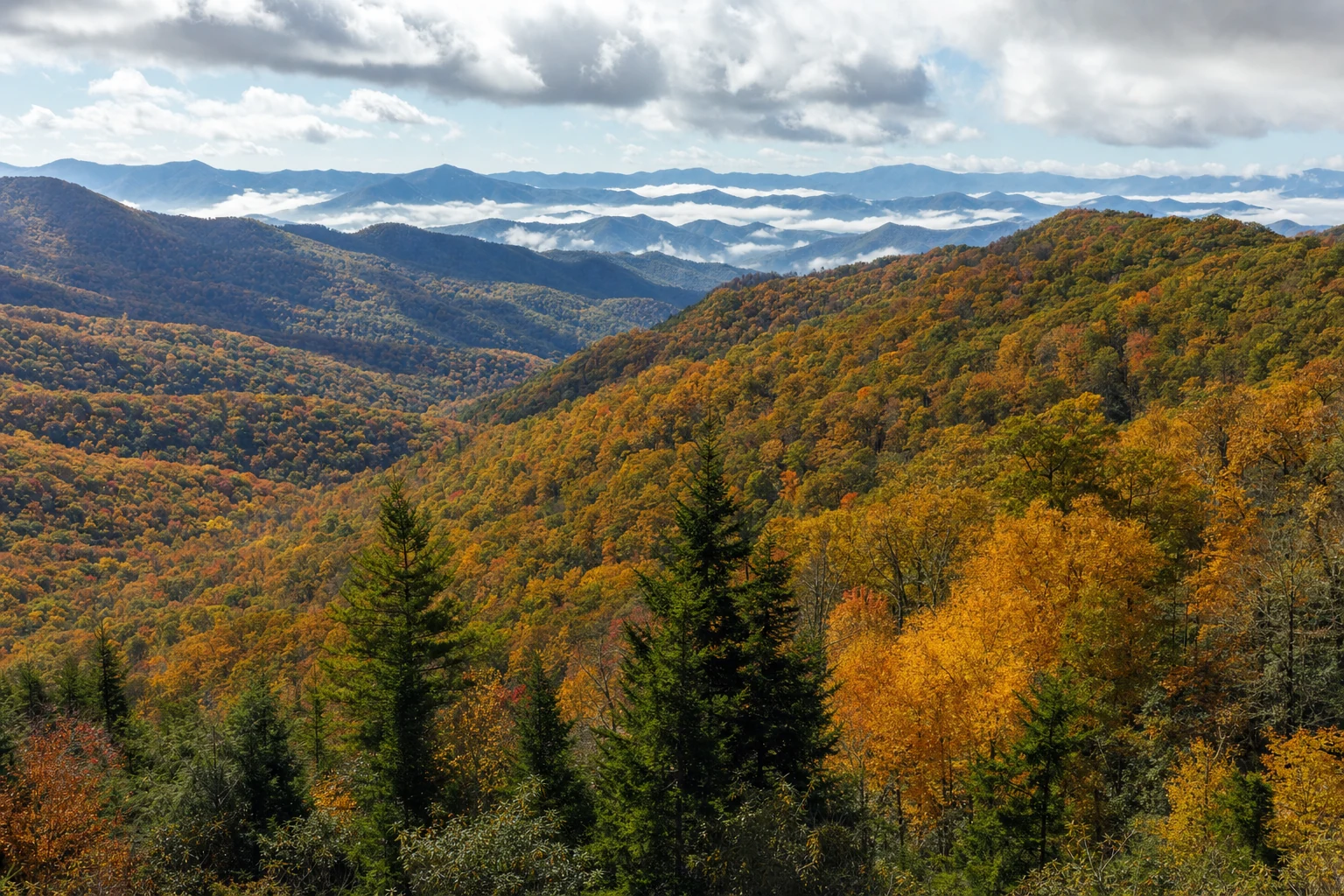

About Greenbrier Campground
Greenbrier Campground sits along the Little Pigeon River on East Parkway, east of downtown Gatlinburg, on private land close to the national park's eastern edge. It operates year-round, accepts full RV hookups, and runs roughly 100 sites through a river-side stretch of property that delivers more of a natural camping feel than most of what you'll find closer to the Gatlinburg strip. For campers who want park-edge access without committing to GSMNP's own reservation system and seasonal closures, it's a practical, well-situated option.
Location and Orientation
The address is 2359 East Pkwy, Gatlinburg, TN 37738, on US-321 heading east from the main Gatlinburg commercial district toward Cosby. GPS: 35.7250, -83.4760. This stretch of East Parkway runs quieter than the Sugarlands approach to the park: less dense development, more tree cover, the Little Pigeon River visible alongside the road.
The orientation matters practically. Camped here, you're pointed toward the Greenbrier area of GSMNP rather than the Sugarlands corridor, which puts you closer to trails that see considerably less foot traffic than the park's most popular entrances. Downtown Gatlinburg is a short drive west if you need a restaurant or gear shop; the park boundary is close enough that your hiking mornings don't begin with a long commute.
Sites, Hookups, and Cabins
The roughly 100 sites span tent pads, full-hookup RV sites, and cabin rentals. Full hookups means water, electric, and sewer at the pad — suitable for extended stays and for running appliances without managing tank cycles. The campground also has a dump station on-site for self-contained rigs that don't need a sewer connection.
Tent sites spread through the property, some positioned close to the river. The cabin option is worth considering if you want a bit more shelter without leaving the campground setting; cabins fill quickly in peak season, and mid-October specifically should be booked weeks out, not days.
Two things to know before you arrive: flush toilets aren't available here. The bathhouse has hot showers, which is the confirmed facility, but the toilet setup is a different arrangement than a full-service campground. The campground also doesn't allow pets.
Rates and Reservations
In 2024, site rates ran from roughly $45 to over $90 per night, varying by site type, hookup level, and time of year. Verify current pricing at greenbriercampground.com before booking — private campground rates in this corridor shift with demand, and the price difference between a tent pad and a full RV site is significant enough to matter.
Reservations go through the campground's own website. The most competitive windows are October leaf-change weekends, Fourth of July week, and summer Friday-to-Sunday stretches. Private campgrounds near the park fill during these periods at rates comparable to GSMNP's own developed campgrounds. Winter is the inverse: January and February see minimal competition, lower rates, and a campground that functions more like a quiet base camp than a busy operation.
The River
The Little Pigeon River running along the property is the campground's most distinctive feature. River access for fishing and swimming is a genuine part of the experience here, not a secondary detail buried in the amenity list.
The stretch of river through this corridor has a reputation for trout fishing among anglers who know East Tennessee. A Tennessee fishing license with the appropriate trout stamp applies; regulations differ from those inside GSMNP since the campground sits on private land. Bring a setup appropriate for a smaller river — sections of bank are overgrown, and this isn't wide-open water.
Swimming runs best from midsummer through early fall, when water levels drop and current speed slows to wading range. After significant rain or during spring runoff, the river moves fast and cold enough that casual swimming is genuinely dangerous. The visual read is simple: murky, fast-moving water means stay out; clear water at knee depth means wade in. By late July, the latter is the typical condition.
The river runs audibly through the campground at night. That registers as the main draw or a mild inconvenience depending on how you sleep, but it defines the character of the property as much as anything else about the location.
Getting There
From the main Gatlinburg strip, head east on East Parkway (US-321) away from the Sugarlands entrance. The campground is on the right side of the road, along the river. Coming from I-40, take exit 407 toward Newport and follow US-321 south into the area. From Cherokee and the Oconaluftee entrance, take Newfound Gap Road (US-441) north through the park into Gatlinburg, then turn east on US-321.
A Park It Forward parking tag is required for any stop inside Great Smoky Mountains National Park that lasts over 15 minutes: $5 daily, $15 weekly, $40 annual, available at recreation.gov or park entrance kiosks. The campground is private property and doesn't require a tag for your site, but you'll need one for any trailhead parking inside the park boundary.
Timing and Bears
Year-round operation is a real advantage over some of GSMNP's developed campgrounds, several of which close sections from late fall through spring. Fall and summer carry the heaviest demand; October leaf color in the Smokies draws the region's largest crowds, and sites here compete directly with cabins and hotels for that window. Book fall weekends well in advance.
Spring camping — April through early June — offers good conditions, lower rates, and a park not yet at summer saturation. The river runs higher and faster in spring, limiting swimming, but hiking conditions are often ideal and crowds are manageable.
Black bears are active throughout this corridor year-round. The campground's proximity to national park land means regular bear movement in the area. Store all food, coolers, and anything scented in a hard-sided vehicle or a bear box whenever you're not actively using it. This is the most consistently ignored rule at every campground in the Smokies, and the consequences fall harder on the bears than the campers: a bear that learns to raid food becomes a management problem and eventually gets removed. One clean camp keeps the behavior from getting established in the first place.
Frequently asked questions
- How many sites are available?
- 100 sites total.
- Can I bring my pet?
- Pets are not permitted at this campground.