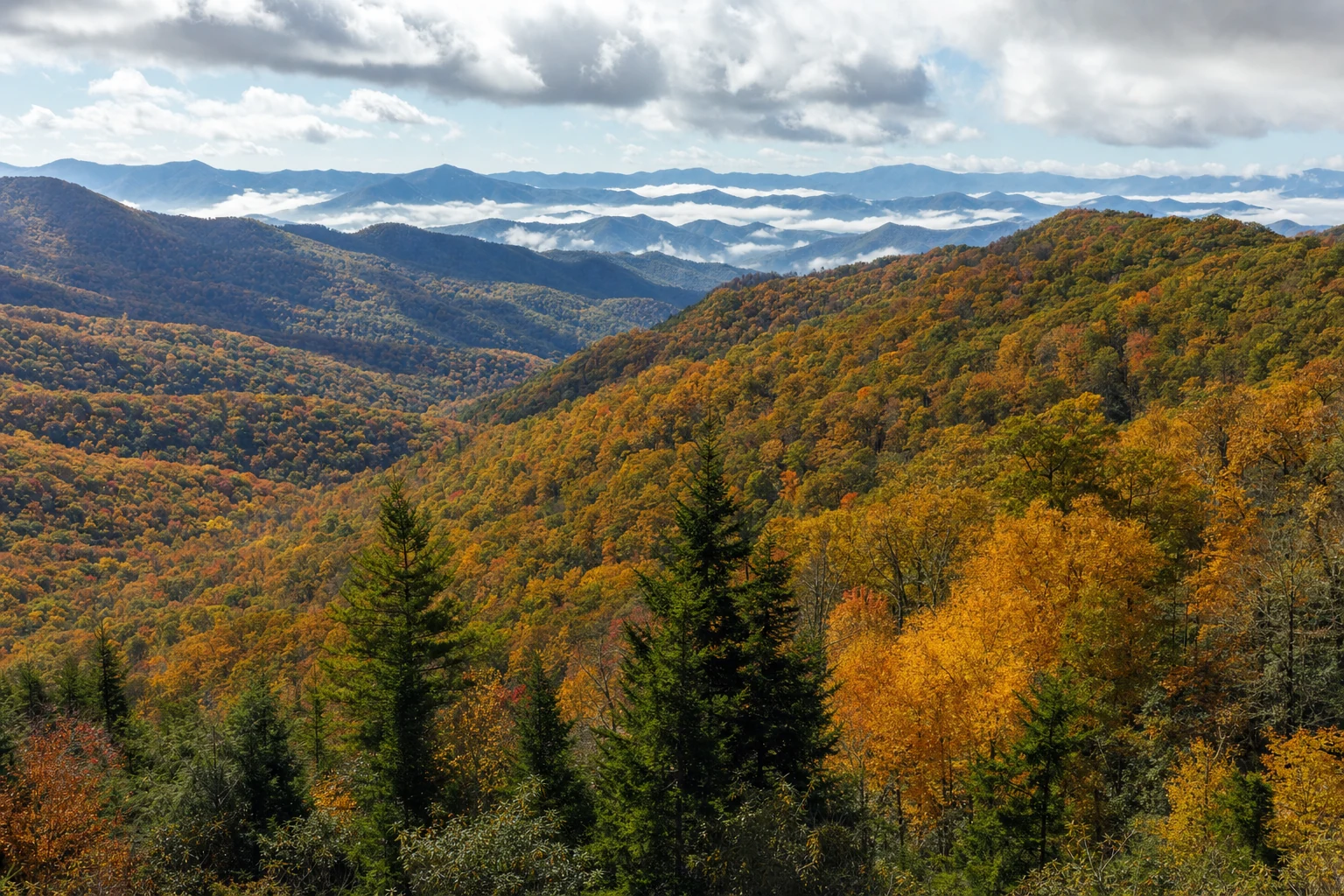

About Riverbend Campground
Riverbend Campground sits along the Little Pigeon River, giving you a genuine outdoor base just outside Gatlinburg's commercial corridor. With 100 sites, full RV hookups, and hot-water showers, it occupies a comfortable middle ground between primitive camping and full resort — close enough to Gatlinburg that you can grab dinner on the strip, far enough from the noise that mornings feel quiet. The private campground runs from early April through late October, and its mature tree canopy makes it a reliable warm-weather retreat.
The Setting
The Little Pigeon River isn't incidental here — it's the campground's defining feature. The river runs alongside the property, providing a steady ambient sound that tends to make evenings feel more remote than the proximity to Gatlinburg's traffic would suggest. Mature trees give most sites genuine shade, which matters in July and August when temperatures in the valley hover in the upper 80s.
Because this is a private campground, you're dealing with a managed operation rather than the lottery-style availability at GSMNP's front-country sites. That comes with tradeoffs: more amenities and predictable booking, but a different feel than camping at Elkmont or Cosby inside the park boundary.
Sites and Amenities
The campground accommodates around 100 sites, a mix of RV and tent configurations. Full hookups are available for RVs, and a dump station is on-site — useful for longer stays or if you're running a self-contained rig. Showers are available with hot water, making this a practical option for multi-night trips where you'll want to clean up after a full day on the trails.
One thing to plan around: the campground does not have flush toilets. For some campers this is a non-issue; for others it's worth confirming before you book.
No pets are permitted at Riverbend. If you're traveling with a dog, you'll need to look at alternatives — Cosby Campground inside GSMNP allows leashed pets on a limited basis, and several private campgrounds in the broader Pigeon Forge corridor welcome animals.
Rates in recent seasons have ranged roughly $40–$70+ per night depending on site type and time of year. Confirm current pricing directly through riverbendcampground.com when you book, as rates can shift between seasons.
Booking and Timing
The campground operates from early April through late October. That window captures the two biggest demand periods in the Smokies: spring wildflower season (roughly April through mid-May) and fall foliage season (mid-October through early November). Both periods fill well in advance.
Book through the campground's website as soon as your dates are set if you're targeting a weekend in May, June, July, August, or October. Walk-up availability does exist, but counting on it during peak season is a gamble. Mid-week stays in early April, late September, or the first half of October tend to have more room to work with — and the park itself is noticeably less congested.
Summer heat in the Gatlinburg valley peaks in July and August. If you're planning a hiking-heavy trip, the higher elevations of the park will be significantly cooler than the campground at night. Clingmans Dome, at 6,643 feet, can sit 20–25 degrees below the valley floor on a summer afternoon — plan layers even if you leave camp in shorts.
Getting to the Park
From the Gatlinburg area, the route into Great Smoky Mountains National Park is straightforward — the Sugarlands Visitor Center entrance sits on the Tennessee side along Newfound Gap Road (US-441), and the same road carries you all the way through to the Oconaluftee Visitor Center near Cherokee if you're making the full cross-park drive.
If you're driving into the national park from the campground — which you almost certainly will be — bring a method to pay for the Park It Forward parking tag. This tag is required for any parking inside GSMNP that exceeds 15 minutes. Current tiers:
- Daily: $5
- Weekly: $15
- Annual: $40
Tags are available at recreation.gov before your trip or at park kiosks near major trailheads. The system replaced the old free parking arrangement after congestion on Newfound Gap Road and around popular trailheads became unmanageable. It's a modest cost, and the funds stay in the park. GSMNP itself charges no entrance fee, which remains unusual for a major national park and is one of the main reasons it's the most-visited in the country.
Day Hikes Worth Planning Around
Riverbend's location gives you efficient access to Gatlinburg's trailhead infrastructure. From the Sugarlands Visitor Center, several well-regarded trails are within a short drive:
- Laurel Falls Trail — A paved 2.6-mile round trip to one of the most-visited waterfalls in the park. Gets crowded quickly on weekends; aim for early morning or a weekday.
- Alum Cave Trail — 4.4 miles round trip to the arch bluffs (the trail continues further to the Mount LeConte summit). Involves arch rocks, ridge views, and significant elevation gain in the upper section.
- Chimney Tops Trail — A steep 4-mile round trip that reopened after fire damage and subsequent restoration. Panoramic views from the top on clear days.
- Clingmans Dome — A short but steep paved walk from the parking area to the highest point in the park. Frequently foggy at the top, but worth the trip even in partial visibility. The Dome Road typically closes from around December through March and opens well before the campground season begins.
Gatlinburg's dining and commercial strip is close. For groceries and camping supplies, the Gatlinburg area has several options; larger stores are available a few miles north on US-441 toward Pigeon Forge.
Bear Safety at Camp
The Smokies support one of the highest black bear densities in the eastern United States, and campgrounds near the park require genuine food storage discipline — not just a posted reminder.
Store all food, beverages, coolers, and scented items (sunscreen, toothpaste, deodorant) in your vehicle or a campground-provided bear box when not actively in use. Don't leave anything out overnight. Don't leave food in a tent under any circumstances.
The campground's private status means park rangers won't be patrolling your site the way they would at Elkmont or Smokemont, so the responsibility sits with you. If a bear enters camp, make noise, hold your ground, do not run, and give it a clear exit route. A bear that gets a food reward at a campground is a bear that typically has to be removed from the area — the consequences for the animal are real.
Frequently asked questions
- How many sites are available?
- 100 sites total.
- Can I bring my pet?
- Pets are not permitted at this campground.