
About Smoky Bear Campground & RV Park
Smoky Bear Campground & RV Park sits along Wears Valley Road in the corridor between Pigeon Forge and Townsend, giving you a useful mid-point position for exploring both the busier tourist towns and the quieter western reaches of Great Smoky Mountains National Park. The private campground runs year-round, accommodates around 100 sites for RVs and tents, and comes equipped with full hookups and on-site amenities that make an extended stay genuinely practical.
The Campground Layout
With 100 sites spread across the property, the campground doesn't feel overwhelming — there's enough space to settle in without the institutional scale of the park's large developed campgrounds. Sites serve both tent campers and RV travelers. Full hookups are offered for RVs, so you don't need to ration power or water mid-trip, and a dump station is on-site for emptying tanks before you move on.
The campground includes a pool and playground, which makes it a more complete option for families with kids who need somewhere to burn energy after a long trail day. Modern bathhouses with hot water showers are available on the grounds.
Rates and Reservations
Rates run in the $40–$70+ per night range based on 2024 pricing — verify current rates at smokybearcampground.com before booking. Given that the Smokies region sees intense seasonal demand from late spring through fall, and heavy holiday weekends from Thanksgiving through New Year's, reservations are strongly recommended. The year-round operation means winter camping is a legitimate option if you want to visit during quieter months with smaller crowds.
Booking goes through the campground's own site at smokybearcampground.com. Walk-up availability can happen outside peak season, but counting on it for a summer Friday is a gamble that usually doesn't pay off.
Getting There
The campground is located at 4520 Wears Valley Rd, Sevierville, TN 37862. Despite the Sevierville mailing address, the property sits on the southern stretch of Wears Valley Road — the TN-321 corridor that arcs from Pigeon Forge down toward Townsend and the Little River entrance to Great Smoky Mountains National Park.
From Pigeon Forge, head south on Wears Valley Road (TN-321 South). The drive takes you out of the commercial strip fairly quickly, and within several miles the landscape opens into actual valley farmland before the road begins climbing toward the park boundary. From Gatlinburg, the most direct route cuts through Pigeon Forge, then picks up Wears Valley Road heading southwest.
If you're planning to enter the park from this side, the Townsend/Little River entrance is your access point. This puts you near the Tremont area and trails like Lynn Camp Prong and the Schoolhouse Gap area, bypassing the bottleneck of the Sugarlands entrance that clogs on busy summer weekends.
Park-It-Forward Parking Tag
For any vehicle stopped inside Great Smoky Mountains National Park for more than 15 minutes, a Park-It-Forward parking tag is required. The fee is $5 per day, $15 per week, or $40 annually. Tags are available at recreation.gov before you leave home or at park entrance kiosks. The annual tag pays for itself quickly if you're planning more than a week of park visits throughout the year.
This is separate from any federal interagency pass (America the Beautiful, Senior Pass, and so on). Those passes cover entrance fees at parks that charge them, but GSMNP has never charged entry, so the parking tag is the mechanism used to generate maintenance revenue. You still need it even if you carry a federal pass.
Nearby Trails and Access
Wears Valley Road's position gives you credible access to parts of the park that visitors coming strictly through Gatlinburg or Pigeon Forge often skip. The Laurel Creek Road entrance near Townsend leads to Cades Cove, roughly 30 minutes from the campground on a clear day. Cades Cove runs an 11-mile one-way loop road through open meadows, historic homesteads, and reliable wildlife habitat — deer, turkey, and black bears are common sightings in the early morning and late evening.
Tremont is a short drive farther once you enter the park. The Institute at Great Smoky Mountains connects researchers, educators, and serious naturalists with one of the more focused outdoor education programs in the southern Appalachians. The trails in that immediate area carry considerably less foot traffic than the park's most popular routes.
For waterfalls, Laurel Falls sits on the Little River Trail system accessed from the Sugarlands side. It's a paved trail with heavy foot traffic in season, but the distance from the campground is manageable if you're spending multiple days in the area.
What to Know Before You Camp
Pets are not permitted at Smoky Bear Campground & RV Park. This is a firm policy, not a guideline — plan accordingly if you're traveling with animals.
Bear activity is real throughout the Smokies corridor, including private campgrounds outside the park boundary. Store all food, coolers, and scented items inside a hard-sided vehicle when not in active use. Keeping a clean camp isn't just park protocol — it's basic practice in this region.
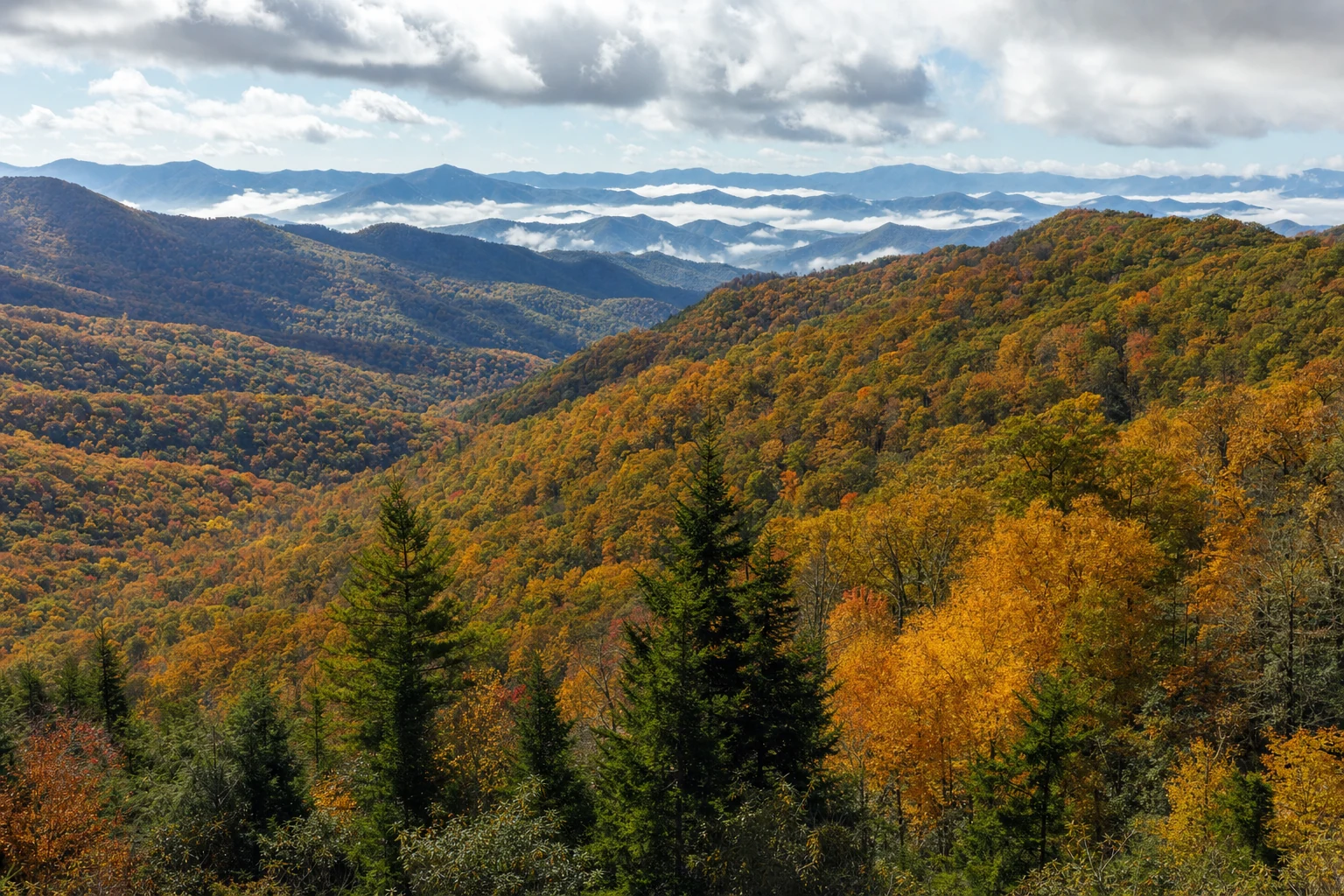
Seasonal patterns matter more here than in most destinations. Late spring through October is peak season, with maximum crowds falling on holiday weekends and the fall color window, which typically runs late September through mid-October. Summer weekend reservations can disappear weeks in advance. Mid-week stays from late October through December offer a dramatically different experience — cooler, quieter, and with foliage in many years that rivals the color peak itself.
Weather at elevation differs meaningfully from the valley towns. Wears Valley sits low, but hikes into the park gain elevation quickly. Pack layers even in summer for ridge work, and check the forecast at nps.gov/grsm before any significant outing.
What's Nearby
Pigeon Forge sits within easy reach along Wears Valley Road — the commercial attractions, outlet shops, Dollywood, and the full density of Sevier County tourism are all accessible in under 20 minutes in normal traffic conditions. Townsend is the quieter alternative in the opposite direction, with tubing on the Little River during warmer months and significantly less traffic year-round.
For supplies, Pigeon Forge and Sevierville have full grocery and hardware options. Townsend has more limited services — adequate for basics but not a major resupply stop. Fill up on propane and firewood before settling in if you're staying multiple nights.
The year-round operation makes the campground viable for Christmas and New Year's visits, which have become a signature draw for the region. Gatlinburg's Winterfest lights run from November through February, Dollywood operates a winter season, and the park takes on a genuinely different character when snow falls on the high ridges. Expect reduced but still significant crowds around major holidays, with pricing and road conditions shifting accordingly.
Frequently asked questions
- How many sites are available?
- 100 sites total.
- Can I bring my pet?
- Pets are not permitted at this campground.