
About Bote Mountain Road Shelter:
The Bote Mountain Road Shelter sits in the backcountry of Great Smoky Mountains National Park, one of the surviving structures from the Civilian Conservation Corps work of the early 1930s that built much of the park's trail infrastructure. Getting here takes actual hiking — this isn't a roadside pullout. It's a functioning backcountry shelter, open to hikers, and that distinction shapes how you should plan the visit.
A Brief History
When CCC crews began working in what would become GSMNP in the early 1930s, they built more than roads and front-country facilities. They also constructed backcountry shelters along high-ridge routes, giving hikers reliable cover in terrain where weather changes fast and the distances between settlements are substantial. The Bote Mountain Road Shelter dates to approximately that same period, built as working infrastructure rather than a landmark.
The CCC program left a particularly deep imprint on the Smokies. Young men arrived at Depression-era camps and spent their service years on the kind of physical construction that a cash-strapped National Park Service couldn't fund on its own: stone masonry, timber framing, trail cutting. The standard of work was consistently high enough that many of these structures are still standing nearly a century later. This shelter is one of them.
What to Expect On-Site
The shelter is publicly accessible and open to hikers who reach it on foot. This isn't an interpretive museum stop or a staffed historic site; it's a backcountry structure in the Bote Mountain area of the park, preserved and still serving the basic purpose it was built for. The preservation status means it's been maintained rather than left to decay, but encountering it is fundamentally about finding a piece of early park infrastructure in the landscape where it was built to function.
Expect a simple interior. CCC-era shelters were built for utility: cover from rain and wind, not comfort. The stonework and framing reflect construction methods of the era, and the wear of decades of backcountry use is visible. It's the kind of place where the age of the thing and its continued usefulness exist in the same moment.
Getting There
The Bote Mountain area is backcountry, which means you're hiking in. There's no drive-up access to the shelter. You'll approach via the trail system in that section of GSMNP, accessible from within the park. Gatlinburg is the natural gateway for visitors coming from the Tennessee side.
From downtown Gatlinburg, the Sugarlands Visitor Center entrance puts you inside the park and oriented toward the interior. A Park It Forward parking tag is required anywhere inside GSMNP for stops over 15 minutes: $5 daily, $15 weekly, $40 annually. Tags are available at recreation.gov before you go or at park kiosks on arrival.
Because this is a backcountry destination, check current conditions before heading out. Trail status, water crossing levels, and backcountry regulations can all affect the trip. The park's visitor centers have current information, and staff there can confirm what's accessible.
Best Time to Visit
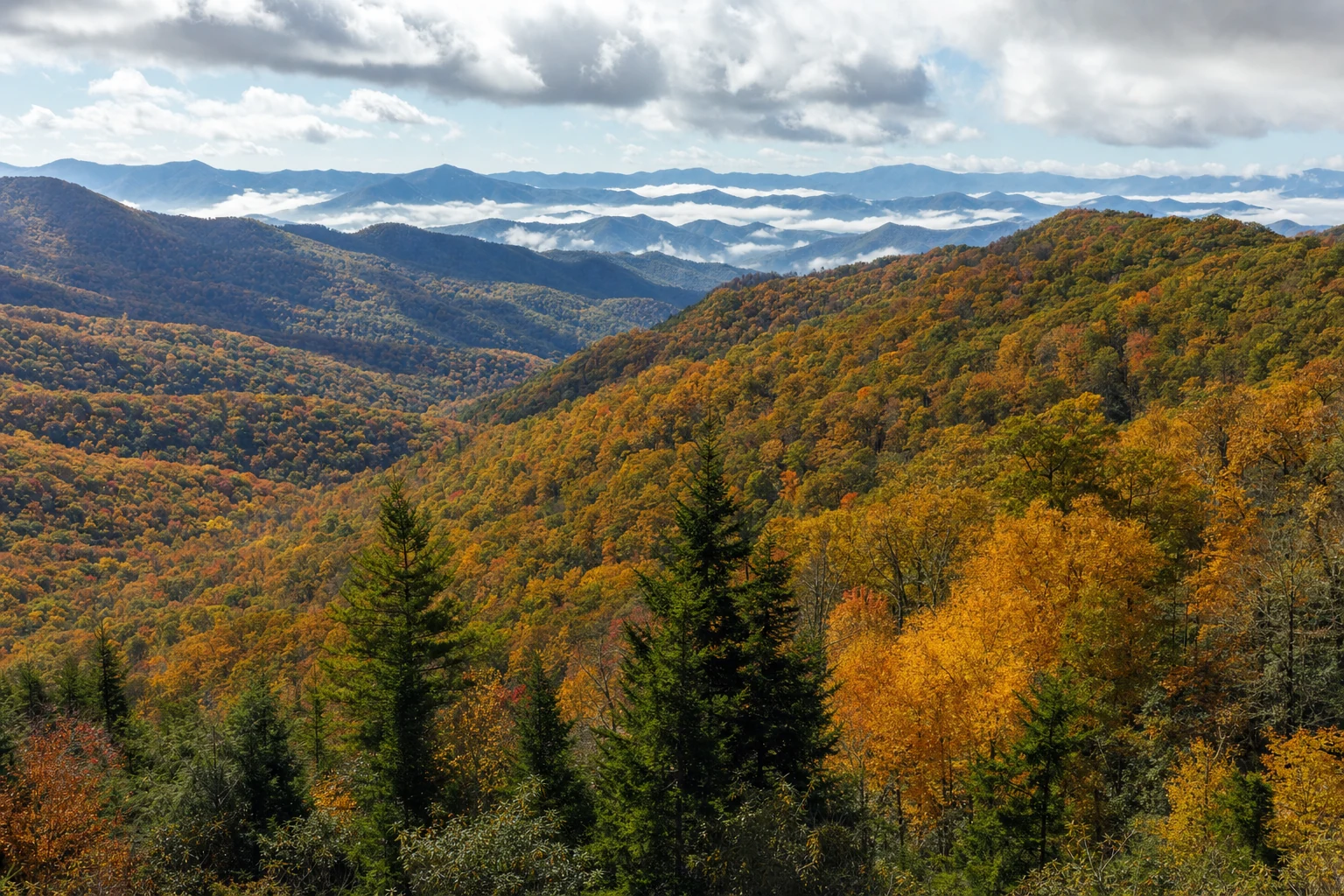
Fall makes the strongest case for this kind of backcountry hike. The crowds that pack the park's front-country overlooks and roadside stops in summer thin sharply once you're moving through the backcountry, and the October canopy at these elevations can be exceptional. Views open up as leaves drop; cooler temperatures make sustained hiking more comfortable.
Spring works well too. Wildflowers push through the forest floor from mid-March into May, and the ridges above Bote Mountain see some of the park's most dramatic storm light in April. Streams run hard after winter snowmelt.
Summer is the park's peak season overall. The front-country areas near Gatlinburg get genuinely busy, but the backcountry stays relatively quieter. Heat and humidity at lower elevations make the approach harder work, so start early if you're going in July or August.
Winter is honest about what it demands. Roads inside the park can close with ice and snow, and some backcountry approaches become serious undertakings in bad conditions. If you're experienced in winter hiking and want near-solitude on a park trail, late January into early March can deliver it; just verify road and trail status with the park before committing to the drive.
Practical Notes
- No street address or standard GPS coordinates exist for the shelter — backcountry sites in GSMNP are navigated by trail, not by postal address. Bring a paper topo map or a downloaded offline map with full GSMNP trail data. Cell service in the backcountry is unreliable.
- Leave No Trace applies strictly. The shelter's preservation depends partly on visitors treating it with care. Don't carve into the wood or attempt to modify the structure; pack out everything you carry in.
- Check road status before going. High-elevation park roads, including some approaches to backcountry trailheads, close seasonally and during winter weather events. The park's road status page is authoritative.
- Weather above 4,000 feet changes faster than it does at the trailhead. Afternoon thunderstorms build quickly in summer, and temperatures drop sharply after dark at any time of year. Don't let conditions at the trailhead set your expectations for conditions higher up.
Pairing With Other Stops
Most visitors to the Bote Mountain area are doing a longer day hike or a multi-day trip rather than a single-destination out-and-back just to see the shelter. If you're already moving through the park's backcountry, this is a natural stop, not a special detour.
Cades Cove is worth the detour for anyone interested in the park's broader historic fabric. The collection of 19th-century homesteads and churches there represents an earlier layer of the region's built history — the farm families who lived in the Smokies before the park was established. The contrast between that front-country, farm-landscape preservation and a backcountry CCC shelter from several decades later tells a fairly complete story of how this landscape changed over a century. Both are GSMNP, but they're different relationships between human presence and the mountains.
The Appalachian Trail corridor offers natural connections for hikers interested in pairing longer ridgeline mileage with backcountry shelter access. For overnight base, Gatlinburg covers the full range of lodging options within close reach of the park's Tennessee entrances.