
About Caldwell House:
Now I'll write the Caldwell House page copy, applying the anti-slop constraints against the research material.
Cataloochee Valley runs deep into the North Carolina portion of Great Smoky Mountains National Park, far enough from the main park corridors that most visitors never reach it. The Caldwell House sits on the valley floor, a two-story frame structure built around 1903 by Hiram and Mary Caldwell, noticeably more substantial than the log cabins nearby, and open during daylight hours for anyone who makes the drive. Walking inside gives you something photographs can't replicate: the actual scale of how these mountain farming families lived at the turn of the last century.
The Caldwells and Their House
By the early 1900s, Cataloochee Valley supported a full community: farms, churches, a school, and hundreds of residents spread across the surrounding hollows. The Caldwell family was among the more established households in the valley. Their two-story frame construction set them apart from their neighbors, most of whom had built with logs using whatever timber was at hand. The Caldwells used milled lumber, which took money and planning to get into a remote mountain valley. That difference in materials is the house's main story.
The National Park Service maintains it as an open building, no tickets or reservations required. You walk in, look around at the rooms and windows and the views of the surrounding ridgelines, and piece together what daily life looked like here in 1903.
The Valley Around It
The Caldwell House is part of a broader collection of preserved structures, and most of them are within easy walking distance or a short drive from one another. Palmer Chapel, a white-frame church built in 1898, still holds occasional services and is a frequent photography subject. The Palmer House dates to the 1890s and shows the older log-cabin construction style the Caldwell family had moved beyond. Beech Grove School, a one-room schoolhouse from 1901, gives the clearest picture of what education looked like for children here. The Messer Barn is a large cantilever structure; the Woody Cabin is simpler and more spare. Self-guided walking tours let you move through all of them at your own pace.
Reading the buildings together is more interesting than any single one. The range in construction, from rustic cabin to the Caldwells' frame house, all within roughly fifteen years of each other, shows how the valley was developing right up until the federal government began buying out residents in the late 1920s and 1930s to create the park. The open farm fields on the valley floor are still mostly intact, which makes Cataloochee feel unlike any other part of GSMNP.
Elk
Elk were reintroduced to the park in 2001, and Cataloochee Valley is now the most reliable place in the eastern United States to see them in the wild. The herd grazes in the valley's open fields, most actively at dawn and dusk. If you're visiting the Caldwell House, the timing works naturally: arrive early, spend the morning moving through the historic structures, and catch the elk in the fields as the light comes up.
Park regulations require a minimum 150-foot distance from all wildlife. Rangers are regularly present during peak viewing times to provide information and keep things orderly. Bulls can weigh over 700 pounds, and they look calm right up until they're not; keep your distance and don't attempt to feed them. The fall rut, which runs through September and October, is when bulls are most vocal. Early-morning visits during the rut are among the more memorable wildlife experiences available anywhere in the Appalachians.
Getting There
Cataloochee Valley is not a place you pass through on the way to somewhere else; the access road exists for this valley alone. From Interstate 40, take exit 20 near Waynesville, North Carolina, then follow Cove Creek Road for approximately 11 miles into the park. The first section is paved. It transitions to a narrow gravel road as you enter the park boundary, steep in places with tight turns that make it genuinely uncomfortable for RVs and trailers. A standard car handles it fine; low-clearance sports cars may struggle in poor conditions.
The GPS coordinates for the approximate center of the valley are 35.6325° N, 83.1097° W. The drive over the ridge before dropping into the valley is worth slowing down for.
A Park It Forward parking tag is required for stays over 15 minutes anywhere inside Great Smoky Mountains National Park. Tags cost $5 per day, $15 per week, or $40 annually, available through recreation.gov or at park kiosks. Check NPS road conditions before you go. The gravel section of Cove Creek Road can close for snow or ice without much warning, and there's no alternate route.
Timing Your Visit
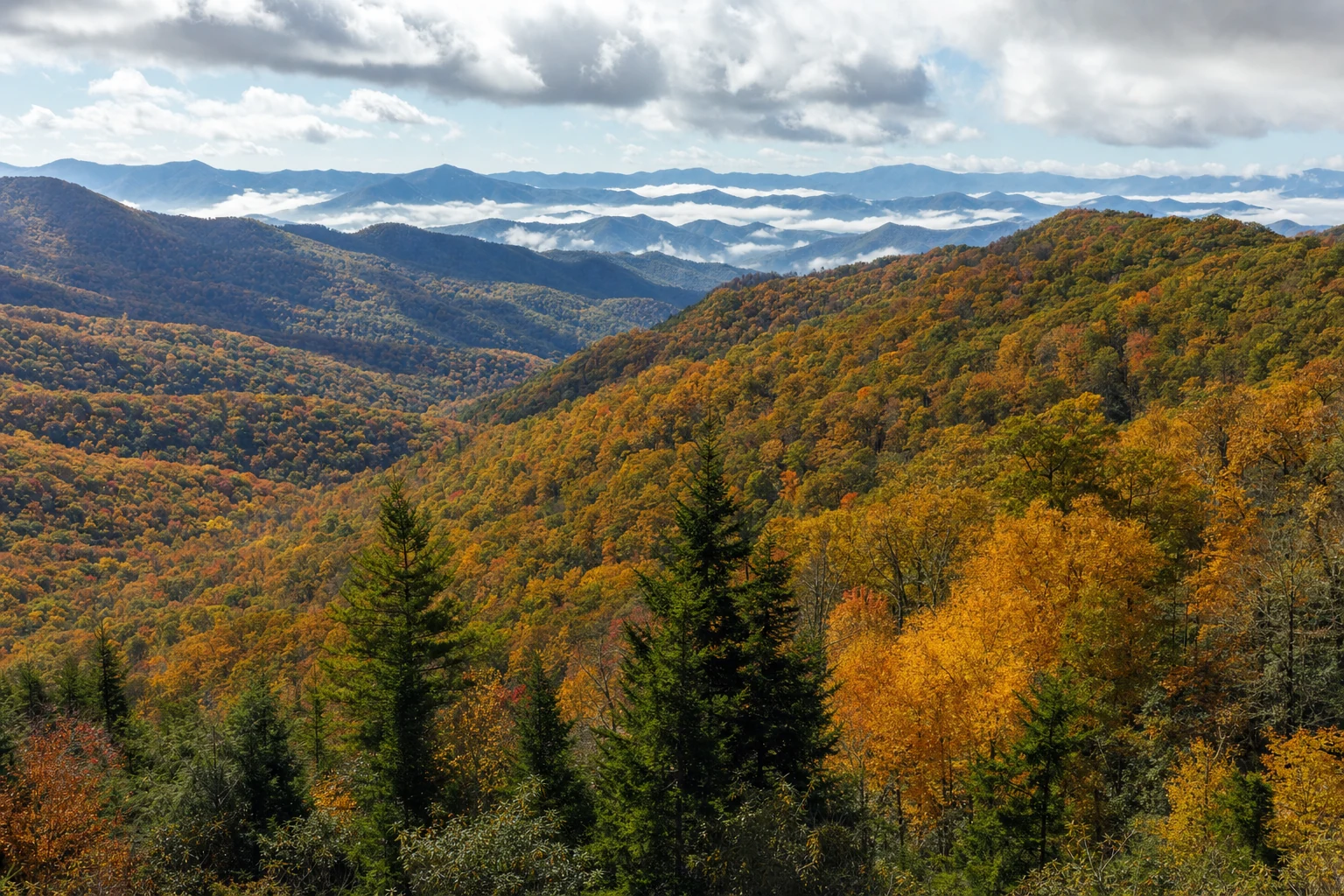
Spring and early fall are the most comfortable seasons. The rut in September and October draws more people specifically for wildlife, but the valley absorbs visitors without feeling crowded the way Clingmans Dome or Laurel Falls does on a busy day. Foliage peaks around mid-October, and the open farm fields give it a different character than the forested park corridors.
Summer is warmer and more humid, but weekday mornings are genuinely quiet. The difficulty of the access road filters out a large portion of casual visitors. On a Tuesday morning in July, you can easily have the Caldwell House to yourself.
Winter is possible but unpredictable. The gravel road ices before lower-elevation routes do, and the NPS may close it without much notice. If a winter visit is on your itinerary, check road conditions that morning rather than the day before.
Trails
Two trails extend beyond the valley floor for those who want more ground. The Boogerman Trail loops through old-growth sections of the watershed; the Cataloochee Divide Trail climbs to ridgeline views over the surrounding mountains. Both are full-day outings if done properly, not short walks. Given how long the access road is, combining one of these trails with a visit to the historic structures makes practical sense.