
About Carter Shields Cabin:
Carter Shields built his cabin around 1880 near what is now the far end of the Cades Cove Loop Road, and the structure has stood largely unchanged since. It's smaller than most of what you'll pass earlier on the loop: a single-pen log cabin with a detached kitchen, both enterable during daylight hours. George Washington "Carter" Shields, for whom the cabin is named, was a Civil War veteran, and the scale of what he built is itself a kind of historical record: the Cove's families were not economically uniform, and this is what the lower end of that range looked like.
The Man and the Building
Shields built a modest homestead by Cades Cove standards. The main cabin is single-pen: one room, round logs with chinking between them, a doorway low enough that you duck slightly. Behind it, separated by a few feet, sits the detached kitchen. That gap wasn't architectural indecision; keeping the cooking fire physically separate from the main living quarters reduced the chance of a kitchen fire taking the whole structure. It's a practical arrangement common throughout the Cove, but here it reads more clearly because there's so little else on the property. These two buildings and the open field around them are what Shields had.
Both structures are open to walk through. The interior of the main cabin is bare (no furniture, no period staging most of the time), which actually makes the room easier to read on its own terms. The walls, the notching at the corners, the ceiling height, the single window opening. Spend a few minutes in there and the cabin's dimensions become real to you in a way the exterior view doesn't quite deliver.
Where It Falls on the Loop
The Carter Shields Cabin sits near the end of the 11-mile Cades Cove Loop, well past the Cable Mill historic area that marks roughly the midpoint. That positioning matters practically: the Cable Mill complex draws the highest concentration of visitors in the Cove, and by the time you reach the Carter Shields pullout, the crowd thins noticeably. The pullout itself is small, room for a handful of cars, and it fills quickly when tour groups are moving through. Since the loop is one-way, you can't reverse if it's full; continue around to the exit and return, or note that the distance back to the cabin from the loop exit is short.
The Surrounding Field
The open field around the cabin does real photographic work. Late afternoon light falls across the front face of the building cleanly, and spring brings the most color to the surrounding grass. The view from this end of the loop toward the mountains behind the cabin is unobstructed; it's a different kind of frame than the densely wooded sections offer.
Morning is the better time if wildlife is part of your reason for visiting Cades Cove. The back half of the loop, including the area around the cabin, sees deer and turkeys regularly in the open ground around the historic structures. Arriving at dawn and working slowly around the loop before other vehicles fill the road gives you the clearest window.
Walking the Back Half
On Wednesdays, the Cades Cove Loop Road closes to motor vehicles in the morning hours and the entire circuit becomes walkable or bikeable. Reaching the Carter Shields Cabin on foot from the Cable Mill parking area is feasible; it's the back half of the circuit, and making that walk changes the experience noticeably. Wildlife reacts differently without engine noise, the sounds of the valley come through, and the distances between the historic structures become real rather than abstract.
On non-Wednesday visits, parking at Cable Mill and walking toward the cabin is possible, but you'll share the road with cars. The sight lines are generally clear and the road is paved, but pullouts are intermittent and you'll need to step off for passing vehicles. It's still worth doing for anyone who wants to cover this end of the loop at a pace that lets the buildings register.
When to Visit
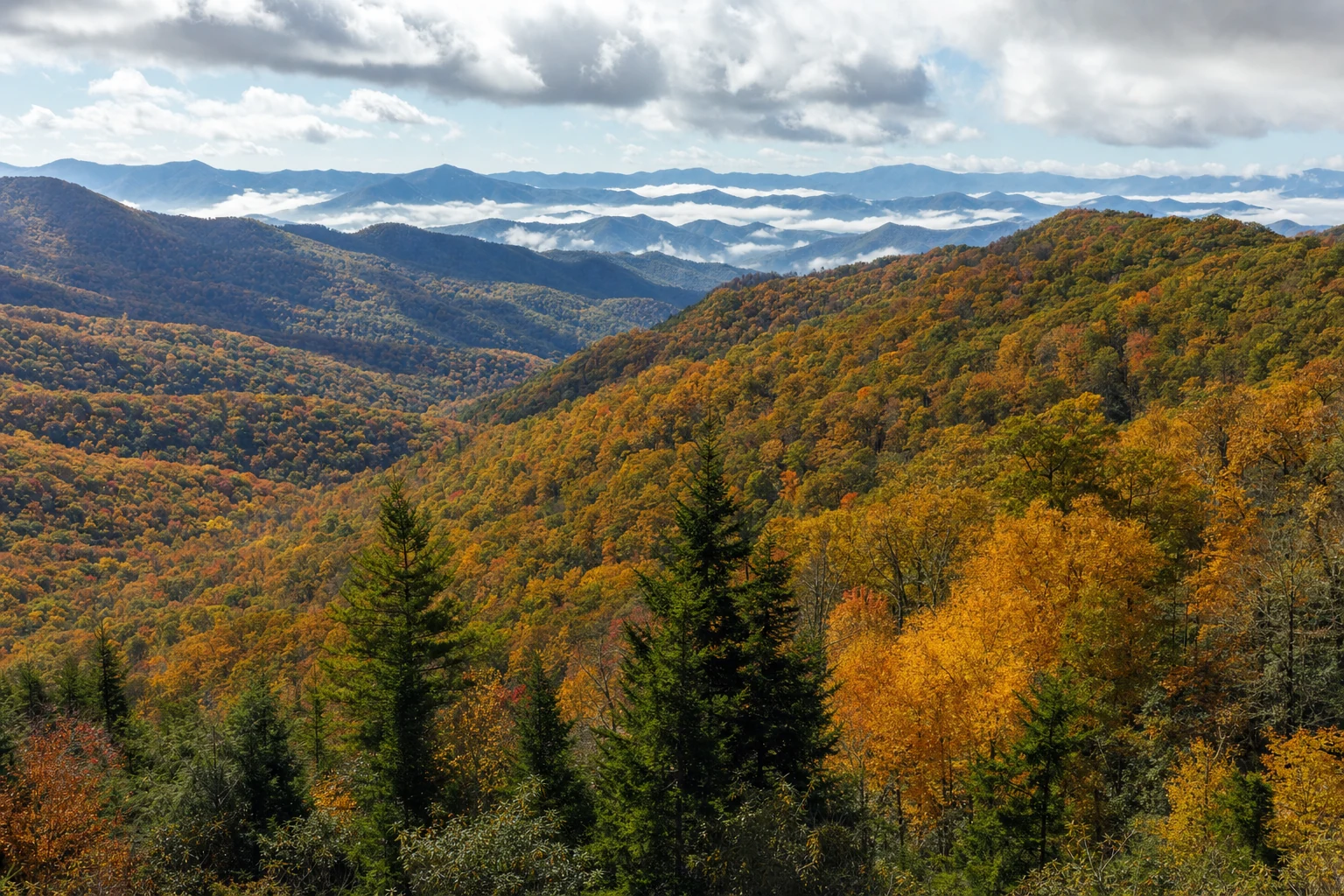
Fall draws the most visitors, peaking around mid-October when foliage color moves across the valley. If you're visiting then, early morning is the only reliable way to avoid significant congestion at the pullouts. Summer is the busiest season overall; arrive before 9 a.m. Spring is the most rewarding for the cabin's field specifically, with early wildflowers in the surrounding grass and a substantially lower crowd level than summer.
Winter is worth considering. The Cades Cove loop is low-elevation and stays open most of the winter unless ice forces a temporary closure; check the park's road status page before driving out. In bare winter light, the cabin's construction is easiest to read clearly. Nothing growing softens the logs or the gaps between them, and the stripped-back valley looks entirely different from its summer self.
Getting There and the Parking Tag
Cades Cove is reached via Laurel Creek Road from Townsend, about 25 minutes from town. The loop entrance is at the road's end; drive past the Cable Mill area and continue around the back half to reach the Carter Shields Cabin pullout near the far end. The full loop drive takes roughly two hours without stopping; plan two to three hours if you're visiting multiple historic structures.
Great Smoky Mountains National Park requires a "Park It Forward" parking tag for any stop over 15 minutes. Tags are $5 per day, $15 per week, or $40 annually, available at recreation.gov, park entrance kiosks, and the Cades Cove campground store. Rangers check regularly at Cades Cove pullouts.
The Tipton Place, a few miles back on the loop, is the most natural pairing with this stop: a larger, more prosperous farmstead with multiple outbuildings that makes the contrast with the Shields cabin direct and easy to read. If you're making the full loop, visit both.