
About Daisy Town Cabins (various):
The cluster of small cabins at Elkmont tells you something honest about how Knoxville families vacationed around 1910: not in grand resort complexes, but in simple wood-frame retreats close enough to a railroad stop to reach by weekend. Daisy Town, one of two distinct cabin colonies that grew up at Elkmont, expanded as private leases brought families back season after season, canvas tents eventually giving way to real walls, porches, and informal summer communities. Today you walk past the surviving structures along a short trail — exteriors only, no entry permitted — and the accumulated effect of cabin after cabin in a quiet forest clearing lands harder than you'd expect from a short detour.
What Daisy Town Is
Daisy Town is a collection of rustic vacation cabins originally built by Knoxville families starting around 1910 and continuing into the 1920s. The park service has been stabilizing and preserving many of them after decades of deterioration following the establishment of Great Smoky Mountains National Park, when the leases expired and the families had to leave. Walking through today, you'll find structures in varying states of repair; some have been consolidated and shored up, others still show the kind of slow dissolution that happens when a building sits unoccupied in a humid mountain hollow for a generation or two.
Named examples include the Maynard Cabin, the Lewelling Cabin, and the Higdon Cabin — each representing a different family's long claim on this stretch of forest. The cabins aren't uniformly signed with interpretive panels at every door, so you won't get a tidy narrative delivered to you as you walk. The experience is more observational: you're reading a landscape, inferring lives from the spacing between buildings and the small details that survived.
The Interior Rule
None of the cabins are open for entry. The park has established exterior-only viewing along the designated trail, and the structural condition of some buildings makes this a genuine safety issue rather than just a technicality. Don't duck under barriers or step onto deteriorating porches; the preservation work is ongoing, and it depends partly on people not accelerating the damage.
What Else Elkmont Has
Daisy Town sits within a larger complex of historic structures at Elkmont, and it's worth treating the whole area as the destination rather than the cabins alone. The ruins of the Wonderland Hotel — also exterior-only — are nearby. Together, the hotel site and Daisy Town sketch out what the Appalachian Club and the Wonderland Hotel Club built here before the park absorbed the land: a genuine mountain resort community that lasted for decades.
Laurel Falls Trail is also accessible from the Elkmont area, running along a paved path to one of the more visited waterfalls in the park. Pairing the cabin walk with a hike to Laurel Falls makes for a solid half-day that covers both the historical and the natural in a manageable distance without significant overlap.
Elkmont is also the site of the park's synchronous firefly population. For a window of a few weeks in late spring or early summer, Photinus carolinus fireflies flash in coordinated patterns across the forest floor, one of the more genuinely unusual natural events in the eastern United States. The park runs a lottery-based vehicle access program for peak viewing nights; if your trip dates overlap, check the park's current-year lottery details well ahead of arrival — spots fill fast, and the lottery opens weeks before the event.
When to Go
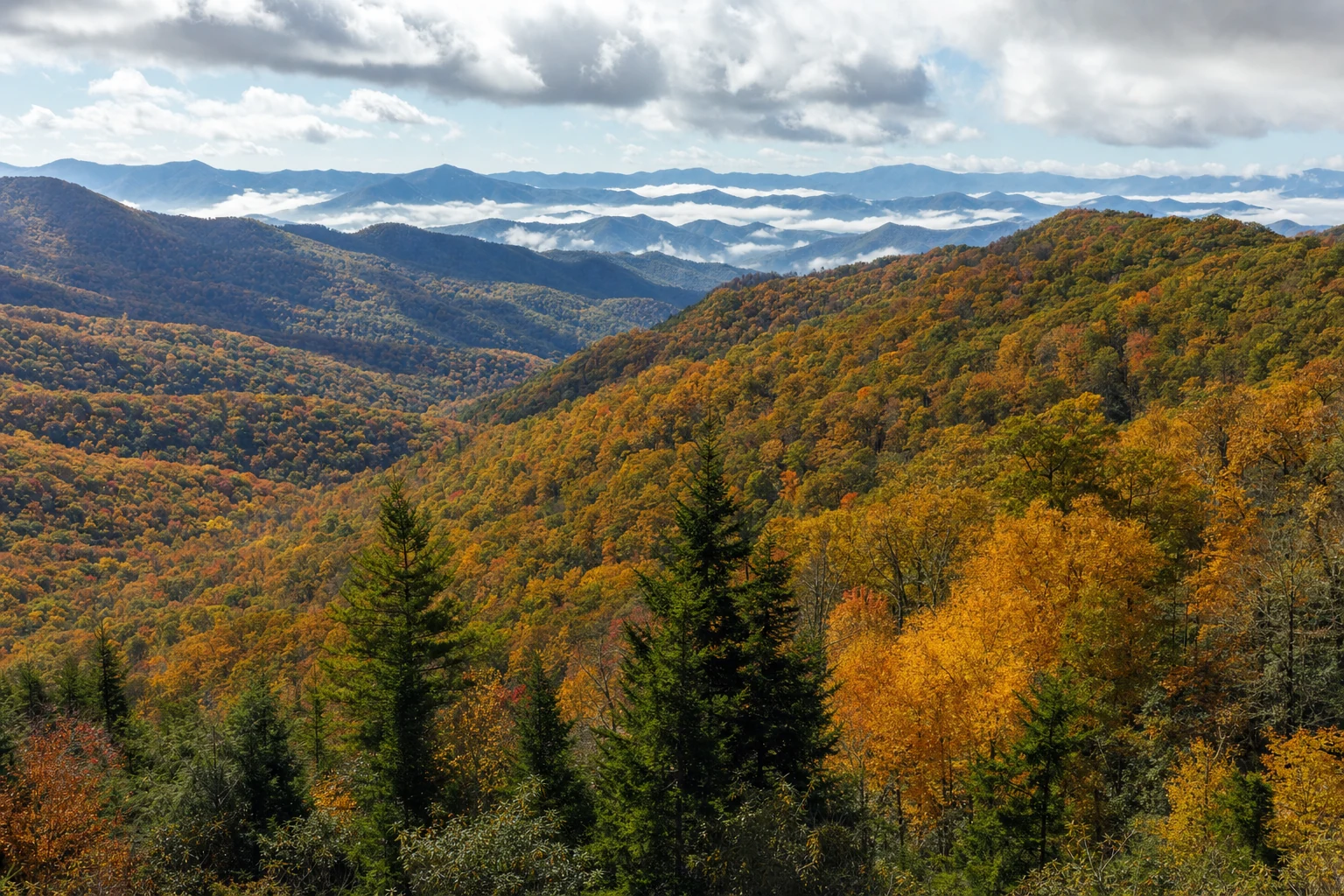
Fall is the clearest choice for first-time visitors. Foliage in the Elkmont valley typically peaks in mid-October, and the lower elevation means the color arrives a bit later than the high-country overlooks. The cabin structures read well against autumn foliage, and crowd volumes at the day-use area tend to ease after the first week of October's heavy traffic.
Spring is strong for a different reason: the forest understory along the creek bottomlands at Elkmont fills with trillium and other wildflowers, benefiting from the moisture the Little River drainage provides. You'll share the trail with more visitors than in fall, but the wildflower displays are genuine enough to warrant it.
Summer is the park's busiest season broadly, and Elkmont reflects that. Arrive before 9 a.m. on weekends or expect to find the parking area full. Weekdays are significantly more manageable.
Winter is quiet. The campground closes, traffic drops, and bare trees open up longer sight lines through the cabin groupings — which actually helps you understand the colony's layout better than you can in summer. Road conditions can become an issue after ice, so check park road status before making the drive.
Getting There and Parking
From Gatlinburg, take US-441 into the park toward the Sugarlands Visitor Center entrance, then turn onto Little River Road heading west. Elkmont is signed from there. The drive along Little River Road is scenic in its own right, following the river through a narrow wooded corridor.
A Park It Forward parking tag is required for any stay over 15 minutes inside Great Smoky Mountains National Park. Daily tags are $5, weekly $15, and an annual pass runs $40. Buy at recreation.gov before you leave or at park entrance kiosks. The Elkmont day-use lot fills by mid-morning on summer weekends, so plan accordingly.
Before You Go
The trail through the cabin area isn't technically demanding, but the ground is uneven in places and stays wet near the creek. Real footwear matters more than it might seem. There are no concession facilities at the Elkmont day-use area. Cell reception in the valley is inconsistent; download the park map before you arrive, and let someone know your plans if you intend to extend the walk onto connecting trails.