
About Davis House:
The Davis House is the centerpiece of the Mountain Farm Museum, an open-air living history exhibit near the Oconaluftee Visitor Center at the North Carolina entrance to Great Smoky Mountains National Park. Built around 1900 by the Davis family of the Smokemont area, it's a two-story frame house — more refined than the typical mountain dwelling of that era, and the most substantial residential structure in the museum's collection. The building is open to visitors during daylight hours.
The Building
Two-story frame construction was not the norm in the Southern Appalachians around 1900. Most families built in logs: the material was at hand, the technique was established, and building in sawn-frame required either access to a nearby sawmill or the means to purchase milled lumber. The Davis family chose frame, which already places this house in a different category from the rougher structures that surround it at the museum.
The two-story layout meant separate sleeping quarters above the main living level. Most mountain families of that period managed in a single-story space, often with a sleeping loft reached by ladder. A proper second story, with full ceiling height and a staircase, signaled something specific about a household's priorities and resources. The house shows what a more prosperous mountain dwelling looked like at the turn of the century; that's exactly what makes it worth looking at closely rather than walking past.
The Davis Family and Smokemont
The original site was the Smokemont area, a farming and logging community on the eastern Smokies that ran along the Oconaluftee River. Smokemont families grew crops and raised livestock; in the later nineteenth and early twentieth century they increasingly worked for wages in timber operations and tanneries as outside industry moved into the mountains. The Davises were part of that community, and their two-story frame home suggests they occupied a reasonably stable position within it.
The house dates to around 1900, which puts its construction at a particular moment in the region's history. The old isolation of the mountain economy was breaking down. Sawmill access was spreading. Cash wages were entering households that had previously operated entirely on subsistence and barter. Building in frame rather than log was the kind of choice that required capital, or credit, or a sawmill operator in the family. Someone in the Davis household made that calculation and acted on it.
When the Great Smoky Mountains National Park was established and expanded through the 1930s, families living throughout the range were displaced from land they'd farmed for generations. The house was preserved and relocated to the Mountain Farm Museum rather than left to deteriorate on the original site — a reflection of how physically sound the construction was.
Mountain Farm Museum: What You're Walking Into
The museum assembles historic farm structures from multiple sites across the park, brought together at Oconaluftee to document how Southern Appalachian mountain families organized their lives from roughly the 1880s through the 1930s. The Davis House anchors the collection as its primary domestic structure.
The "living history" designation means the site is meant to be experienced rather than observed through a fence. The park service uses the museum grounds for demonstrations of traditional farming practices and period craft work, though the schedule varies by season and what staff and volunteers are available on any given day. Stop at the Oconaluftee Visitor Center first to find out what's running — it sits immediately adjacent to the museum grounds, so it takes about two minutes to walk over and check.
Inside the Davis House
You can go inside, which puts it in a different category from most historic structures in GSMNP, the majority of which are viewable only from the exterior. Inside, the two-story frame construction and room layout are legible in ways they aren't from the outside; you understand the scale the Davis family was working at and why the building reads as more considered than the structures surrounding it.
Plan at least 45 minutes on the grounds if you want to absorb the full context. The Davis House makes more sense when you've walked past the other buildings and understood what was standard for families at different economic levels. Isolated from that comparison, it's an interesting old frame house; set within the collection, it tells a more specific story about aspiration and resources in the early twentieth-century mountain South.
The site is flat and accessible, which makes it workable for visitors with mobility limitations. Children tend to engage well with the farm setting.
Getting There
The Oconaluftee Visitor Center is on US-441 North, just inside the park from Cherokee, NC. If Gatlinburg is your base, the drive takes you across Newfound Gap, which tops out above 5,000 feet and is worth the trip on its own terms; allow at least 45 minutes each way under normal conditions, more during summer. The route through the park is a point-to-point drive rather than a quick detour — plan your day accordingly.
A Park-It-Forward parking tag is required for any stop over 15 minutes inside Great Smoky Mountains National Park. Tags run $5 daily, $15 weekly, or $40 annually, available at kiosks inside the park and through recreation.gov. The Oconaluftee Visitor Center has a dedicated lot.
When to Go
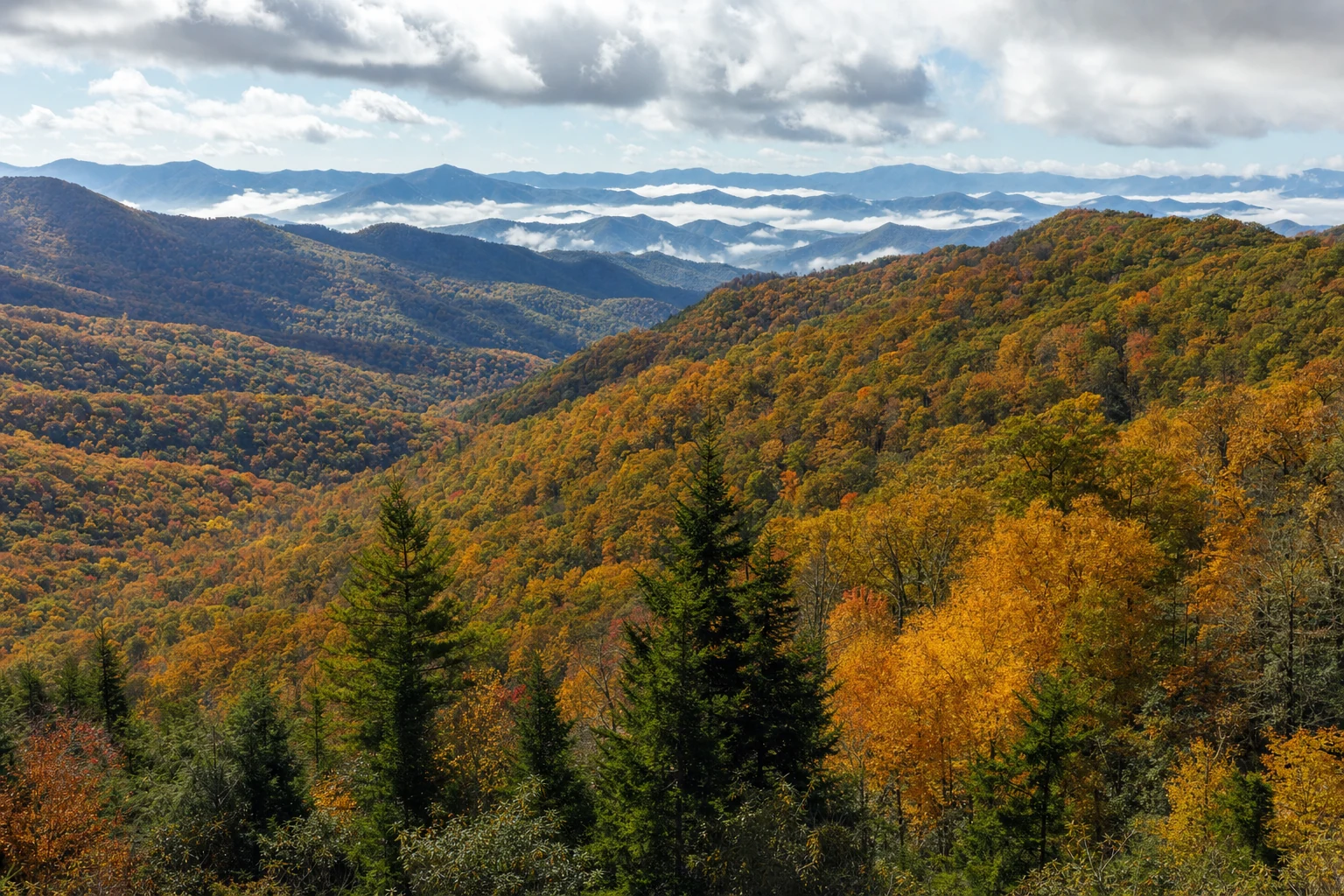
The museum is accessible year-round, and the Davis House is open during daylight hours. Spring and fall offer the most comfortable walking weather: spring for the wildflowers that come through the Oconaluftee valley, fall for the foliage that peaks typically in mid-October at this elevation. Summer is the park's busiest period; arriving before 10 a.m. makes a real difference in both parking availability and crowd levels at the museum.
Winter is underrated here. The valley floor stays accessible through most of the cold season, unlike the high-elevation roads that close when ice sets in. Bare trees open up sight lines across the farm grounds that disappear under summer foliage, and the number of visitors drops sharply after the fall color fades. The Davis House doesn't look like a lesser version of itself in January — it looks like the farm building it was built to be, which is the point.