
About Gregg-Cable House:
The Gregg-Cable House is one of the few two-story cabins you'll find in Cades Cove, which already distinguishes it from most of the historic structures along the loop. Built around 1870 and connected over its working life to Russell Gregory and later to the Gregg and Cable families, it survived intact long enough to be preserved within Great Smoky Mountains National Park. The cabin is open to walk through during daylight hours, no reservation required.
History
Russell Gregory, described as a prominent Cades Cove resident, was the cabin's first occupant. Two-story construction was uncommon here; most families built single-story, and a second floor represented either unusual means or a specific practical demand that Gregory's household had. Ownership moved to the Gregg and Cable families over subsequent decades, and both left the structure largely unchanged, which is why it still reads today as a genuine artifact rather than a reconstruction.
The building shows what post-Civil War life in Cades Cove actually required: timber framing and modest room dimensions, with windows positioned for light and cross-ventilation; the layout was built around farming a mountain valley, not around comfort or appearance. Nothing about it was designed to impress.
Inside the Cabin
You can step inside, which puts the Gregg-Cable House in a different category from many GSMNP historic structures that can only be viewed from outside. Two stories mean two floors of construction to examine: the structural timber, the ceiling height on each level, the dimensions of the rooms, the staircase. There's a physical quality to standing in a space this old that photographs don't carry.
Interpretation at the site is minimal by design. The Park Service tends not to over-sign these structures; what you get is the cabin itself, and the context you bring with you matters. The park's visitor centers and website cover Cades Cove history in considerably more depth if you want background before arriving.
Cades Cove: Setting and Scale
Cades Cove is one of the most-visited areas in Great Smoky Mountains National Park, and the appeal is straightforward: a loop road through open valley farmland surrounded by mountain ridgelines, with wildlife visible in the meadows throughout the day. Deer are common across the cove floor; black bear sightings happen regularly enough that the area has a genuine reputation for them.
The Gregg-Cable House sits along this loop among other preserved historic structures, so visiting it typically happens as part of a longer circuit rather than as a stand-alone trip. The loop takes one to several hours depending on how often you stop and how much wildlife is moving across the road. On busy days, plan for the longer end.
The designation "Cades Cove: A Window to Pioneer Life" signals how the Park Service frames the whole area: not just as scenery but as a living history context, where the surviving cabins, barns, and mills together sketch out what community life looked like here before the park was established. The Gregg-Cable House is one piece of that larger picture, and its unusual two-story form makes it a more distinctive stop than it might first appear on the map.
When to Go
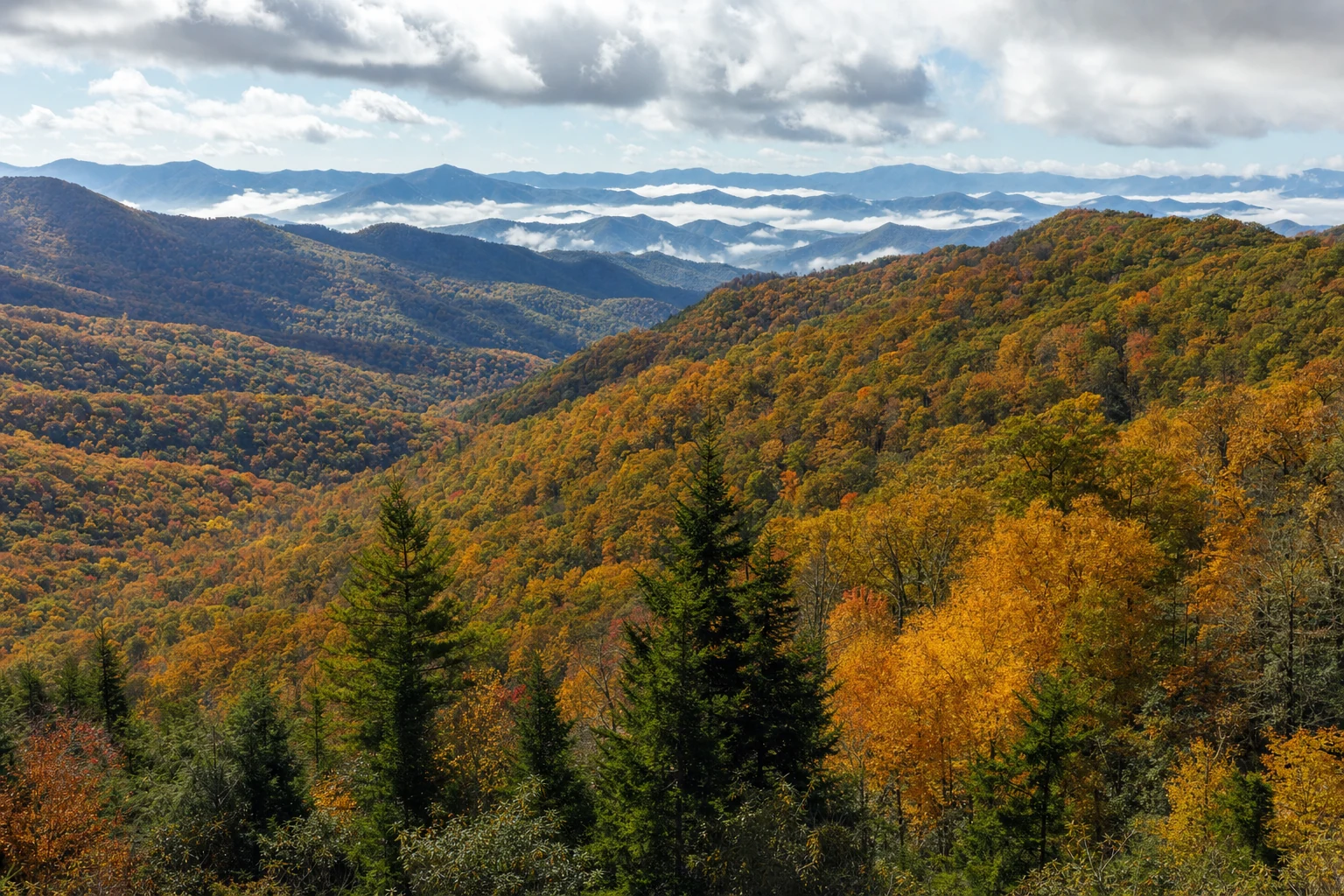
Fall draws the most visitors to Cades Cove, with foliage typically peaking around mid-October. Summer is the heaviest season overall; the open meadows make the cove a popular early-morning wildlife stop, and arriving before 9 a.m. in July or August makes a noticeable difference in both parking availability and traffic on the loop.
Spring brings wildflowers across the valley floor and stronger waterfall flow throughout the park. Winter reduces crowd levels considerably and keeps the cove accessible even when higher park elevations close. Check the park road status page for current conditions before heading out in cold months. A weekday in January, frost still on the grass and few other vehicles on the loop, is a quieter experience than any other season offers.
Getting There
Cades Cove is on the Tennessee side of the park, most directly accessible via the Townsend entrance. From downtown Townsend, park entrance signs are easy to follow. If you're coming from the Gatlinburg side, the Sugarlands Visitor Center is the main entry point and orientation hub for that approach.
A Park It Forward parking pass is required anywhere inside Great Smoky Mountains National Park for any stop over 15 minutes. The daily rate is $5, weekly $15, and annual passes are $40; you can purchase one through recreation.gov before your trip or at kiosks near the park entrances.
Know Before You Go
The loop road through Cades Cove runs one-way, so there's no backing up or shortcutting if you miss a stop; read the full loop map before you start driving it. Check road status before heading out, particularly in winter, since high-elevation closures elsewhere in the park can affect your planned route even when the cove itself is accessible.
Bear activity in Cades Cove is frequent enough to take seriously. Keep all food and scented items out of sight inside your vehicle, maintain distance from any bear you encounter on foot, and review the park's bear safety guidelines before hiking in the area. Current bear activity information is posted on the park's website and updated regularly.