
About John Messer Barn:
Greenbrier was working farmland long before it was parkland, and the John Messer Barn, built around 1875, is one of the clearer surviving proofs of that. The structure belongs to the Messer family's agricultural legacy in this part of the Smokies; while you can't go inside, getting close enough to read the exterior framing makes the drive worthwhile. The Greenbrier area draws people in for Porters Creek Trail's wildflowers, and the barn gives those same visitors something older and more grounded to think about while they're there.
The Greenbrier Community
What's now a trail corridor was once an active farming settlement. Families built substantial operations along the creek valleys here, and the Messer family's barn reflects that effort: large, carefully constructed, and built to outlast the people who put it up. The park was established in the 1930s, which ended generations of agricultural use in Greenbrier, but the structures the NPS chose to preserve let you read the landscape as it was rather than as it appears today.
The barn's construction date of around 1875 puts it in the Reconstruction era, when mountain communities like Greenbrier were largely self-sufficient by necessity. A barn of this scale required real materials and real labor, which is worth keeping in mind when you're standing next to it on a trail that, 150 years ago, would have been someone's farm road.
What to Expect at the Site
No staff, no interpretive panels; the barn is there to be seen, not explained, and the park's approach to Greenbrier's historic structures generally runs that way. You'll get as much out of it as you bring.
The exterior framing is the main event. Studying the proportions and materials from outside gives you a clear picture of what a serious farm operation looked like in this region in the 1870s, and the way the barn has held its shape over a century and a half says something about the construction choices the Messer family made. Take your time with it.
Don't try to go inside. The restriction isn't bureaucratic caution; the barn is preserved, not reinforced for public access.
Getting There
Greenbrier sits off US-321, northeast of Gatlinburg, on the Tennessee side of the park. The entrance road leads to the Porters Creek Trail trailhead, and the barn is accessible from there. The road into the area is unpaved in sections and narrow enough that oversized vehicles will have difficulty, so keep that in mind if you're towing anything.
A Park It Forward parking tag is required anywhere in Great Smoky Mountains National Park for stays over 15 minutes. Daily tags cost $5, weekly $15, and an annual pass runs $40. You can buy one ahead of time at recreation.gov or at park kiosks on arrival, though the kiosks aren't always in service, so advance purchase is the more reliable option.
When to Go
Spring makes the strongest case for Greenbrier. The wildflowers along Porters Creek Trail rank among the park's best, and the combination of thin crowds, low light, and a landscape that hasn't fully leafed out yet makes April and early May the easiest time to read old structures in context.
Summer works if you arrive before 9 AM on weekends. Greenbrier doesn't pull the volumes of Cades Cove, but summer weekend mornings still fill the small parking areas quickly, and the heavy canopy in July and August makes photographing historic structures harder than it sounds.
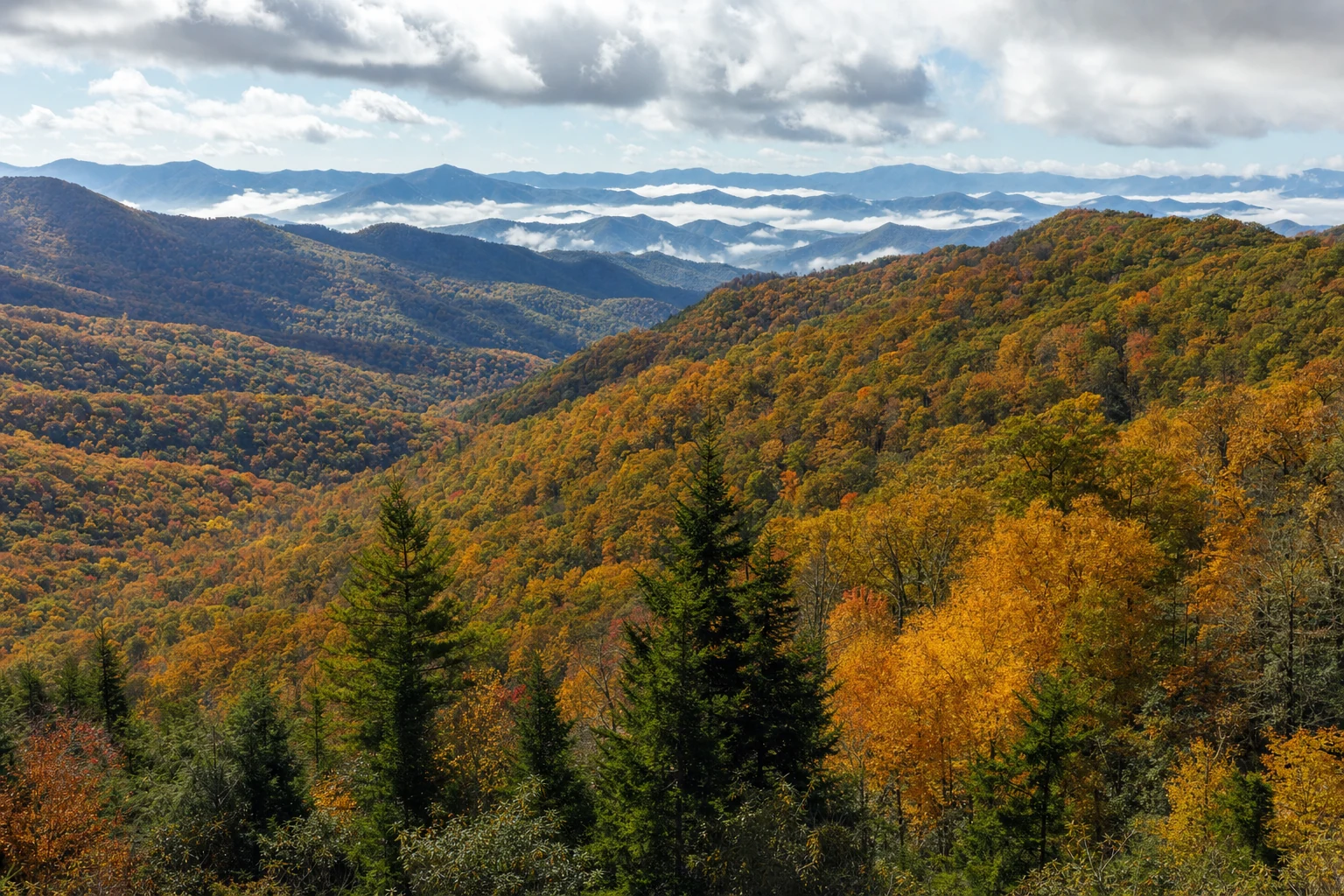
Fall shifts the angle and quality of light in ways that suit weathered wood, with the surrounding hardwoods turning through October and foliage typically peaking in the Greenbrier elevation range around mid-October (though that varies by year). Winter is underrated here: Greenbrier sits low enough that the access road stays passable through most cold-weather periods, and without foliage the sight lines open up considerably. You can see how the barn sits in relation to the surrounding terrain in a way that summer's canopy hides entirely. Check NPS road status before you go regardless of season; conditions can change fast.
Practical Notes
No facilities at the barn itself; the nearest restrooms are at the trailhead parking area. Cell service in Greenbrier is inconsistent, so download offline maps if you're navigating from your phone. The Porters Creek Trail can be muddy and uneven after rain, so wear actual hiking footwear even if you're only going as far as the barn.
The Rest of the Porters Creek Corridor
The John Messer Barn isn't the only remnant of the former Greenbrier settlement visible along Porters Creek. The trail itself follows what was once a community road, and you'll encounter other traces as you walk: stone walls, old clearings; evidence of a landscape shaped by people for generations before the park reshaped it again. For anyone interested in the pre-park history of the Smokies, Greenbrier repays a full half-day more than almost any other area on the Tennessee side.
The wildflowers alone could justify the drive in April. The barn makes that same trip worth doing in any other month.