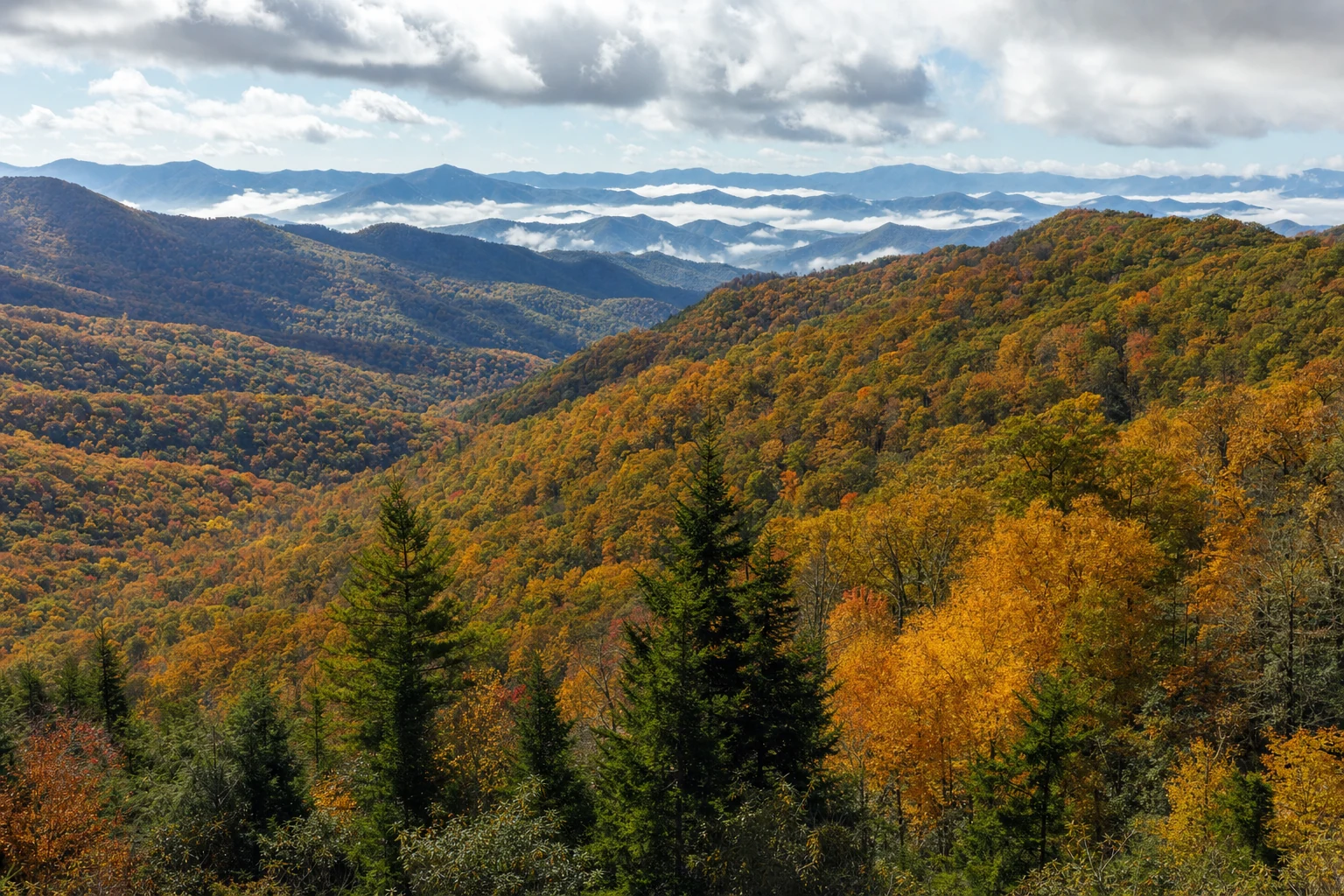

About LeConte Lodge (main lodge and cabins):
Mount LeConte rises to 6,593 feet inside Great Smoky Mountains National Park, and the only commercial lodging at that elevation has stood here since 1920. LeConte Lodge is the highest guest lodge in the eastern United States, accessible only by foot via trails ranging from 5.0 to 8.0 miles one-way, and its rustic cabins have no electricity, no running water, and a reservation lottery that typically fills more than a year out. For a significant number of hikers, that combination makes it the most sought-after overnight spot in the eastern Appalachians.
The Lodge Itself
The cabins run on kerosene lamps and propane heaters; bathrooms are shared and primitive, with no cell service to fill the silence after dark. The design hasn't substantially changed since 1920, which is not a shortcoming — it's the entire premise. What you're paying for is the chance to sleep at 6,593 feet inside a national park, with cloud banks below you in the morning and the spruce-fir forest going quiet around you at night. The lodge serves hearty family-style dinners included in the nightly rate, and those shared meals, strangers at a table after a mutual long day on steep trail, tend to produce a different quality of conversation than anything with Wi-Fi and a private room.
Rates start around $160 per person per night. That makes LeConte a premium option, not a budget one. The price reflects the genuine logistics of getting food and fuel to the summit; everything arrives by llama train or by the people carrying it up.
Getting There: The Five Trails
Five separate trails reach the lodge, with one-way distances from 5.0 to 8.0 miles. None of them is easy. The Alum Cave Trail is the most popular route: roughly 5.5 miles one-way from the trailhead off Newfound Gap Road, climbing 2,763 feet. The trail passes Arch Rock at about 1.3 miles, the dramatic overhang of Alum Cave Bluffs at 2.2 miles, and then a long exposed ridge walk before the final steep approach to the summit. The upper sections have cable-assisted ledges that become genuinely hazardous when wet or icy.
The other four routes are Trillium Gap, Bullhead, Rainbow Falls, and Boulevard. Trillium Gap is the path the llama supply trains use; Boulevard connects to the Appalachian Trail at a high saddle. Your choice might come down to trailhead location, preferred elevation gain rate, or whether you want to loop back on a different path. All five require checking current NPS trail conditions before you leave the car.
One thing that surprises hikers who don't account for it: conditions above 5,000 feet deteriorate fast in late fall and early spring. Icy sections without crampons are a real hazard on the upper trail. Spring snowmelt keeps things slippery well into April, even during the lodge's operational window.
Life at the Summit
Nights here are quiet in a way that's genuinely difficult to replicate. No traffic noise reaches 6,593 feet; the common lodge building hosts family-style dinners, and the format tends to produce actual conversation among people who've just shared a hard day on the same mountain. Mornings, when cloud banks sit below the ridgeline and the air is cold and sharp at dawn, are the reason repeat guests enter the lottery every year.
If you're expecting something like camping with a solid roof and meals provided, that's roughly right. If you're expecting something like a Gatlinburg cabin rental at altitude, adjust expectations before the climb.
How to Get a Reservation
Reservations run through a lottery system, and the booking window for a given season typically opens more than a year before your target dates. Many people who've stayed multiple times still miss their preferred nights. The most useful thing you can do is set a calendar reminder for when the lottery opens at lecontelodge.com/reservations; staying flexible on dates improves your odds considerably. October weekends are the hardest to land, while early-season slots in late March and mid-September see more availability. There is no walk-in option — without a confirmed reservation, you hike up and turn back.
When to Come
Mid-May through June brings wildflowers at upper elevations, including flame azalea on the exposed ridgelines, with streams running hard from snowmelt. Summer is the park's busiest period; the Alum Cave Trailhead fills well before midday on weekends, and the lodge is fully booked. September tends to offer the best conditions: cooler air, lower humidity, and the first color in the canopy before the October crowds arrive.
October is the most sought-after month and the hardest to book. Nights at the summit run considerably colder than the afternoon reading in the valley, so bring more insulation than seems necessary. Late November closes the season, and ice on upper trails is plausible before then.
Before You Hike
All five trailheads are inside the park boundary and require a Park-It-Forward parking tag: $5 per day, $15 per week, or $40 annually, purchased through recreation.gov or at park kiosks. The tag applies to any vehicle stopped inside the park for more than 15 minutes. The Alum Cave Trailhead is on Newfound Gap Road (US-441), about 8 miles from the Sugarlands Visitor Center near Gatlinburg; on busy weekends it fills before 9am, so arriving early is not optional.
Carry more water than feels necessary on the way up; the descent the following morning is harder on the knees than the climb. Trekking poles make a real difference on the upper sections around the cable-assisted ledges. Pack actual layers regardless of season, since the summit consistently runs 10 to 20 degrees colder than the valley floor — and that gap widens fast after sunset.