
About Livery Stable (Elkmont):
Built around 1910, when this mountain valley was still a private resort community and the guests who came for the summer air arrived by train, the Elkmont Livery Stable is a small, functional building you can only view from outside. The park service keeps it closed to foot traffic. But if you're spending time in the Elkmont Historic District, it's worth slowing down here, because the stable tells you something the more photogenic cottages don't.
The Story Behind It
Before the national park arrived, Elkmont belonged to two organizations: the Appalachian Club, a private social and athletic club whose members were largely Knoxville families, and the Wonderland Hotel, which operated as a full-service mountain inn. Guests reached Elkmont via the Little River Railroad, and once they were here, travel along the mountain roads still meant horses and carriages. The livery stable served that need directly — housing and managing the horses and equipment that kept the resort community moving.
It was built around 1910, which makes it one of the older surviving structures in the district. A livery stable wasn't a prestige building; it was infrastructure. The people who used it were hotel staff and club members who needed transport, not tourists posing for photographs. That functional plainness is part of what makes it worth pausing at now. Most of what's left at Elkmont is the domestic architecture of summer leisure; the stable is a reminder that someone had to do the actual work.
The Elkmont Historic District
The stable sits within the Elkmont Historic District, which holds one of the larger concentrations of historic structures in Great Smoky Mountains National Park. When the park was established in the 1930s, the families who had built summer cottages here were allowed to retain lifetime leases; those leases expired over subsequent decades, and the park has since preserved a portion of the district as a record of this pre-park resort era.
Walking through Elkmont today, you'll pass the remains of two distinct areas: the Appalachian Club section and the Wonderland Hotel cluster. Many structures are in varying states of preservation or controlled decay. The park service has stabilized some buildings and left others only intact enough to keep them from collapsing entirely. The livery stable has held up reasonably well and reads clearly as what it was — a working barn at the practical edge of a resort, built for animals and equipment rather than summer guests.
What to Expect on the Ground
You won't spend more than a few minutes at the stable itself. It's viewable from the path; the exterior shows the scale and construction of a working farm building from the early twentieth century, built for utility rather than appearance. The surrounding Elkmont area rewards considerably more time: the Jakes Creek and Little River Trails both start from the trailhead here, and the historic cottages are scattered along the district roads.
Plan to walk. The Elkmont campground and trailhead parking area serve as the practical hub, and from there you can cover the main historic district on foot without any particular effort. The loop through the cottage areas is short enough to pair with a stretch along the Little River Trail and still finish before lunch. If you want elevation, Jakes Creek Trail climbs toward the ridge and gets you away from the crowds that concentrate at the flat, easy sections near the parking lot.
When to Go
Elkmont runs to its own seasonal rhythm. Late May to early June brings the synchronous firefly display, when Photinus carolinus beetles flash in coordinated patterns after dark. It's one of the most watched natural events in the park and draws significant crowds; viewing access is ticketed separately through recreation.gov, and spots go fast. If the fireflies are your main reason for coming, plan months ahead.
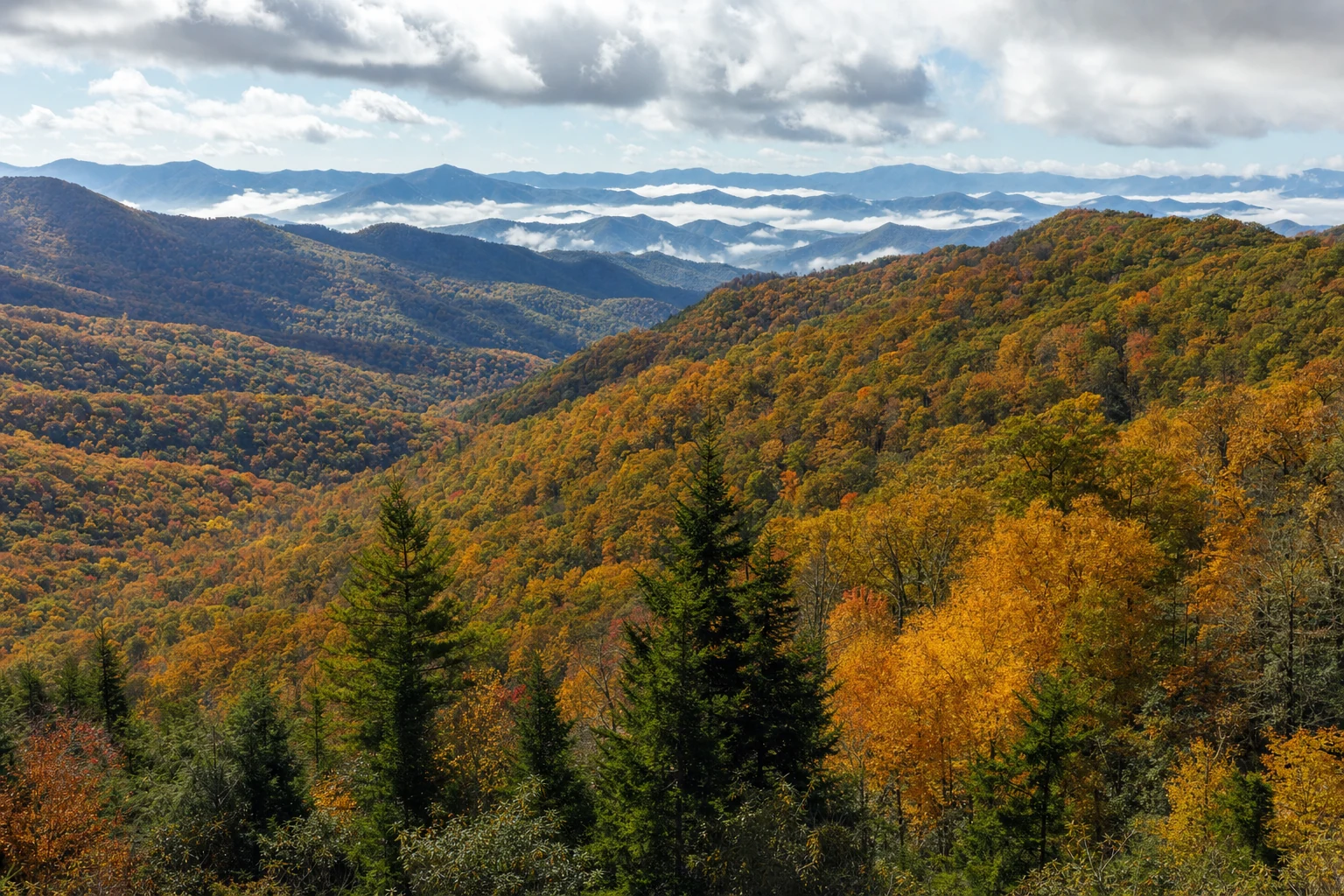
Outside firefly season, spring means wildflowers along the creek banks and cold water running fast through the valley. Fall brings color to the cove and surrounding ridges; mid-October is typical for peak color at this elevation, though it shifts a week or two year to year depending on temperatures. Winter quiets the whole district considerably. The campground closes, foot traffic drops, and you'll often have the historic cottages largely to yourself — genuinely good conditions for actually looking at the buildings without people in the frame.
Summer is the busiest stretch across the park. Arrive before 9 a.m. if you want parking in the actual lot rather than the road shoulder a half-mile back.
Getting There and Parking
Elkmont is off Little River Road, reached from the Sugarlands Visitor Center side of the park near Gatlinburg. From the Sugarlands entrance, drive west on Little River Road to the Elkmont turnoff, then follow the access road into the campground and trailhead area. The road in is paved.
A Park It Forward parking tag is required for any vehicle staying more than 15 minutes inside Great Smoky Mountains National Park. Tags cost $5 for a day, $15 for a week, and $40 for an annual pass; buy them at park entrance kiosks or in advance through recreation.gov. America the Beautiful passes cover entrance fees but not the parking tag, which is a separate program. On summer weekends and peak fall days, the Elkmont lot fills before mid-morning — the early start advice applies more here than at most GSMNP trailheads because Elkmont's combination of trails, historic structures, and the campground draws multiple visitor types at once.
Combining It With the Rest of Elkmont
The stable is one piece of a larger picture. If you're spending real time in the district, the other structures fill in the same story from different angles: the Appalachian Club building, the Wonderland Hotel site, the scattered cottages in various stages of survival. The Little River Trail runs flat along the river and is accessible to most visitors regardless of fitness; it gives you a sense of the valley the resort community was built around.
For current access conditions on specific structures, the rangers at Sugarlands Visitor Center are a reliable resource. Restoration and stabilization work occasionally closes portions of the district temporarily, and they'll know which buildings are currently reachable and which aren't.