
About Mill Creek Cabin:
The Greenbrier area of Great Smoky Mountains National Park holds some of the most intact evidence of pre-park mountain life in the Tennessee Smokies, and Mill Creek Cabin is one of the quieter examples. Built around 1880, it sits along the Porters Creek Trail: a small, well-preserved log structure that you approach on foot, view from the outside, and leave as you found it. There are no exhibits here, no interpretive panels, no entrance fee — just the cabin, the creek noise, and the forest pressing in around it.
What Mill Creek Cabin Is
This is a historic log cabin from the era of Appalachian mountain settlement, preserved in place inside what's now national park land. It isn't a standalone destination so much as a significant stop along a trail that rewards attentive walkers. The construction dates to approximately 1880, meaning it predates the park by about half a century and has outlasted the family that built it.
The building is exterior-viewing only. The NPS asks visitors not to enter, and the structure isn't open or staffed. What makes it worth pausing at is exactly what it is: an 1880s log cabin still standing where someone put it, in the specific hollow where they chose to make a life.
Greenbrier Settlement History
Long before the park existed, the Greenbrier cove and its surrounding creek drainages were working farmland. Families built homes, kept livestock, and cultivated fields on whatever flat ground the terrain offered; they made roads out of game paths and creek beds. When the park was established in the early 20th century, the land was gradually acquired from private owners, and most structures either collapsed over decades or were cleared. The ones that survived are the ones the NPS chose to preserve.
Mill Creek Cabin is among that smaller group. Log construction from this period used whatever timber was locally available and followed techniques common across southern Appalachia. Cabins this age don't usually survive intact; this one has, and it shows.
Porters Creek Trail
To reach the Greenbrier trailhead, take US-321 east from Gatlinburg; the park entrance road will be signed off the highway. This is a different access point from the main Sugarlands entrance on Newfound Gap Road, and it draws a smaller crowd as a result. Parking requires a Park It Forward tag: $5 for a day, $15 for a week, $40 for the year, available through recreation.gov or at park kiosks.
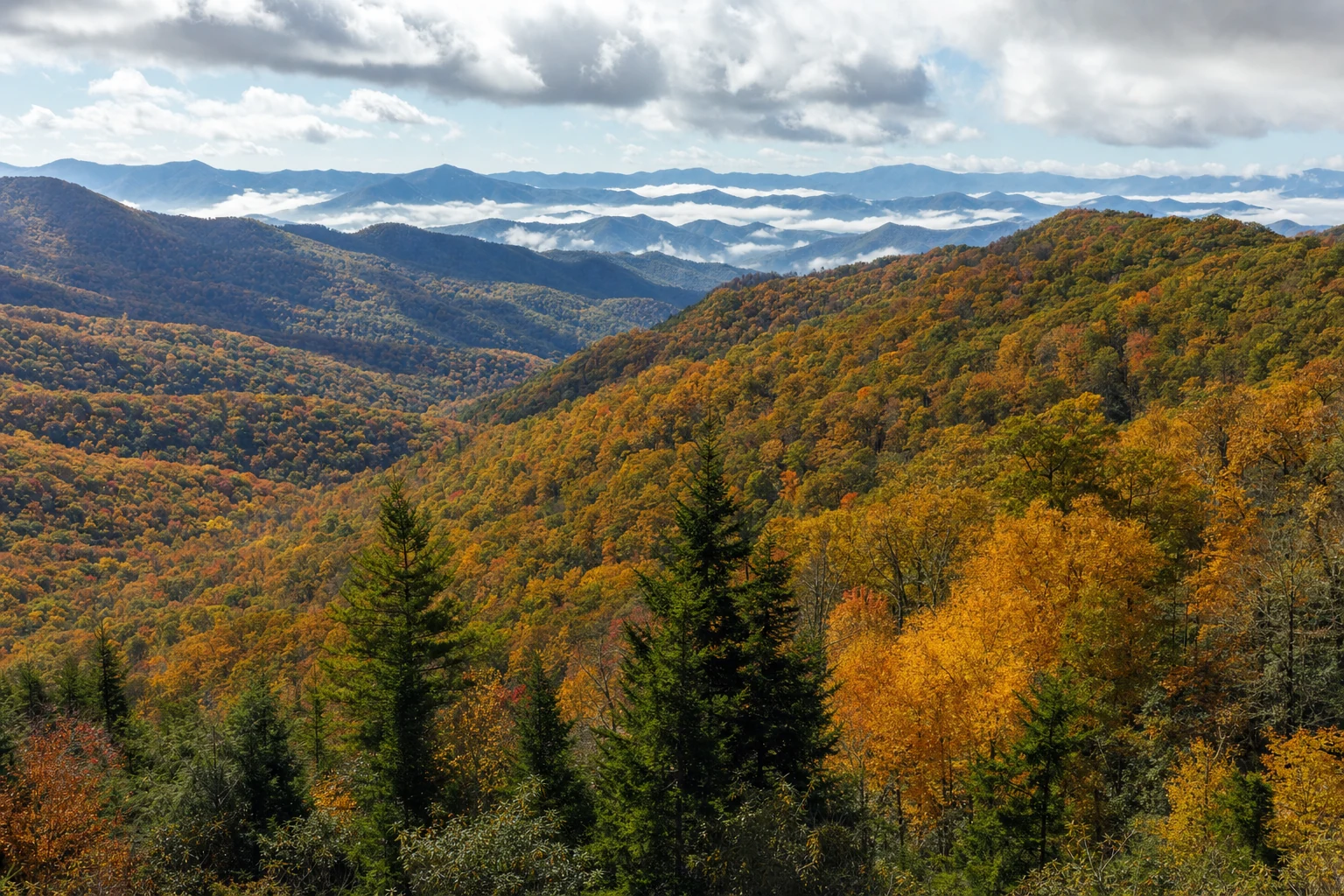
The trail follows Porters Creek upstream through recovering forest. The area was cleared farmland within living memory, and the woodland has been reasserting itself since; the canopy is substantial but not old-growth. In spring, the creek bottom fills with wildflowers and the trail can feel crowded on warm weekends. Summer brings shade and humidity in roughly equal measure. Fall shifts the light and colors through October. Winter thins the crowds considerably and opens up sightlines through the bare trees that don't exist in other seasons.
At the Cabin
When you reach Mill Creek Cabin, the experience is brief and visual. It's a small structure, and you can take in the proportions and construction details from outside without difficulty. The chinked log walls, the door placement, the roof line: these are the details that carry the history, though nothing on-site explains them formally. If you arrive knowing a little about vernacular Appalachian architecture, you'll see more; if you don't, it still registers as old and specific in a way that holds attention.
Don't expect a manicured site or a formal stop. The cabin sits within the trail environment, not set apart from it. That's precisely what makes it feel real rather than curated.
Best Time to Visit
Spring is the strongest draw for the Greenbrier area. The wildflower displays in this cove are well-documented among regular park visitors, and the combination of a creek-side walk and a historic structure makes for a natural pairing. Peak bloom timing varies year to year; late March through early May is the general window, with color holding longer at higher elevations.
Fall traffic across GSMNP peaks around mid-October for foliage. If you're visiting then, arriving early on weekends is the difference between a parking spot and a long wait. Winter is genuinely quiet in Greenbrier, and bare trees open up views of the ridgeline and cabin that you simply won't get any other time of year.
Know Before You Go
The Park It Forward system applies across GSMNP, including at the Greenbrier trailhead. Check road conditions before visiting in winter, when icy access roads can close without much warning. The trail can be muddy after rain; waterproof shoes are worth bringing in shoulder seasons. Cell coverage in the Greenbrier area is limited, so download a trail map before you leave the car.
For anyone specifically interested in the park's historic buildings, the NPS maintains preserved structures scattered across different areas of GSMNP. Mill Creek Cabin is among the less-visited examples, which is part of what makes the walk feel like something the crowds at Clingmans Dome or Laurel Falls rarely deliver.