
About Palmer Chapel:
Palmer Chapel's white frame has stood in Cataloochee Valley since 1898, longer than the national park that now surrounds it. The Palmer family and their Appalachian neighbors built this Methodist church as a congregation and community gathering place for the entire valley settlement; the door stays open to visitors during daylight hours, and the original pews remain inside. Services still occasionally take place, so you might arrive to find the building occupied.
The Church and Its Valley
The Cataloochee settlement that built this chapel was a real community, not a handful of scattered farmsteads. Dozens of families farmed the valley floor before the federal government acquired the land to establish the park in the 1930s, relocating residents and leaving the buildings behind. The chapel was their social and spiritual anchor.
Step inside and the building feels remarkably preserved: original pews worn smooth from decades of use, a small steeple above, the spare economy of Appalachian vernacular construction. The valley's other historic structures sit within walking distance; the Caldwell House (built around 1903), the Beech Grove School (1901), the Messer Barn with its distinctive cantilever construction, the Woody Cabin, and the Steve Woody House together form a coherent picture of what this settlement looked like before the park displaced it. A single afternoon can take you through all of them without rushing.
Getting to Cataloochee Valley
Reaching the chapel requires commitment. From Interstate 40, take exit 20 near Waynesville, NC, and follow Cove Creek Road roughly 11 miles into the park. The road starts paved but transitions to a narrow gravel surface well before you reach the valley, with steep grades and sharp turns that make the route genuinely difficult in wet weather. RVs and trailers shouldn't attempt it; most passenger vehicles manage fine if you drive slowly and stay alert for oncoming traffic on the narrowest sections.
The GPS coordinates for the valley center are 35.6325° N, 83.1097° W; the trailhead at Palmer Chapel Road sits at 35.6366° N, 83.0805° W. Download offline maps before you leave, because cell service is limited or absent once you're inside the valley. Cove Creek Road can close without much notice during winter ice events, so checking NPS road conditions before you commit to the drive is worth two minutes of your time, especially between November and March.
Trails from Palmer Chapel Road
The trailhead at Palmer Chapel Road is the starting point for two of the stronger backcountry routes in this section of the park.
Boogerman Trail runs 7.1 miles as a loop via Caldwell Fork Trail, gaining around 1,000 feet. It's rated strenuous and earns that, but the old-growth forest is the payoff: timber that the valley's settlement history largely left alone, a remote feel that holds even with modest trail traffic, and good odds of seeing elk. The Boogerman cabin site adds a historical thread to a walk that's rewarding on its own terms.
Caldwell Fork Trail covers 5.7 miles one-way at a moderate grade, also gaining roughly 1,000 feet. It links with the Boogerman Loop to form a full circuit, or you can walk it out-and-back to where the trail gets properly remote. Stream crossings are part of the route; plan for wet feet in shoulder seasons.
Elk
Cataloochee Valley holds the best wild elk viewing in the eastern United States. A herd reintroduced to the park in 2001 has grown substantially since, and the animals feed regularly on the valley floor around the historic structures, including near the chapel. Early morning and late afternoon visits are reliably productive.
The fall rut in October is the most dramatic window: bulls bugle across the valley, and the sound carries far enough that you'll hear them before you see them. Spring brings calves visible from late April through June. In summer, the elk tend to move to higher elevations during midday heat and return to the valley floor toward evening.
When to Visit
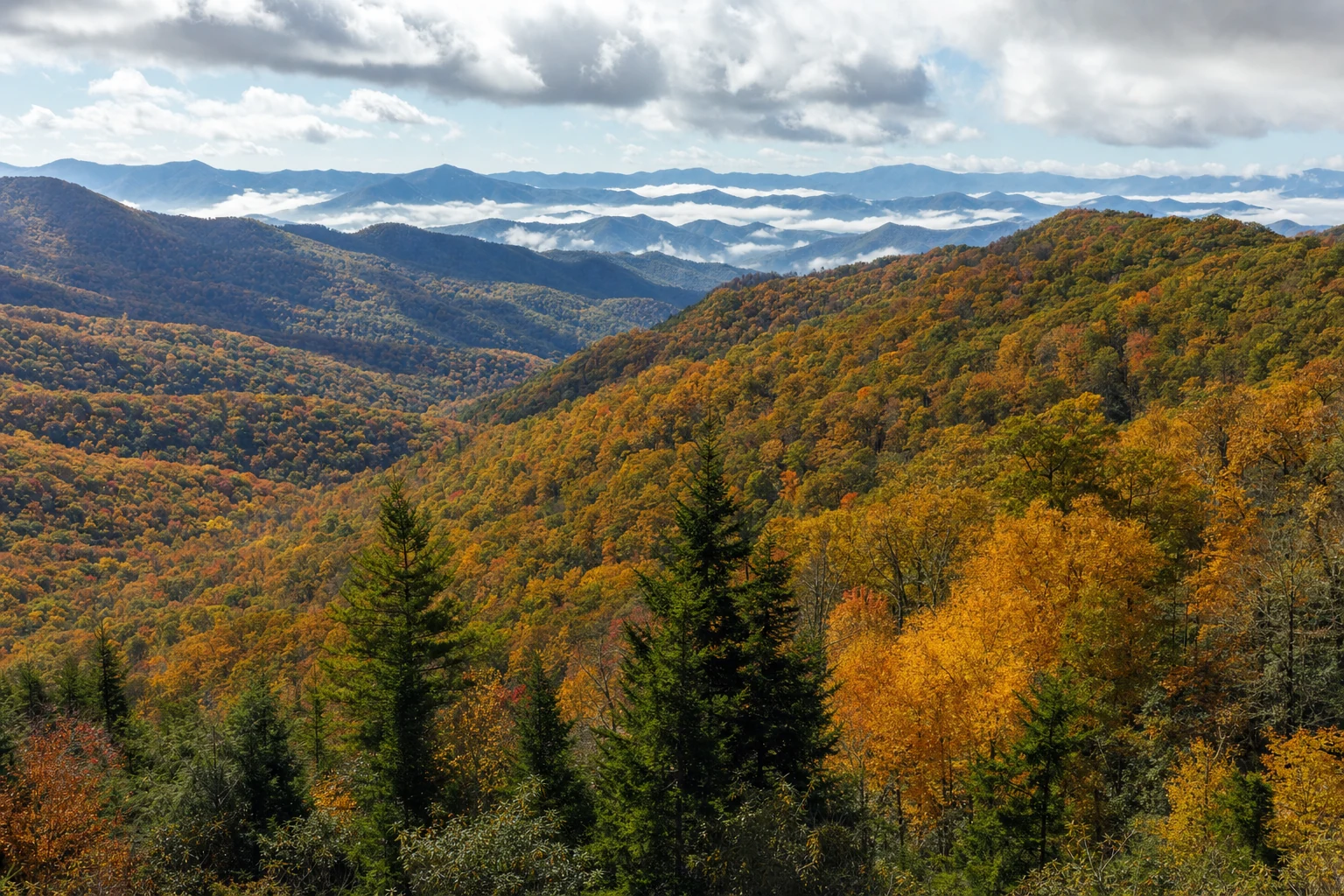
Fall is the strongest season for Cataloochee. Foliage peaks around mid-October, and the valley sits low enough to hold color longer than the exposed ridgelines above. The elk rut and autumn color arrive together, and the historic buildings look particularly good in October light.
Spring offers wildflowers and reliable access after winter closures lift. Summer brings consistent weather but heavier traffic on the gravel road; arriving before 9 a.m. gets you a parking spot without circling. Winter is quiet, sometimes deeply so. The bare trees open up sight lines across the valley floor that summer obscures, and the chapel looks entirely different with snow on the roof. Just check road conditions before committing to the drive.
Before You Go
Great Smoky Mountains National Park requires a Park It Forward parking tag for any stay over 15 minutes. The daily rate is $5, a weekly tag runs $15, and an annual pass costs $40. Buy at recreation.gov or at park entrance kiosks before you head into Cataloochee, since there are no kiosks in the valley itself.
The chapel is open during daylight hours at no charge. If you arrive during an occasional service, respect the posted notices and come back when it's done. The building has been in use for more than 125 years; the pews and floors show it.