
About Smokemont Church:
Smokemont Church sits at the edge of a campground on the North Carolina side of Great Smoky Mountains National Park, a plain white frame building that has outlasted the logging boom that originally put Smokemont on the map. Built in 1896, it served a working community long before the park existed, and it's still open to visitors during daylight hours, with pews you can actually sit in.
History
The Smokemont area was once a company town built around logging operations in the early twentieth century. Timber companies cleared much of the surrounding forest, and the families who worked those camps and mills needed a place to worship; the church answered that need beginning in 1896. When the federal government bought up the land to create the national park in the late 1920s and early 1930s, the logging infrastructure disappeared, but the church stayed. The Park Service preserved it as part of the cultural landscape, and it remains one of the more intact reminders of what daily life looked like for the people who lived in these mountains before the area was set aside as wilderness.
The building is simple: a small, white-painted wood-frame structure with plain windows and a short set of front steps. No ornate details. The congregation that worshipped here wasn't wealthy, and the architecture never pretended otherwise; that directness is part of what makes it worth stopping for.
What you'll find inside
Wooden pews line up against plain walls, and the room has that particular quiet that comes from more than a century of use. It's the sort of place where sitting for ten minutes feels worthwhile, regardless of whether you're religious. The Park Service maintains it without over-restoring it, which is the right call; the patina of age is the point.
There's no ranger on site, no interpretive panels, no gift shop. The experience is entirely self-directed: walk in, look around, leave when you're ready. Some visitors spend five minutes; others sit considerably longer.
Getting there
Smokemont sits along Newfound Gap Road (US-441) on the North Carolina side of the park, roughly 3 miles north of the Oconaluftee Visitor Center near Cherokee. You'll see the Smokemont Campground turnoff; the church is in that same area. Coming from Gatlinburg and the Tennessee side, drive over Newfound Gap and continue down toward Cherokee: Smokemont will appear on your left before you reach the visitor center.
A Park It Forward parking tag is required anywhere in Great Smoky Mountains National Park for stops longer than 15 minutes. Daily tags cost $5, weekly $15, and an annual pass runs $40. Buy one at park entrance kiosks or through recreation.gov before your trip. The kiosk at Oconaluftee, a few minutes south of Smokemont, is a reliable backup if you forgot.
Best time to visit
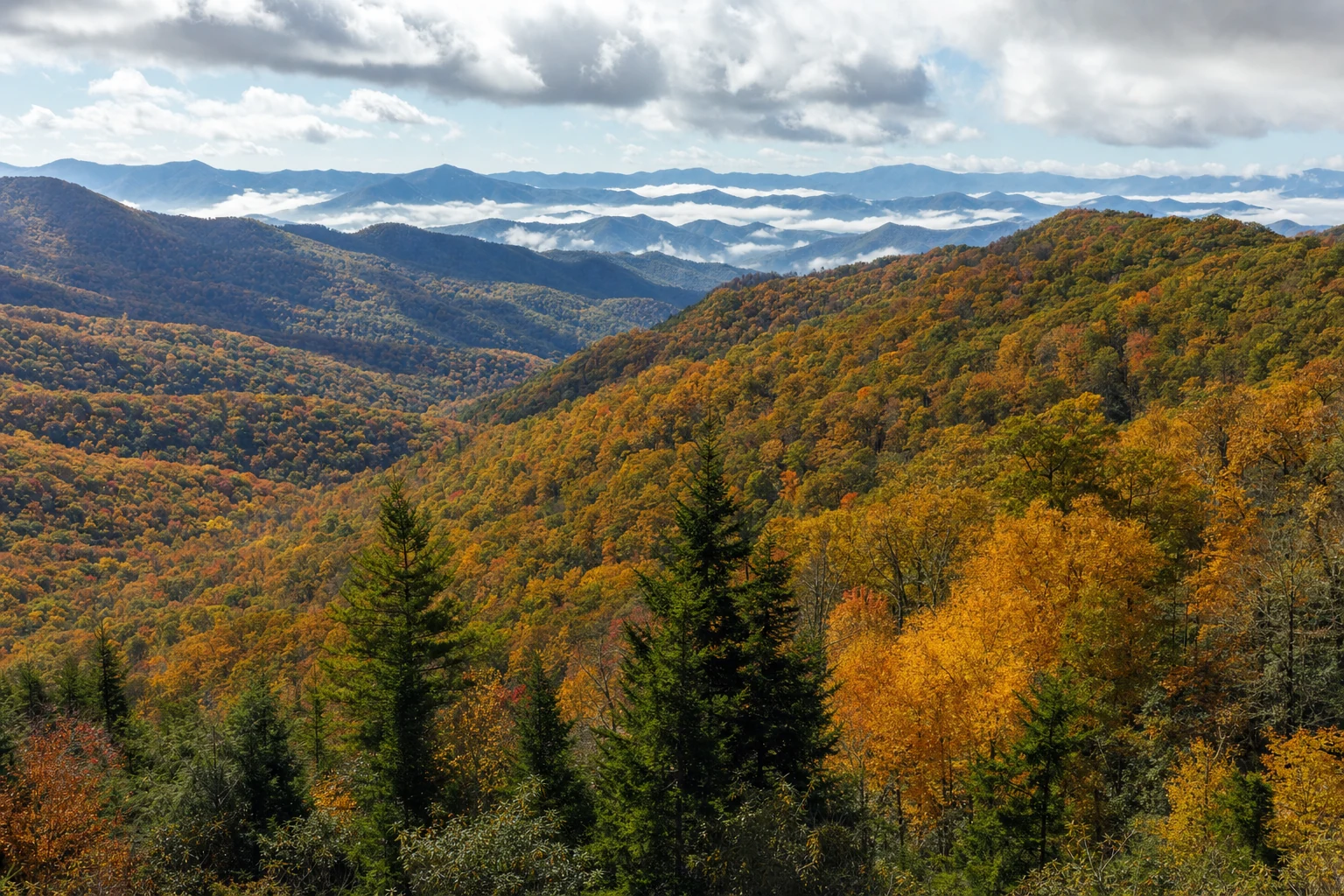
The church is accessible year-round, but season shapes what surrounds it considerably. Fall brings heavy traffic to the park, especially in mid-October when foliage color peaks along the lower elevations near Smokemont. Newfound Gap Road runs congested midday through October; arriving before 9 a.m. makes a real difference. Spring is the other strong season: wildflowers reach the Oconaluftee River corridor by April, and the campground nearby reopens as the weather settles. Summer is the park's busiest period across the board, so early arrival is less optional than usual. Winter keeps most casual visitors away, and Smokemont's lower elevation typically stays accessible even when higher sections of Newfound Gap Road close for ice.
Pairing with nearby stops
The Smokemont area puts several good options within a short drive. The Oconaluftee Visitor Center, a few miles south near Cherokee, is the most useful starting point for the North Carolina side of the park and a reliable place to pick up current trail conditions and maps. The Oconaluftee River Trail leaves from that visitor center parking area, follows the river north, and is one of the few park trails where leashed dogs are permitted, which makes it consistently busy with families. Mingus Mill, also near the visitor center, is an operational nineteenth-century grist mill worth a 20-minute stop if you've never seen one running.
For a longer outing from the same base, the Smokemont Loop trail starts from the campground and covers about 6 miles through the surrounding second-growth forest. It's not a technical hike, but it's a solid half-day with good creek crossings and tree cover that makes it reasonable even in summer heat.
Cherokee, NC is roughly 5 miles south and deserves more than a passing stop. The Museum of the Cherokee People covers the history of the Cherokee Nation in this region with real depth; it's among the better cultural museums in the Southern Appalachians and puts the landscape you've been driving through into a longer frame of reference.
Know before you go
The church has no posted hours; it's generally open during daylight, but there's no guarantee the doors will be unlocked on every visit. Plan for 10 to 20 minutes rather than treating it as a half-day anchor. It works best as one piece of a larger Smokemont itinerary: a walk along the river, the drive over Newfound Gap, a stop at Mingus Mill. Cell service in the valley runs intermittent, so download offline maps before leaving Cherokee or Gatlinburg.